

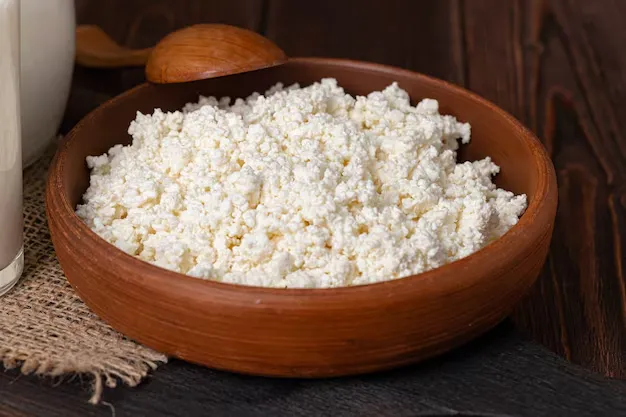
Basic Information
- Name: Feta Cheese
- Scientific Name: Not applicable, as feta is a type of cheese rather than a species of plant or animal.
- Category: Dairy product
Varieties
While feta cheese traditionally comes from Greece, various countries produce their own versions. The main varieties are based on the type of milk used and the region of production:
- Traditional Greek Feta: Made from sheep’s milk or a mixture of sheep and goat’s milk.
- Other Varieties: May include feta made entirely from goat’s milk or cow’s milk, each offering a slightly different flavor profile.
Nutritional Information
Macronutrients
- Carbohydrates: Very low in carbohydrates.
- Proteins: A good source of protein.
- Fats: High in fat, especially saturated fat, given its whole milk content.
Micronutrients
- Vitamins: Contains B-vitamins, particularly B12, and is a good source of riboflavin (B2).
- Minerals: Rich in calcium and phosphorus, important for bone health. It also provides sodium and, to a lesser extent, zinc and selenium.
phytonutrients
Feta cheese, including the whole milk, crumbled variety, is primarily a source of macronutrients (fats, proteins, carbohydrates) and micronutrients (vitamins and minerals) rather than phytonutrients. Phytonutrients are natural compounds found in plants that contribute to their health benefits, such as antioxidant, anti-inflammatory, and anti-cancer properties. Since feta cheese is an animal-derived product, it does not contain phytonutrients, which are typically found in fruits, vegetables, grains, and other plant-based foods.
Nutritional Profile of Feta Cheese
Although feta cheese lacks phytonutrients, it is rich in several important nutrients:
- Proteins: Provides a good amount of protein, which is essential for building and repairing body tissues.
- Fats: Contains saturated fats from whole milk, contributing to its creamy texture and rich flavor.
- Vitamins: A source of B-vitamins, particularly Vitamin B12 and riboflavin (B2), important for energy metabolism and maintaining healthy skin and eyes.
- Minerals: Rich in calcium and phosphorus, crucial for bone health. Feta cheese is also a significant source of sodium, which enhances its taste but should be consumed in moderation.
Health Considerations
While feta cheese does not provide phytonutrients, it offers other nutritional benefits that can contribute to a balanced diet. However, due to its high sodium and saturated fat content, it’s best consumed in moderation, especially for individuals with hypertension or those managing their intake of saturated fats.
Conclusion
Feta cheese is a flavorful addition to a variety of dishes, providing nutritional benefits like protein, calcium, and B-vitamins. To enjoy a diet rich in phytonutrients, it’s beneficial to accompany feta cheese with a wide range of plant-based foods, including vegetables, fruits, whole grains, nuts, and seeds. This approach ensures a diverse intake of nutrients essential for optimal health, including those phytonutrients found exclusively in plant-based sources.
Calorie Count
Feta cheese is moderately high in calories due to its fat content.
Glycemic Index
Feta cheese has a negligible glycemic index (GI) as it contains minimal to no carbohydrates.

Physical Characteristics
- Color: White.
- Shape: Traditionally sold in blocks or barrels, but the crumbled version is pre-crumbled for convenience.
- Size: The size can vary, especially when crumbled; packaging size ranges widely.
- Texture: Crumbly and slightly grainy, with a firm yet creamy mouthfeel.
Culinary Uses
- Common Dishes: Feta is a staple in Greek cuisine, used in salads (like the classic Greek salad), pies (such as spanakopita and tiropita), and sandwiches. It’s also served with olives and bread as an appetizer.
- Preparation Methods: Eaten fresh or used as a topping or filling, rarely cooked or melted.
- Suitable Pairings: Pairs well with fresh vegetables, especially tomatoes and cucumbers, olives, watermelon, and herbs like oregano and mint.
Geographical Information
- Origin: Feta cheese originates from Greece, with historical records dating back to the 8th century B.C.
- Primary Growing Regions: Primarily produced in Greece, but similar versions are made in Turkey, Bulgaria, and other countries in the Balkans. Feta-style cheeses are also produced worldwide.
- Seasonal Availability: Available year-round.
Feta cheese, particularly when made from whole milk and crumbled, is cherished for its tangy, salty flavor and versatile use in both traditional and contemporary cuisines. Its rich nutritional profile makes it a valuable addition to various dishes, offering both flavor and health benefits.
| Proximates: | |
| Water | 51.9 g |
| Energy (Atwater General Factors) | 273 kcal |
| Energy (Atwater Specific Factors) | 273 kcal |
| Nitrogen | 3.09 g |
| Protein | 19.7 g |
| Total lipid (fat) | 19.1 g |
| Ash | 3.74 g |
| Carbohydrates: | |
| Carbohydrate, by difference | 5.58 g |
| Sugars, Total | 1.63 g |
| Sucrose | <0.25 g |
| Glucose | 0.59 g |
| Fructose | <0.25 g |
| Lactose | 0.61 g |
| Maltose | <0.25 g |
| Galactose | 0.43 g |
| Minerals: | |
| Calcium, Ca | 371 mg |
| Iron, Fe | 0.07 mg |
| Magnesium, Mg | 17.7 mg |
| Phosphorus, P | 328 mg |
| Potassium, K | 105 mg |
| Sodium, Na | 1030 mg |
| Zinc, Zn | 2.35 mg |
| Copper, Cu | 0.032 mg |
| Manganese, Mn | 0.02 mg |
| Iodine, I | 48.4 µg |
| Vitamins and Other Components: | |
| Thiamin | 0.056 mg |
| Riboflavin | 0.444 mg |
| Niacin | 0.264 mg |
| Vitamin B-6 | 0.038 mg |
| Biotin | 0.464 µg |
| Vitamin A | |
| Retinol | 147 µg |
| Vitamin D (D2 + D3), International Units | 0 IU |
| Vitamin D (D2 + D3) | 0 µg |
| Vitamin D2 (ergocalciferol) | <0.1 µg |
| Vitamin D3 (cholecalciferol) | <0.1 µg |
| Lipids: | |
| Fatty acids, total saturated | 11.2 g |
| SFA 4:0 | 0.404 g |
| SFA 6:0 | 0.334 g |
| SFA 10:0 | 0.481 g |
| SFA 12:0 | 0.545 g |
| SFA 14:0 | 1.8 g |
| SFA 16:0 | 5.31 g |
| SFA 18:0 | 1.74 g |
| Fatty acids, total monounsaturated | 4.18 g |
| MUFA 16:1 c | 0.285 g |
| MUFA 18:1 c | 3.66 g |
| PUFA 18:2 n-6 c,c | 0.424 g |
| Cholesterol | 58 g |