


Basic Information
- Common Name: Almond Flour
- Scientific Name: Prunus dulcis
- Category: Nut Flour
Varieties
Almond flour typically doesn’t have varieties in the traditional sense, but it can be categorized based on the type of almonds used (e.g., blanched or unblanched) and the fineness of the grind:
- Blanched Almond Flour: Made from almonds with the skins removed, resulting in a finer texture and lighter color.
- Unblanched Almond Flour: Made from whole almonds with the skin on, leading to a slightly coarser texture and darker color.
Nutritional Information
- Macronutrients:
- Carbohydrates: Low, about 16.2g per 100g, mostly from dietary fiber.
- Proteins: Moderate, approximately 26.2g per 100g.
- Fats: High, around 50.2g per 100g, predominantly healthy monounsaturated and polyunsaturated fats.
- Micronutrients:
- Vitamins: Good source of vitamin E, a powerful antioxidant. Also contains small amounts of B vitamins.
- Minerals: Rich in magnesium, potassium, calcium, and iron. Also provides significant amounts of phosphorus, zinc, and selenium.
Phytonutrients
Almond flour, made from ground almonds, is not only valued for its nutritional content of vitamins, minerals, and macronutrients but also for its phytonutrients, which are bioactive compounds that contribute to health benefits. Here’s an overview of the key phytonutrients present in almond flour:
Flavonoids
- Quercetin, kaempferol, and isorhamnetin: These are potent antioxidants found in the skin of almonds. They have anti-inflammatory, anti-viral, and anti-cancer properties. While the content of these flavonoids might be higher in almond skins, almond flour, especially unblanched almond flour that includes the skins, also contains these beneficial compounds.
Phenolic Acids
- Gallic acid: This compound has antioxidant properties and is also found in almond skins. It plays a role in protecting cells from oxidative damage and may have antifungal and antiviral effects.
Tocopherols
- Vitamin E (alpha-tocopherol): Almond flour is a rich source of vitamin E, a fat-soluble antioxidant that protects cell membranes from oxidative damage and supports immune function.
Phytosterols
- Almonds are among the nuts with the highest content of phytosterols, which have been shown to lower cholesterol levels and may reduce the risk of heart disease. Phytosterols work by inhibiting the absorption of cholesterol in the intestines.
Squalene
- Though not as abundant as in some other sources, squalene is a phytonutrient found in almonds. It has antioxidant properties and may contribute to the beneficial effects of almonds on skin health.
Fiber
- While not a phytonutrient, the dietary fiber in almond flour is worth mentioning. It promotes digestive health, helps regulate blood sugar levels, and may contribute to heart health.
Almond flour’s phytonutrient profile contributes to its antioxidant capacity, anti-inflammatory properties, and potential health benefits, including reducing the risk of heart disease and managing blood sugar levels. The presence of these phytonutrients, combined with its rich content of healthy fats, proteins, and essential nutrients, makes almond flour a nutritious and health-promoting food choice, especially for those following gluten-free, low-carb, or plant-based diets.
Calorie Count and Glycemic Index
- Calorie Count: High, about 578 calories per 100g.
- Glycemic Index: Low, primarily because of its low carbohydrate content and high fiber, making it suitable for low-carb and ketogenic diets.
Physical Characteristics
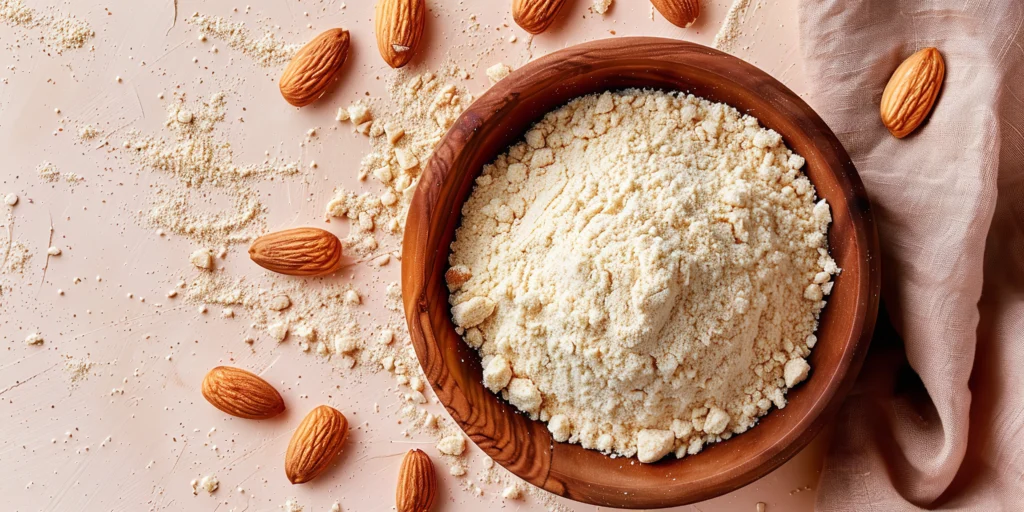
- Color: Pale yellow (blanched) to slightly brownish (unblanched).
- Shape: Fine powder, though the granularity can vary.
- Size: Consistency is similar to that of wheat flour but can feel slightly grainier.
- Texture: Smooth and buttery, especially when made from blanched almonds.
Culinary Uses
- Common Dishes: Used in gluten-free and low-carb baking, including bread, cookies, cakes, and pancakes. Also used as a thickening agent in sauces and soups.
- Preparation Methods: Can replace wheat flour in many recipes, often requiring adjustments in liquid ingredients due to its higher fat content.
- Suitable Pairings: Pairs well with sweet and savory ingredients alike, including fruits, chocolate, and spices like cinnamon and nutmeg for desserts, or herbs and cheese for savory dishes.
Geographical Information
- Origin: The almond tree is native to the Middle East, India, and North Africa.
- Primary Growing Regions: Today, the United States (specifically California) is the largest producer of almonds, followed by Spain, Iran, and Morocco.
- Seasonal Availability: Almond flour is made from dried almonds and is available year-round.
Almond flour is a nutritious, gluten-free alternative to traditional wheat flour, offering a rich source of vitamins, minerals, and fiber. Its low carbohydrate content and healthy fat profile make it popular in various dietary lifestyles, including paleo, keto, and gluten-free diets. With its mild, nutty flavor, almond flour is versatile for both sweet and savory culinary applications, providing a delicious way to enjoy the nutritional benefits of almonds in a wide range of dishes.
| proximates: | |
| Water | 4.32 g |
| Energy (Atwater General Factors) | 622 kcal |
| Energy (Atwater Specific Factors) | 578 kcal |
| Nitrogen | 4.2 g |
| Protein | 26.2 g |
| Total lipid (fat) | 50.2 g |
| Ash | 2.96 g |
| Carbohydrates: | |
| Carbohydrate, by difference | 16.2 g |
| Fiber, total dietary | 9.3 g |
| Minerals: | |
| Calcium, Ca | 232 mg |
| Iron, Fe | 3.22 mg |
| Magnesium, Mg | 251 mg |
| Phosphorus, P | 512 mg |
| Potassium, K | 667 mg |
| Sodium, Na | 1 mg |
| Zinc, Zn | 2.8 mg |
| Copper, Cu | 0.975 mg |
| Manganese, Mn | 1.81 mg |
| Selenium, Se | 0.7 µg |
| Molybdenum, Mo | 36.1 µg |
| Vitamins and Other Components: | |
| Thiamin | 0.112 mg |
| Riboflavin | 0.748 mg |
| Niacin | 4 mg |
| Vitamin B-6 | 0.1 mg |
| Biotin | 69.1 µg |
| Folate, total | 38 µg |