
Cassava flour, derived from the cassava plant, is a highly versatile and increasingly popular gluten-free alternative to traditional wheat flour. Here’s a detailed look into cassava flour, covering its basics, nutritional content, physical characteristics, culinary uses, and geographical information.
Basic Information
- Common Name: Cassava Flour
- Scientific Name: Derived from the cassava plant, Manihot esculenta
- Category: Gluten-free flour alternative
Varieties
Cassava flour is primarily made from the whole root of the cassava plant. While there aren’t “varieties” of the flour in the traditional sense, the quality and texture may vary slightly based on the specific cassava root variety used and the production process.
Nutritional Information
- Macronutrients:
- Carbohydrates: High in carbs, with about 87.3 grams per 100 grams of flour.
- Proteins: Relatively low, with about 0.92 grams per 100 grams.
- Fats: Very low in fat, with about 0.49 grams per 100 grams.
- Micronutrients: Cassava flour is a source of some vitamins and minerals, including Vitamin C, calcium, and magnesium, though the amounts can be minimal.
Phytonutrients
Cassava flour, made from the root of the cassava plant (Manihot esculenta), is not typically renowned for its phytonutrient content compared to whole fruits and vegetables. However, the cassava root does contain some beneficial compounds, although these may be present in varying amounts in the flour, depending on processing methods. Here’s an overview of the phytonutrients found in cassava:
Phytonutrients in Cassava Flour
- Saponins: These compounds have antioxidant properties and may contribute to the health benefits of cassava, including potential anti-inflammatory effects.
- Flavonoids: Cassava contains flavonoids like quercetin, which have antioxidant properties that can help in fighting free radicals.
- Tannins: Present in small amounts, tannins have antioxidant properties, though they can also interfere with the absorption of certain nutrients.
- Phenolic Acids: Cassava has phenolic compounds that exhibit antioxidant activity, potentially contributing to disease prevention.
- Lectins: While not a phytonutrient in the traditional sense, cassava contains lectins, which can be toxic in high amounts but are significantly reduced through proper processing and cooking.
Considerations
- Processing Effect: The content of these phytonutrients can be significantly affected by the processing of cassava root into flour. For example, peeling, washing, and drying can reduce the levels of some beneficial compounds.
- Cyanogenic Glycosides: Cassava roots naturally contain cyanogenic glycosides, which can release cyanide when the plant is damaged or processed improperly. Proper preparation and processing of cassava flour significantly reduce these compounds to safe levels.
Nutritional Context
While cassava flour provides some phytonutrients, it’s important to note that it’s primarily consumed for its carbohydrate content and as a gluten-free alternative to wheat flour, rather than for its phytonutrient content. To ensure a diet rich in phytonutrients, it’s beneficial to consume a wide variety of fruits, vegetables, whole grains, nuts, and seeds alongside cassava flour-based products.
Given the processing required to make cassava safe and palatable, the flour may not be as rich in phytonutrients as the whole root or other more nutrient-dense plant foods. However, it remains a valuable dietary component, especially in gluten-free and traditional cuisines around the world.
Calorie Count and Glycemic Index
- Calorie Count: Approximately 357 calories per 100 grams.
- Glycemic Index: Cassava flour has a high glycemic index (GI), typically above 70, which means it can cause a rapid increase in blood sugar levels.
Physical Characteristics
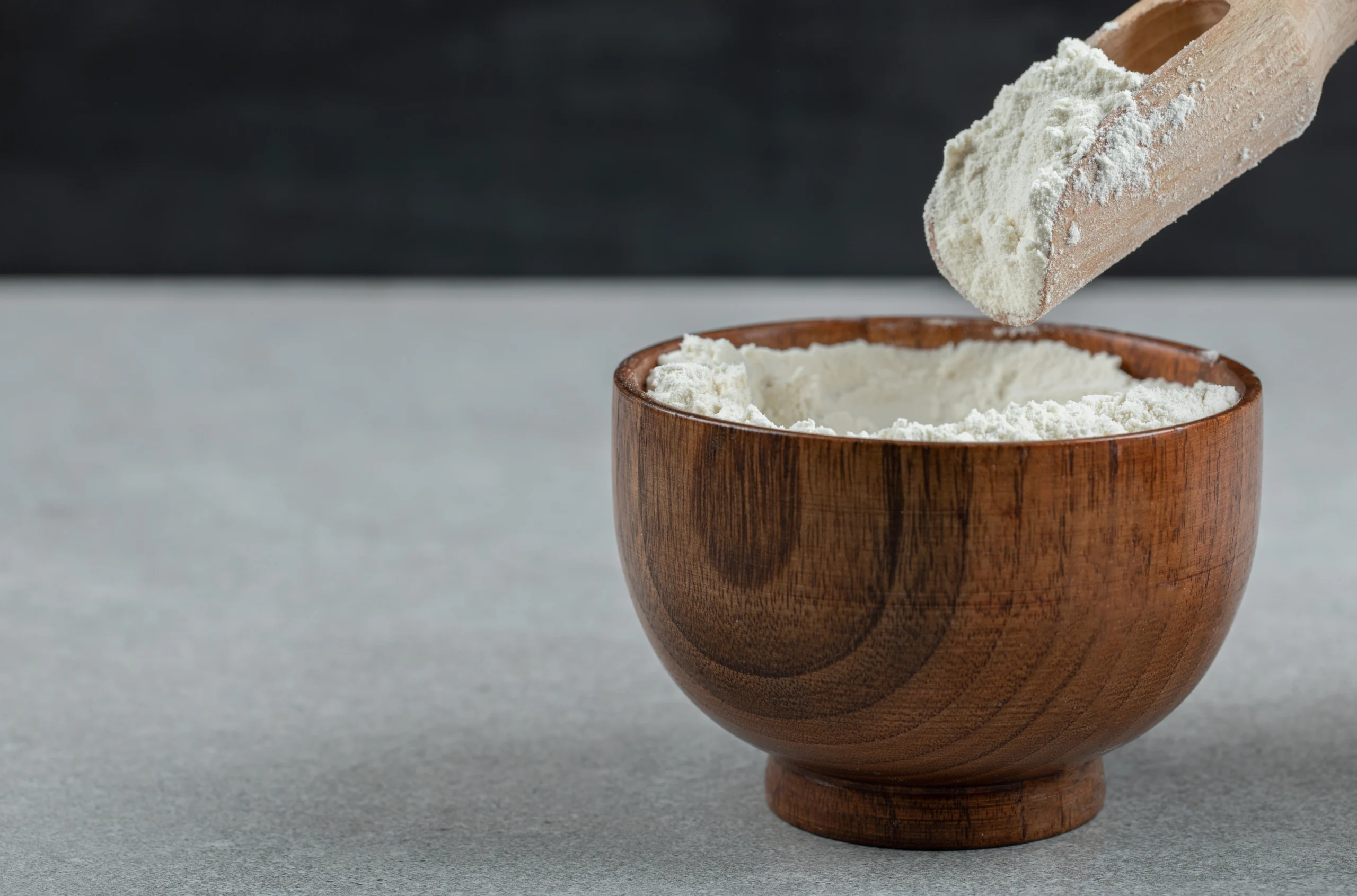
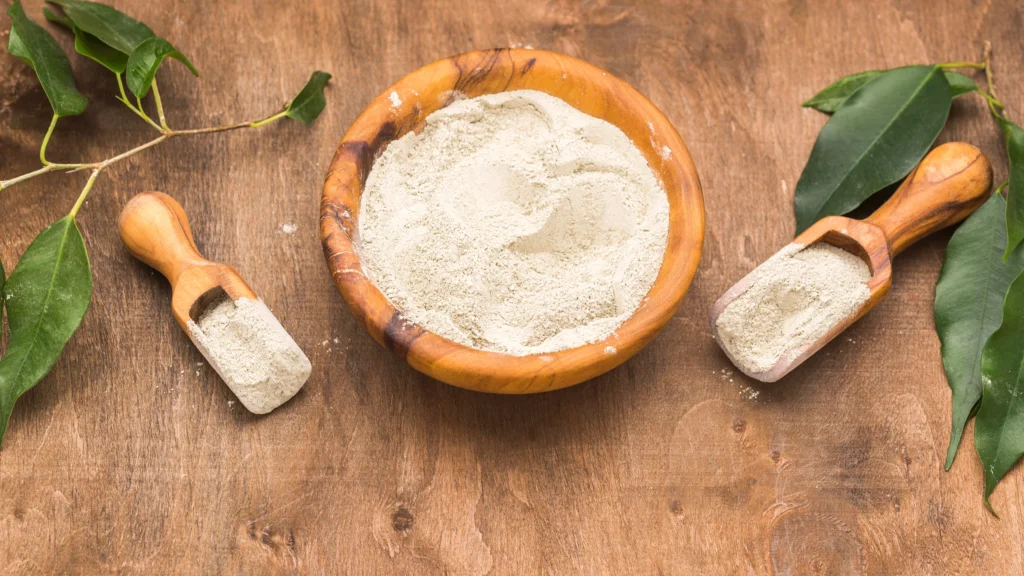
- Color: Off-white to creamy white.
- Shape: It is a fine powder, so the shape is not applicable.
- Size: Fine grain size, similar to traditional wheat flour.
- Texture: Smooth and light, suitable for baking and cooking.
Culinary Uses
Cassava flour is incredibly versatile in the kitchen. It can be used in a 1:1 ratio in many recipes that call for traditional wheat flour, making it a favorite among those following a gluten-free diet. Common uses include:
- Common Dishes: Breads, cakes, cookies, and pancakes.
- Preparation Methods: Baking, frying, and thickening sauces.
- Suitable Pairings: Works well with both sweet and savory ingredients, making it an excellent choice for a wide range of dishes.
Geographical Information
- Origin: Cassava is native to South America, specifically the Brazilian Amazon.
- Primary Growing Regions: Today, it is cultivated in tropical and subtropical regions around the world, with Nigeria, Thailand, and Indonesia among the largest producers.
- Seasonal Availability: Cassava is generally available year-round, as it can be harvested at various times of the year depending on the local climate.
Cassava flour’s rise in popularity is attributed to its gluten-free property, making it an excellent alternative for those with gluten sensitivities or celiac disease. Its versatility in cooking and baking further enhances its appeal in various culinary traditions worldwide.
| proximates: | |
| Water | 10.6 g |
| Energy (Atwater General Factors) | 357 kcal |
| Energy (Atwater Specific Factors) | 359 kcal |
| Nitrogen | 0.16 g |
| Protein | 0.92 g |
| Total lipid (fat) | 0.49 g |
| Ash | 0.72 g |
| Carbohydrates: | |
| Carbohydrate, by difference | 87.3 g |
| Fiber, total dietary | 4.8 g |
| Total dietary fiber (AOAC 2011.25) | 7.66 g |
| High Molecular Weight Dietary Fiber (HMWDF) | 6.27 g |
| Low Molecular Weight Dietary Fiber (LMWDF) | 1.39 g |
| Beta-glucan | <0.1 g |
| Starch | 79.7 g |
| Minerals: | |
| Calcium, Ca | 75 mg |
| Iron, Fe | 3.99 mg |
| Magnesium, Mg | 33.6 mg |
| Phosphorus, P | 39 mg |
| Potassium, K | 198 mg |
| Sodium, Na | 13 mg |
| Zinc, Zn | 0.41 mg |
| Copper, Cu | 0.077 mg |
| Manganese, Mn | 0.395 mg |
| Selenium, Se | <2.5 µg |
| Molybdenum, Mo | 2.5 µg |
| Vitamins and Other Components: | |
| Thiamin | 0.051 mg |
| Riboflavin | 0.068 mg |
| Niacin | 0.6 mg |
| Vitamin B-6 | 0.05 mg |
| Biotin | 0.519 µg |