
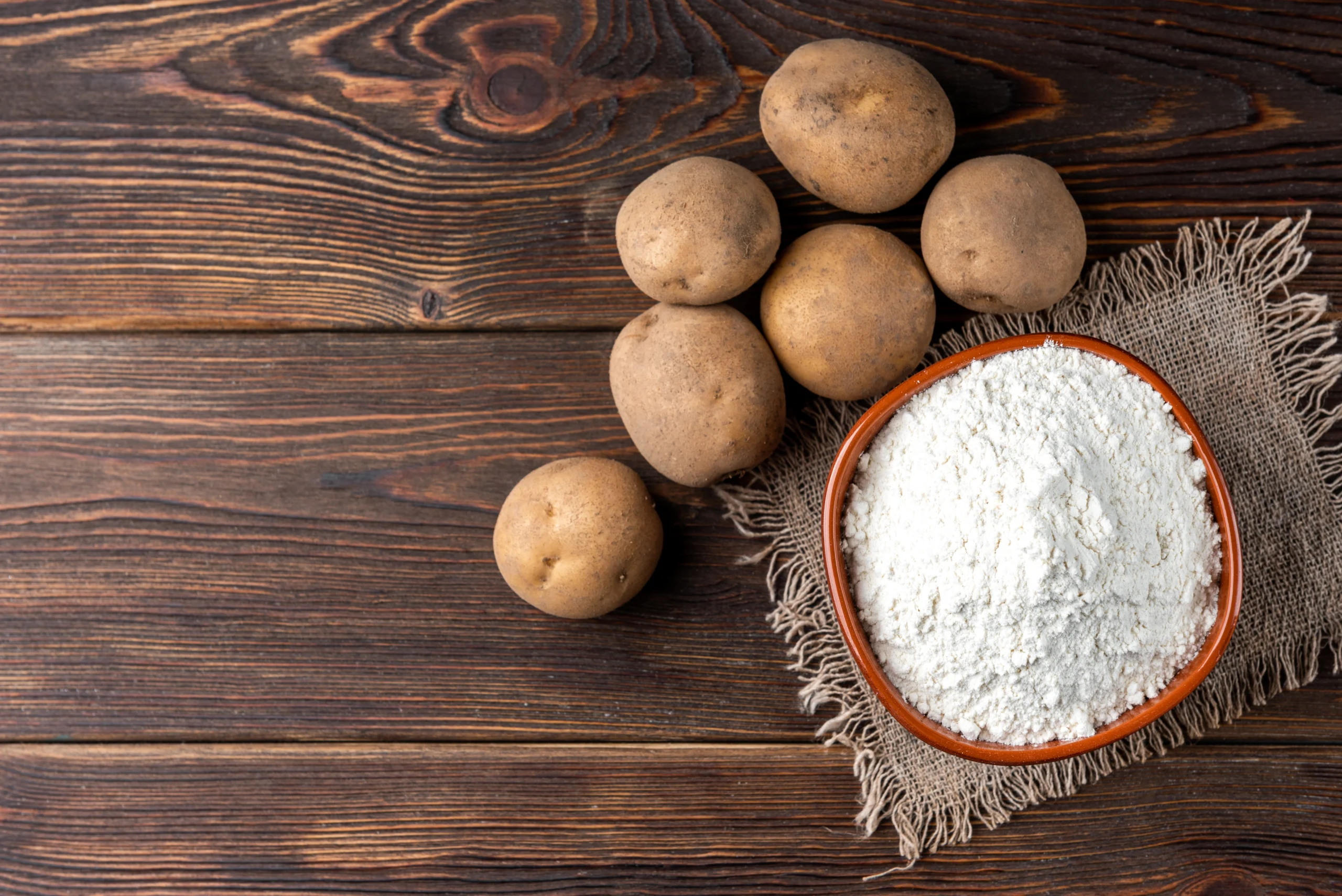
Potato flour is a gluten-free flour alternative made from whole potatoes that are cooked, dried, and then ground into a fine powder. This flour is distinct from potato starch, which is extracted only from the starch of the potato, lacking the protein and fiber found in potato flour. Here’s an in-depth look at potato flour, encompassing its basic information, nutritional content, physical characteristics, culinary uses, and geographical background.
Basic Information
- Common Name: Potato Flour
- Scientific Name: Made from Solanum tuberosum
- Category: Gluten-free flour alternative
- Varieties: While there are numerous potato varieties used globally, potato flour typically doesn’t specify varieties as it can be made from any type of potato. The nutritional profile and flavor might vary slightly based on the potato variety used.
Nutritional Information
- Macronutrients:
- Carbohydrates: High in carbs, around 79.9 grams per 100 grams, primarily as complex carbohydrates.
- Proteins: Moderate, about 3.11 grams per 100 grams.
- Fats: Very low, less than 1 gram per 100 grams.
- Micronutrients: Potato flour is a good source of potassium, vitamin C, and B vitamins, particularly vitamin B6. It also contains minerals like iron and magnesium.
Phytonutrients
Potato flour, made from whole potatoes (Solanum tuberosum), retains many of the nutrients and phytonutrients found in the original vegetable. While it’s well-known for its carbohydrate content, potato flour also contains a variety of phytonutrients that contribute to its health benefits. These compounds include antioxidants and other bioactive molecules that can help protect against chronic diseases. Here’s an overview of the key phytonutrients present in potato flour:
Phytonutrients in Potato Flour
- Carotenoids: Potatoes contain carotenoids like lutein and zeaxanthin, especially in yellow and orange varieties. These antioxidants are important for eye health, protecting against age-related macular degeneration.
- Phenolic Compounds: Potatoes are a source of phenolic compounds such as chlorogenic acid, which has antioxidant properties. These compounds can help reduce oxidative stress in the body, potentially lowering the risk of chronic diseases like heart disease and cancer.
- Flavonoids: Specific types of potatoes, particularly those with colored flesh, contain flavonoids such as anthocyanins (in purple and blue potatoes) and quercetin. These compounds have anti-inflammatory and antioxidant effects, offering further protection against chronic disease.
- Glycoalkaloids: While typically considered anti-nutrients, glycoalkaloids such as solanine and chaconine have shown some potential for health benefits in low concentrations, including antimicrobial and antifungal properties. However, in high amounts, they can be toxic, which is why it’s important that potatoes are processed correctly into flour to minimize these compounds.

Nutritional Context and Health Implications
The process of making potato flour involves cooking and drying whole potatoes, which can affect the concentration of these phytonutrients. However, because the whole potato is used, potato flour maintains a significant amount of the original phytonutrients, providing antioxidant and anti-inflammatory benefits.
Considerations
While potato flour contains beneficial phytonutrients, it’s also high in carbohydrates and has a high glycemic index, which may be a consideration for individuals managing blood sugar levels. As part of a balanced diet, potato flour can contribute valuable nutrients and phytonutrients, especially when used in gluten-free cooking and baking for individuals with celiac disease or gluten sensitivity.
In summary, potato flour offers more than just a gluten-free alternative to wheat flour; it provides a variety of phytonutrients that can contribute to a healthy diet. However, as with any food, it should be consumed in moderation and as part of a diverse and balanced diet to ensure a wide range of nutrients.
Calorie Count and Glycemic Index
- Calorie Count: Approximately 361 calories per 100 grams.
- Glycemic Index: High, due to the high carbohydrate content, though it may vary slightly depending on the potato variety and processing.
Physical Characteristics
- Color: Off-white to creamy yellow, depending on the potato variety.
- Shape: Fine powder.
- Size: Consistency similar to wheat flour but may feel slightly heavier or denser.
- Texture: Smooth and fine, with a tendency to clump due to its absorbent nature.
Culinary Uses
Potato flour is valued for its moisture-retaining properties and is used in a variety of culinary applications:
- Common Dishes: Often used in gluten-free baking, including bread, muffins, and pancakes. It’s also used as a thickener for soups, sauces, and gravies.
- Preparation Methods: Can be used alone or mixed with other flours to improve moisture content and texture in baked goods.
- Suitable Pairings: Complements both sweet and savory flavors. In gluten-free baking, it pairs well with rice flour, tapioca flour, and xanthan gum to improve texture.
Geographical Information
- Origin: Potatoes are native to the Andean region of South America.
- Primary Growing Regions: Today, potatoes are grown worldwide, with China, India, Russia, Ukraine, and the United States among the top producers.
- Seasonal Availability: Potato flour is available year-round due to the global cultivation of potatoes and the shelf stability of the flour.
Potato flour offers a nutritious and gluten-free alternative to traditional wheat flour, with unique properties that benefit various culinary applications. Its ability to retain moisture makes it especially useful in gluten-free baking, providing a tender texture and extending the shelf life of baked goods. Whether used for its functional properties in recipes or as part of a dietary need, potato flour is a versatile ingredient in both savory and sweet dishes.
| proximates: | |
| Water | 8.28 g |
| Energy (Atwater General Factors) | 361 kcal |
| Energy (Atwater Specific Factors) | 353 kcal |
| Nitrogen | 1.3 g |
| Protein | 3.11 g |
| Total lipid (fat) | 0.95 g |
| Ash | 2.71 g |
| Carbohydrates: | |
| Carbohydrate, by difference | 79.9 g |
| Fiber, total dietary | 5.4 g |
| Total dietary fiber (AOAC 2011.25) | 16.6 g |
| High Molecular Weight Dietary Fiber (HMWDF) | 14.8 g |
| Low Molecular Weight Dietary Fiber (LMWDF) | 1.8 g |
| Starch | 62.7 g |
| Minerals: | |
| Calcium, Ca | 44 mg |
| Iron, Fe | 12 mg |
| Magnesium, Mg | 73.6 mg |
| Phosphorus, P | 197 mg |
| Potassium, K | 1270 mg |
| Sodium, Na | 48 mg |
| Zinc, Zn | 0.9 mg |
| Copper, Cu | 0.231 mg |
| Manganese, Mn | 0.676 mg |
| Selenium, Se | 1.4 µg |
| Molybdenum, Mo | 18.9 µg |
| Vitamins and Other Components: | |
| Thiamin | 0.198 mg |
| Riboflavin | 0.115 mg |
| Niacin | 5.63 mg |
| Vitamin B-6 | 0.582 mg |
| Biotin | 0.976 µg |
| Folate, total | 41 µg |