

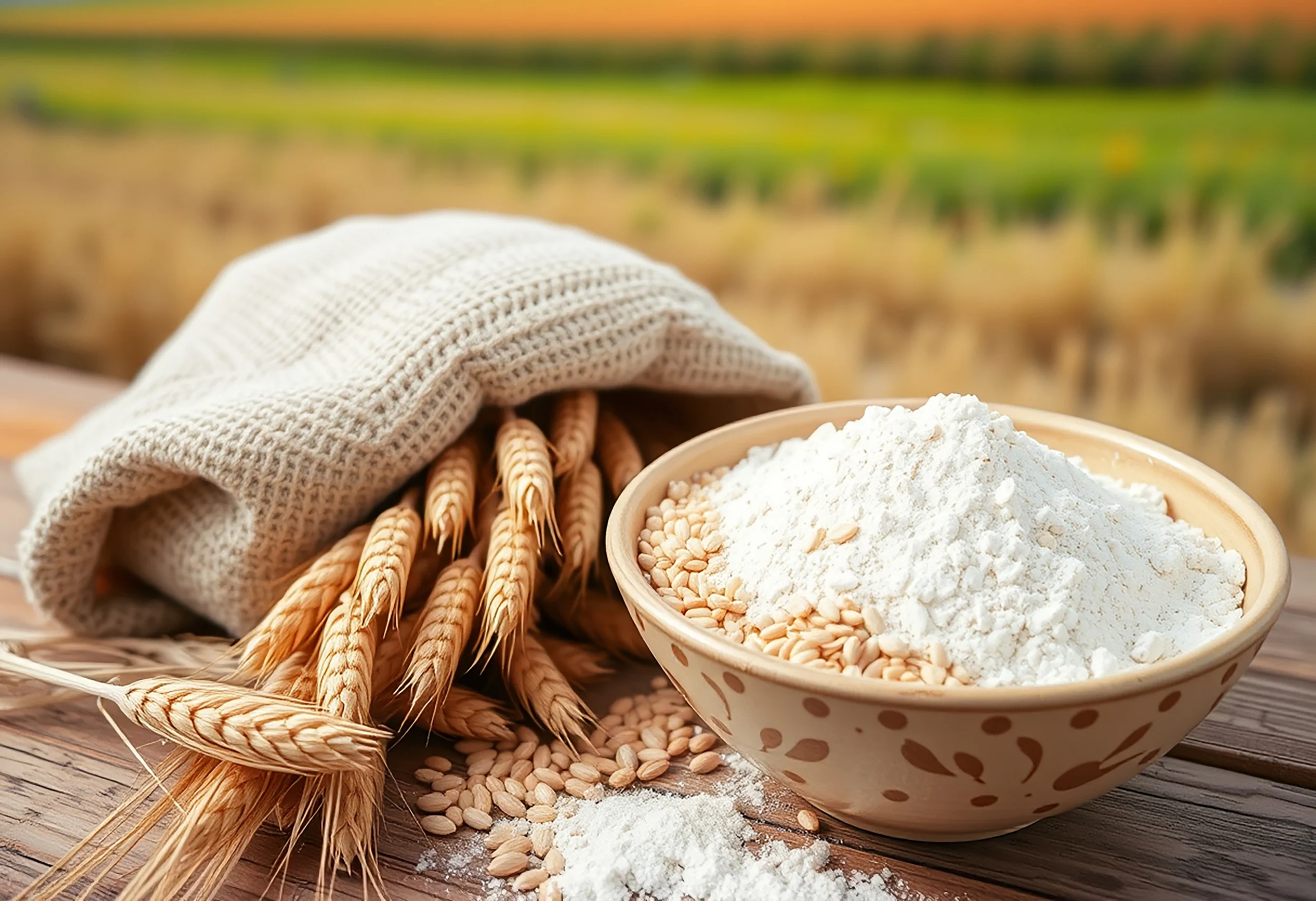
Basic Information
- Common Name: All-Purpose Wheat Flour
- Scientific Name: Derived from Triticum spp.
- Category: Staple food, Cereal grain product
Nutritional Information
- Macronutrients:
- Carbohydrates: Approximately 74.6 g per 100 g
- Proteins: About 12 g per 100 g
- Fats: Roughly 1.7 g per 100 g
- Micronutrients: Contains a variety of B vitamins (notably folate and thiamin), and minerals such as selenium, manganese, and iron.
Phytonutrients
All-purpose wheat flour, particularly when it is unenriched and unbleached, still retains a variety of phytonutrients, albeit in lesser quantities compared to whole wheat flour due to the removal of the bran and germ during processing. These phytonutrients include a range of compounds that contribute to health benefits, although the specific content can vary based on the wheat variety and processing methods. Here’s an overview of the types of phytonutrients present in wheat flour and their potential health implications:
Types of Phytonutrients in Wheat Flour
- Phenolic Acids: These compounds, including ferulic acid, are potent antioxidants that help protect the body from oxidative stress and may reduce the risk of chronic diseases such as heart disease and cancer.
- Alkylresorcinols: Found in the outer layers of wheat grains, alkylresorcinols are antioxidants that have been linked to a reduced risk of obesity, diabetes, and heart disease, though their concentrations are reduced in all-purpose flour compared to whole wheat.
- Lignans: Plant compounds that have antioxidant properties and can act as phytoestrogens. Lignans may contribute to reduced risk of cardiovascular disease and certain cancers.
- Phytosterols: These compounds are known for their cholesterol-lowering effects. They can contribute to heart health by reducing the absorption of cholesterol in the intestines.
- Betaine: This nutrient is involved in liver function and cellular reproduction and has been linked to reduced risk of chronic disease, such as heart disease and certain types of cancer.
- Carotenoids: Including beta-carotene, these are antioxidant compounds that the body can convert into vitamin A, important for vision, immune function, and skin health. The levels in all-purpose flour are lower than in whole wheat because the bran and germ, where these are concentrated, are largely removed.
Nutritional Implications
The refining process that transforms whole wheat into all-purpose flour significantly reduces the content of these phytonutrients, making enriched or whole wheat flour options generally more beneficial for those seeking to maximize their intake of health-promoting plant compounds. However, all-purpose flour still provides a small amount of these nutrients, contributing to its nutritional value.
To enhance the phytonutrient intake from wheat products, it’s recommended to opt for whole grain versions when possible, as these contain the entire kernel (bran, germ, and endosperm) and thus retain a higher concentration of phytonutrients, fiber, and other beneficial compounds.

Calorie Count and Glycemic Index
- Calorie Count: Around 362 calories per 100 g
- Glycemic Index: Typically ranges between 65 to 85, depending on processing and preparation methods.
Physical Characteristics
- Color: Off-white to slightly yellowish, depending on the level of processing and the wheat variety.
- Shape: Powder
- Size: Particle size can vary, but it is finely milled for all-purpose use.
- Texture: Fine and powdery, with a slight granularity that can be felt between the fingers.
Culinary Uses
All-purpose wheat flour is extremely versatile in the kitchen, used in a myriad of dishes across various cuisines. Common uses include:
- Common Dishes: Breads, pastries, cakes, cookies, pancakes, and as a thickening agent for sauces and soups.
- Preparation Methods: Baking, frying, thickening.
- Suitable Pairings: Pairs well with almost every ingredient in both savory and sweet dishes due to its neutral taste.
Geographical Information
- Origin: The domestication of wheat, the source of all-purpose flour, can be traced back to the Fertile Crescent region, now present-day Turkey and Iraq, around 10,000 years ago.
- Primary Growing Regions: Wheat is now grown worldwide, with the largest producers being China, India, Russia, the United States, and France.
- Seasonal Availability: Wheat flour, being a processed product of wheat grains, is available year-round in most parts of the world.
All-purpose flour, especially when unenriched and unbleached, provides a fundamental base for countless recipes, showcasing its indispensable role in global cuisines. Its nutritional profile, combined with its culinary flexibility, makes it a staple ingredient in kitchens around the world.
| proximates: | |
| Water | 11.1 g |
| Energy (Atwater General Factors) | 362 kcal |
| Energy (Atwater Specific Factors) | 370 kcal |
| Nitrogen | 1.92 g |
| Protein | 12 g |
| Total lipid (fat) | 1.7 g |
| Ash | 0.56 g |
| Carbohydrates: | |
| Carbohydrate, by difference | 74.6 g |
| Fiber, total dietary | 3 g |
| Minerals: | |
| Calcium, Ca | 22 mg |
| Iron, Fe | 1.18 mg |
| Magnesium, Mg | 36.1 mg |
| Phosphorus, P | 134 mg |
| Potassium, K | 150 mg |
| Sodium, Na | 2 mg |
| Zinc, Zn | 1.15 mg |
| Copper, Cu | 0.212 mg |
| Manganese, Mn | 0.819 mg |
| Selenium, Se | 20.1 µg |
| Molybdenum, Mo | 42.6 µg |
| Vitamins and Other Components: | |
| Thiamin | 0.298 mg |
| Niacin | 1.59 mg |
| Vitamin B-6 | 0.085 mg |
| Folate, total | 23 µg |