

Basic Information
- Name: Red Grapes, Seedless
- Scientific Name: Vitis vinifera
- Category: Fruit
Varieties
Red seedless grapes come in various varieties, including Crimson Seedless, Ruby Seedless, and Flame Seedless, each with its unique flavor profile and seasonality.
Nutritional Information
- Macronutrients:
- Carbohydrates: Approximately 20.2 g per 100 g, primarily from sugars (glucose and fructose) and dietary fiber.
- Proteins: About 0.91 g per 100 g.
- Fats: Minimal, less than 0.16 g per 100 g.
- Micronutrients: Good source of Vitamin C, Vitamin K, and also provides some B vitamins. Contains minerals like potassium, with traces of magnesium, calcium, and phosphorus.
Phytonutrients
Red seedless grapes are a rich source of phytonutrients, which contribute to their color, taste, and health benefits. These bioactive compounds have been studied for their potential antioxidant, anti-inflammatory, and disease-preventing properties. Here’s a detailed look at the key phytonutrients present in raw red seedless grapes:
Types of Phytonutrients in Red Seedless Grapes
- Resveratrol: Perhaps the most well-known phytonutrient in grapes, resveratrol is a polyphenol with antioxidant properties, found in the skin of red grapes. It has been associated with heart health, longevity, and reducing inflammation.
- Anthocyanins: These are the pigments that give red grapes their color, with antioxidant effects that may protect cells from damage, reduce inflammation, and lower the risk of several diseases.
- Flavonoids: Including quercetin, catechins, and epicatechins, these compounds are known for their antioxidant properties. Flavonoids in grapes can contribute to cardiovascular health, reducing the risk of heart disease and improving blood circulation.
- Proanthocyanidins: Another group of polyphenols, proanthocyanidins, have antioxidant properties that may help in preventing cardiovascular diseases and cancer. They also contribute to the bitterness of grape seeds.
- Tannins: Found in the skins and seeds of grapes, tannins have antioxidant properties and contribute to the astringency of the grapes.
Nutritional Implications
The phytonutrients in red seedless grapes offer a range of health benefits:
- Antioxidant Protection: The antioxidants in red grapes can neutralize free radicals, potentially reducing the risk of chronic diseases such as heart disease, diabetes, and cancer.
- Heart Health: Compounds like resveratrol and flavonoids may improve heart health by increasing the dilation of blood vessels, reducing blood clotting, and lowering LDL cholesterol levels.
- Anti-inflammatory Effects: Many of the phytonutrients in grapes have anti-inflammatory properties, which can help reduce the risk of certain chronic conditions like heart disease and arthritis.
- Cancer Prevention: Some studies suggest that the phytonutrients in grapes, such as resveratrol, may have anti-cancer properties, including the ability to slow the growth of cancer cells and induce apoptosis.
Including red seedless grapes in your diet can provide these phytonutrients, contributing to overall health and well-being. However, it’s important to remember that a balanced diet with a variety of fruits, vegetables, and other plant foods is the best way to ensure an adequate intake of beneficial phytonutrients.
Calorie Count and Glycemic Index
- Calorie Count: Around 77 calories per 100 g.
- Glycemic Index: Low to medium, typically around 43-53.
Physical Characteristics
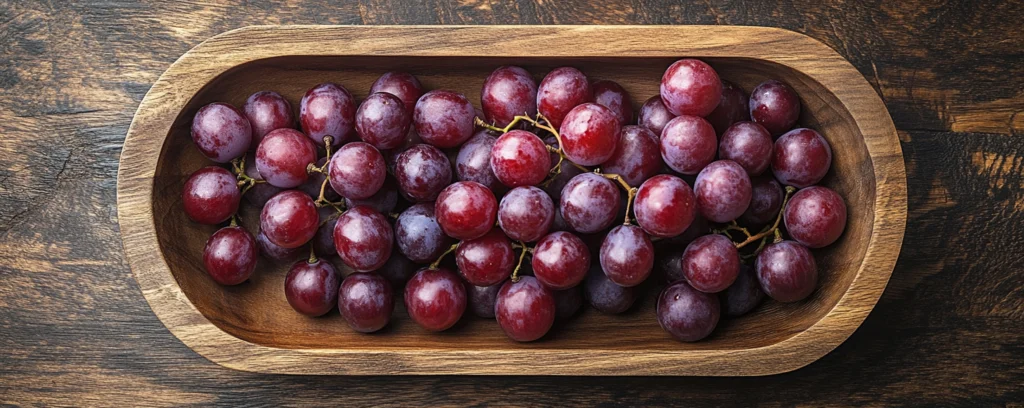
- Color: Varies from light red to deep ruby, depending on the variety and ripeness.
- Shape: Small and round, usually uniform in size.
- Size: Typically about 1-3 cm in diameter.
- Texture: Firm and juicy with a smooth, thin skin that encloses a fleshy interior.
Culinary Uses
Red seedless grapes are enjoyed for their sweet and sometimes slightly tart flavor, suitable for:
- Common Dishes: Consumed fresh as a snack, included in fruit salads, cheese platters, and used in baking and cooking for desserts and savory dishes.
- Preparation Methods: Eaten raw, roasted, or used as a garnish. Can also be frozen for a refreshing treat or juiced.
- Suitable Pairings: Pairs well with cheese, nuts, and other fruits. Delicious when used in salads with leafy greens or cooked with poultry and pork.
Geographical Information
- Origin: Grapes have an ancient history of cultivation, originating thousands of years ago in the Near East and Mediterranean regions.
- Primary Growing Regions: Today, red seedless grapes are grown in many parts of the world with suitable climates, including the United States (particularly California), Chile, South Africa, and Australia.
- Seasonal Availability: Harvest times vary by region, allowing for year-round availability in international markets.
Red seedless grapes are not only a convenient and delicious fruit choice but also offer nutritional benefits, including vitamins, minerals, and phytonutrients. Their wide availability and versatility in culinary uses make them a popular choice globally.
| proximates: | |
| Water | 78.2 g |
| Energy (Atwater General Factors) | 86 kcal |
| Energy (Atwater Specific Factors) | 77 kcal |
| Nitrogen | 0.15 g |
| Protein | 0.91 g |
| Total lipid (fat) | 0.16 g |
| Ash | 0.54 g |
| Carbohydrates: | |
| Carbohydrate, by difference | 20.2 g |
| Sugars, Total | 17.3 g |
| Sucrose | <0.25 g |
| Glucose | 8.17 g |
| Fructose | 9.17 g |
| Lactose | <0.25 g |
| Maltose | <0.25 g |
| Galactose | <0.1 g |
| Minerals: | |
| Calcium, Ca | 10 mg |
| Iron, Fe | 0.16 mg |
| Magnesium, Mg | 8.6 mg |
| Phosphorus, P | 25 mg |
| Potassium, K | 229 mg |
| Sodium, Na | 7 mg |
| Zinc, Zn | 0.04 mg |
| Copper, Cu | 0.081 mg |
| Manganese, Mn | 0.098 mg |
| Vitamins and Other Components: | |
| Vitamin C, total ascorbic acid | 3.3 mg |
| Biotin | <3.7 µg |