
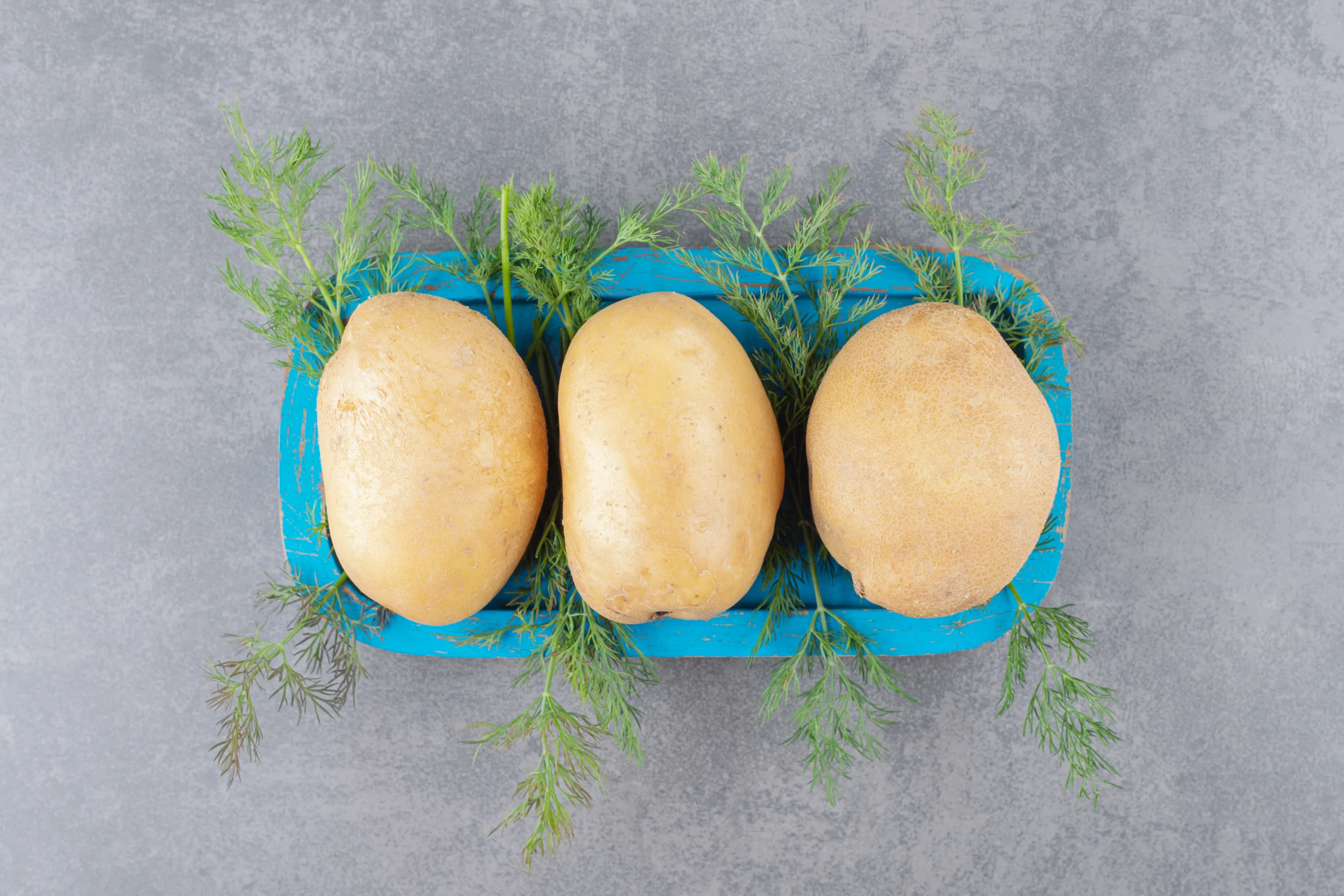
Gold potatoes, known for their smooth texture and buttery flavor, are a popular variety among the wide range of potatoes consumed worldwide. Here’s a detailed look at gold potatoes, specifically those without skin and in their raw form.
Basic Information
- Common Name: Gold Potatoes
- Scientific Name: Solanum tuberosum
- Category: Vegetable
- Varieties: While “gold” refers to a broad category, notable varieties include Yukon Gold, one of the most popular, recognized by its yellow flesh and thin skin.
Nutritional Information
- Macronutrients: Gold potatoes without skin are primarily composed of carbohydrates, with a moderate amount of protein and minimal fat. A 100-gram serving of raw gold potatoes contains approximately 16 grams of carbohydrates, 1.81 grams of protein, and less than 0.26 grams of fat.
- Micronutrients: They are a good source of vitamin C, vitamin B6, potassium, and magnesium. They also contain traces of iron and calcium.
Phytonutrients
Gold potatoes, like other varieties of potatoes, are rich in a variety of nutrients, including phytonutrients that contribute to their color, taste, and health benefits. Phytonutrients are naturally occurring compounds in plants that help protect the plant from threats like insects and ultraviolet radiation. In humans, these compounds can provide health benefits, including antioxidant and anti-inflammatory effects. Here’s a look at some of the key phytonutrients found in gold potatoes, especially when raw and without skin:
1. Carotenoids
- Types: Lutein and zeaxanthin.
- Presence: Found in the flesh of gold potatoes, giving them their characteristic yellow or golden color.
- Benefits: These antioxidants are known for supporting eye health, particularly in protecting against age-related macular degeneration and cataracts.
2. Flavonoids
- Types: Quercetin and kaempferol.
- Presence: Although the skin is often a concentrated source of flavonoids in potatoes, the flesh also contains these compounds, albeit in lower amounts.
- Benefits: Flavonoids have been studied for their antioxidant properties, which can help reduce the risk of chronic diseases such as heart disease and cancer. Quercetin, in particular, is noted for its anti-inflammatory and antihypertensive effects.
3. Phenolic Acids
- Types: Chlorogenic acid is the most prominent phenolic acid in potatoes.
- Presence: Present in significant amounts in the flesh of gold potatoes.
- Benefits: Chlorogenic acid has antioxidant properties, which can help lower blood pressure and may reduce the risk of developing certain types of cancer.
4. Glycoalkaloids
- Types: Solanine and chaconine.
- Presence: Concentrated more in the skin and the parts exposed to light, but still present in the flesh.
- Benefits: While glycoalkaloids can be toxic in high amounts, they have antimicrobial and antifungal properties at lower concentrations. They also may have anticarcinogenic properties.
Nutritional Synergy
The combination of these phytonutrients in gold potatoes, along with essential vitamins and minerals, contributes to their overall nutritional profile. The synergistic effects of these compounds can enhance their individual benefits, making gold potatoes a valuable part of a balanced diet.
Considerations
While gold potatoes are a healthy food choice, the method of preparation can significantly affect their nutrient content. Cooking methods that preserve the integrity of the potato, such as boiling and steaming, are preferred to maintain its phytonutrient content. Additionally, although the skin of potatoes is often removed for certain recipes, it’s worth noting that the skin contains a substantial amount of phytonutrients and fiber.
In summary, gold potatoes without skin still offer a range of phytonutrients with various health benefits. Including them in your diet can contribute to your overall intake of antioxidants and other beneficial compounds.
Calorie Count and Glycemic Index
- Calorie Count: A 100-gram serving of raw gold potatoes provides about 73 calories.
- Glycemic Index: The glycemic index of raw gold potatoes is not typically measured since potatoes are usually consumed cooked. Cooking methods can significantly affect the glycemic index of potatoes, with boiled gold potatoes having a medium GI.
Physical Characteristics
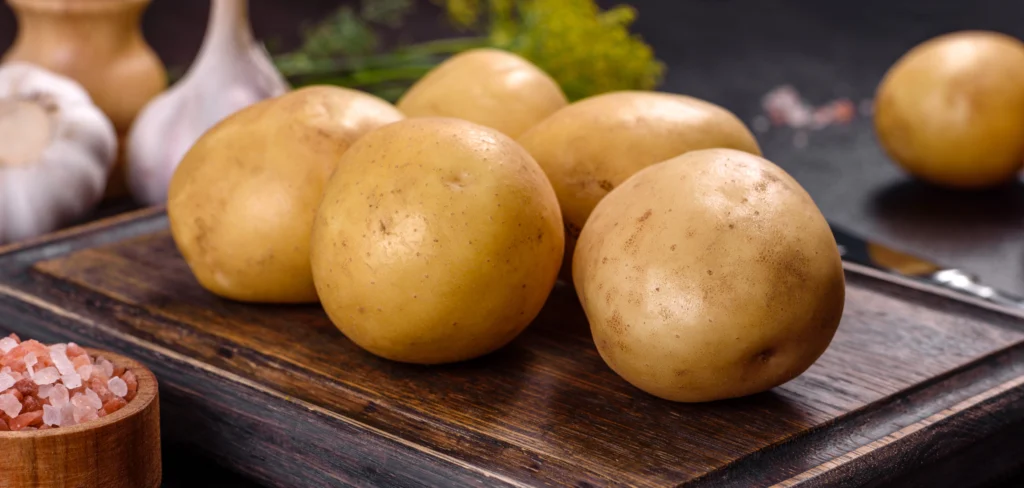
- Color: The flesh of gold potatoes is characteristically rich, yellow or golden, while the skin, when present, is light brown to gold.
- Shape: These potatoes are generally round to oval.
- Size: Size can vary from small to large, but they are often medium-sized, fitting comfortably in the palm of a hand.
- Texture: The flesh is dense and creamy, becoming even smoother when cooked.
Culinary Uses
- Common Dishes: Gold potatoes are versatile in the kitchen. They can be boiled, mashed, roasted, or used in soups and stews. Their creamy texture makes them ideal for making smooth mashed potatoes or gratins.
- Preparation Methods: To prepare, they can be peeled (although peeling is optional due to their thin skin) and cut as desired. They cook relatively quickly and absorb flavors well.
- Suitable Pairings: Gold potatoes pair well with butter, cream, garlic, herbs like rosemary and thyme, cheese, and bacon. They complement both meat and vegetable dishes.
Geographical Information
- Origin: Potatoes are native to the South American Andes, with gold varieties like Yukon Gold being developed more recently for their desirable characteristics.
- Primary Growing Regions: Gold potatoes are grown in many parts of the world, but particularly in areas with cooler growing seasons. The United States, Canada, and European countries are notable producers.
- Seasonal Availability: Potatoes are generally available year-round due to their ability to be stored for several months after harvest. The peak season for fresh potatoes is late summer through fall.
Gold potatoes, without skin and raw, offer a nutritious and versatile option for a variety of dishes, celebrated for their natural buttery flavor and creamy texture. Whether mashed, roasted, or used as a base for soups and stews, they provide a delicious and comforting element to meals.
| proximates: | |
| Water | 81.1 g |
| Energy (Atwater General Factors) | 73 kcal |
| Energy (Atwater Specific Factors) | 72 kcal |
| Nitrogen | 0.29 g |
| Protein | 1.81 g |
| Total lipid (fat) | 0.26 g |
| Ash | 0.89 g |
| Carbohydrates: | |
| Carbohydrate, by difference | 16 g |
| Total dietary fiber (AOAC 2011.25) | 13.8 g |
| High Molecular Weight Dietary Fiber (HMWDF) | 13.2 g |
| Low Molecular Weight Dietary Fiber (LMWDF) | 0.59 g |
| Sugars, Total | 0.65 g |
| Sucrose | 0.13 g |
| Glucose | 0.21 g |
| Fructose | 0.31 g |
| Lactose | <0.25 g |
| Maltose | <0.25 g |
| Minerals: | |
| Calcium, Ca | 6 mg |
| Iron, Fe | 0.37 mg |
| Magnesium, Mg | 22.3 mg |
| Phosphorus, P | 57 mg |
| Potassium, K | 446 mg |
| Sodium, Na | 2 mg |
| Zinc, Zn | 0.37 mg |
| Copper, Cu | 0.13 mg |
| Manganese, Mn | 16 mg |
| Selenium, Se | <2.5 µg |
| Molybdenum, Mo | 7.8 µg |
| Vitamins and Other Components: | |
| Vitamin C, total ascorbic acid | 23.3 mg |
| Thiamin | 0.051 mg |
| Niacin | 1.58 mg |
| Vitamin B-6 | 1.45 mg |
| Vitamin K (phylloquinone) | 0.8 µg |
| Vitamin K (Dihydrophylloquinone) | <0.1 µg |
| Vitamin K (Menaquinone-4) | <0.1 µg |