


Basic Information:
- Common Name: Tomato Paste
- Scientific Name: Solanum lycopersicum (tomato)
- Category: Condiment
- Varieties: Tomato paste is typically made from a variety of tomatoes, but common varieties used include Roma or plum tomatoes for their rich flavor and low moisture content.
Nutritional Information:
- Macronutrients (per 100 grams):
- Carbohydrates: 20.2 grams
- Proteins: 4.23 grams
- Fats: 0.73 grams
- Micronutrients:
- Vitamins:
- Vitamin A: 1015 IU (20% DV)
- Vitamin C: 14.1 mg (16% DV)
- Vitamin K: 10.4 µg (9% DV)
- Vitamin B6: 0.3 mg (18% DV)
- Vitamin E: 2.3 mg (15% DV)
- Minerals:
- Potassium: 549 mg (12% DV)
- Magnesium: 34 mg (8% DV)
- Phosphorus: 91 mg (7% DV)
- Calcium: 24 mg (2% DV)
- Iron: 4.3 mg (24% DV)
Phytonutrients:
While specific data on the phytonutrient content of canned tomato paste without added salt may vary, here are some common phytonutrients found in tomatoes, which may also be present in tomato paste:
- Lycopene:
- Lycopene is a carotenoid pigment responsible for the red color of tomatoes. It is a powerful antioxidant that has been associated with various health benefits, including reducing the risk of certain cancers, protecting against cardiovascular disease, and supporting skin health.
- Beta-Carotene:
- Beta-carotene is another carotenoid found in tomatoes that contributes to their vibrant color. It is a precursor to vitamin A and has antioxidant properties that support eye health, immune function, and skin health.
- Flavonoids:
- Tomatoes contain various flavonoids, such as quercetin and kaempferol, which have antioxidant and anti-inflammatory properties. These compounds may help reduce the risk of chronic diseases and support overall health.
- Vitamin C:
- Tomato paste is a good source of vitamin C, a powerful antioxidant that supports immune function, collagen synthesis, and wound healing.
- Vitamin E:
- Vitamin E is a fat-soluble antioxidant found in tomatoes that helps protect cells from damage caused by free radicals.
- Phenolic Compounds:
- Tomatoes contain phenolic compounds, including chlorogenic acid and caffeic acid, which have antioxidant properties and may help reduce inflammation and lower the risk of chronic diseases.
- Fiber:
- While tomato paste is not a significant source of fiber compared to whole tomatoes, it still contains some dietary fiber, which supports digestive health and helps regulate blood sugar levels.
These are just a few examples of the phytonutrients that may be present in tomato paste. Consuming tomato paste as part of a balanced diet can provide a variety of health-promoting compounds that contribute to overall well-being.
Calorie Count and Glycemic Index:
- Calorie Count: Approximately 89 calories per 100 grams
- Glycemic Index: Low
Physical Characteristics:
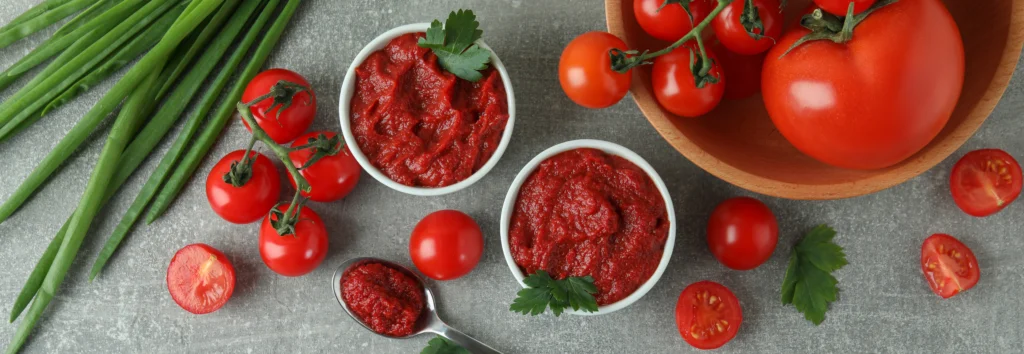
- Color: Dark red
- Shape: Thick, concentrated paste
- Size: Sold in various-sized cans or tubes
- Texture: Smooth, dense, and viscous
Culinary Uses:
- Common Dishes: Tomato paste is a versatile ingredient used in a wide range of dishes, including soups, stews, sauces (such as marinara and Bolognese), curries, chili, and casseroles. It can also be used as a flavor enhancer in dishes like meatballs, meatloaf, and braised meats.
- Preparation Methods: Tomato paste is typically added directly to recipes, either by spoonfuls or by diluting it with water or broth to achieve the desired consistency. It can also be sautéed briefly in oil to develop its flavor before adding other ingredients.
- Suitable Pairings: Tomato paste pairs well with garlic, onions, herbs (such as basil, oregano, and thyme), spices (such as paprika and cayenne), and other vegetables (such as bell peppers and mushrooms).
Geographical Information:
- Origin: Tomatoes are native to western South America and were first domesticated in pre-Columbian Mexico.
- Primary Growing Regions: Tomatoes are now grown worldwide in both temperate and tropical regions. Major producing countries include China, India, the United States, Turkey, and Italy.
- Seasonal Availability: While fresh tomatoes are typically harvested during the summer months in temperate climates, tomato paste is available year-round due to processing and canning methods.
| Proximates: | |
| Water | 71.9 g |
| Energy (Atwater General Factors) | 104 kcal |
| Energy (Atwater Specific Factors) | 89 kcal |
| Nitrogen | 0.68 g |
| Protein | 4.23 g |
| Total lipid (fat) | 0.73 g |
| Ash | 2.92 g |
| Carbohydrates: | |
| Carbohydrate, by difference | 20.2 g |
| Fiber, total dietary | 4.7 g |
| Sugars, Total | 11.7 g |
| Sucrose | <0.25 g |
| Glucose | 5.68 g |
| Fructose | 6.01 g |
| Lactose | <0.25 g |
| Maltose | <0.25 g |
| Minerals: | |
| Calcium, Ca | 37 mg |
| Iron, Fe | 3.18 mg |
| Magnesium, Mg | 49.6 mg |
| Phosphorus, P | 91 mg |
| Potassium, K | 972 mg |
| Sodium, Na | 61 mg |
| Zinc, Zn | 0.51 mg |
| Copper, Cu | 0.295 mg |
| Manganese, Mn | 0.332 mg |