

Basic Information
Name:
- Common: Almond Milk
- Scientific: There is no specific scientific name for almond milk itself as it is a processed product. However, it is derived from almonds, which belong to the species Prunus dulcis.
Category:
- Plant-based milk alternative.
Varieties:
- Unsweetened Varieties: Plain, Vanilla, Chocolate.
- Sweetened Varieties: Plain, Vanilla, Chocolate.
- Other Varieties: Barista blends (designed for better frothing), flavored versions, and fortified versions (with added vitamins and minerals).
Nutritional Information (per 1 cup/240 ml serving)
Macronutrients:
- Carbohydrates: 0.34 grams
- Proteins: 0.55 gram
- Fats: 1.22 grams
- Saturated fats: 0 grams
- Polyunsaturated fats: 0.5 grams
- Monounsaturated fats: 1.5 grams
Micronutrients:
- Vitamins:
- Vitamin E: 20-25% of the Daily Value (DV)
- Vitamin D: 25-30% DV (fortified)
- Vitamin A: 10% DV (fortified)
- Vitamin B12: 50% DV (fortified in some brands)
- Minerals:
- Calcium: 30-45% DV (fortified)
- Magnesium: 4% DV
- Phosphorus: 2% DV
- Potassium: 1-2% DV
Calorie Count:
- Approximately 30-40 calories per 1 cup (240 ml).
Glycemic Index:
- Very low, typically around 30-35 due to low carbohydrate content.
Phytonutrients
Almond milk contains several key phytonutrients that contribute to its health benefits:
1. Flavonoids:
- Includes: Quercetin and kaempferol.
- Benefits: Provide antioxidant and anti-inflammatory properties, helping to protect against oxidative stress and inflammation.
2. Phenolic Acids:
- Includes: Chlorogenic acid and ellagic acid.
- Benefits: Contribute to reducing inflammation, preventing cancer, and protecting cardiovascular health.
3. Phytosterols:
- Includes: Beta-sitosterol and campesterol.
- Benefits: Help lower cholesterol levels, improving heart health and reducing the risk of cardiovascular diseases.
4. Saponins:
- Benefits: Known for immune-boosting and cholesterol-lowering effects.
5. Tannins:
- Includes: Mainly gallotannins.
- Benefits: Provide antioxidant benefits, contributing to anti-inflammatory and antimicrobial effects.
6. Carotenoids:
- Includes: Small amounts of beta-carotene.
- Benefits: Support eye health, immune function, and act as antioxidants.
7. Alkaloids:
- Benefits: Present in trace amounts, these compounds have various pharmacological effects, including anti-inflammatory and analgesic properties.
These phytonutrients contribute to almond milk’s overall health-promoting properties, offering antioxidant, anti-inflammatory, and immune-boosting benefits.
Physical Characteristics
Color:
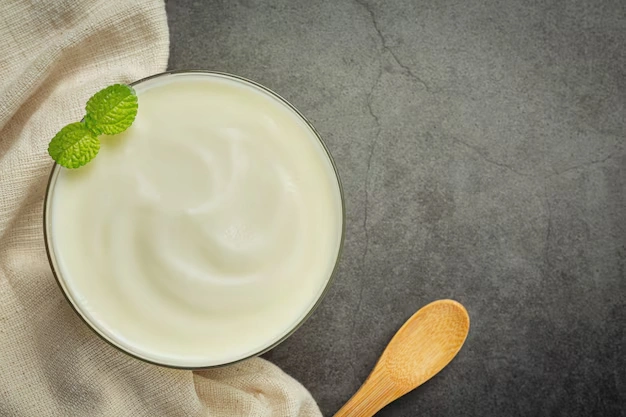
- Almond milk is typically white to off-white, resembling cow’s milk.
Shape:
- As a liquid, almond milk takes the shape of its container. It is commonly sold in cartons, bottles, and tetra packs.
Size:
- Available in various packaging sizes:
- Single servings (8 oz or 240 ml)
- Medium (32 oz or 946 ml)
- Large (64 oz or 1.89 liters)
Texture:
- Mouthfeel: Almond milk has a smooth, creamy texture. It is less viscous than cow’s milk, making it slightly more watery but still offers a pleasant creaminess. Some brands offer thicker, creamier varieties marketed as “barista blends.”
- Consistency: Generally homogeneous and stable, although some separation may occur and shaking before use is recommended.
Aroma and Flavor:
- Aroma: Mild and slightly nutty scent. The smell is generally subtle and not overpowering.
- Flavor: Delicate and mildly nutty with a hint of sweetness despite being unsweetened. It is neutral enough to blend well with both sweet and savory dishes.

Culinary Uses
Common Dishes:
- Beverages:
- Smoothies: Used as a base for fruit and vegetable smoothies.
- Coffee and Tea: Acts as a non-dairy creamer, particularly in lattes and cappuccinos.
- Hot Chocolate: Can be used as a milk substitute for a creamy texture.
- Breakfast:
- Cereal and Oatmeal: Poured over breakfast cereals or mixed into oatmeal.
- Pancakes and Waffles: Used in batter recipes as a dairy milk replacement.
- Baking:
- Cakes, Muffins, and Cookies: Acts as a substitute for cow’s milk in most baking recipes.
- Puddings and Custards: Provides a creamy texture in dairy-free desserts.
- Cooking:
- Soups and Sauces: Adds creaminess to soups like tomato bisque and chowders, and sauces such as Alfredo.
- Mashed Potatoes: Used to create a creamy consistency without dairy.
- Other:
- Dairy-Free Ice Cream: Incorporated into recipes for homemade dairy-free ice cream.
Preparation Methods:
- Direct Consumption: Can be drunk cold directly from the container.
- Heating: Can be gently heated for use in hot beverages or recipes; avoid boiling to prevent curdling.
- Blending: Frequently blended into smoothies and shakes for a creamy consistency.
- Baking: Used in equal parts as a substitute for cow’s milk in baking recipes.
- Cooking: Stirred into soups, sauces, and other dishes to add creaminess.
Suitable Pairings:
- Fruits: Works well with berries, bananas, apples, and other fruits in smoothies and breakfast bowls.
- Grains: Complements cereals, oatmeal, quinoa, and rice.
- Nuts and Seeds: Pairs with chia seeds, flaxseeds, and other nuts in various recipes.
- Vegetables: Can be used in creamy vegetable soups and mashed potatoes.
- Sweeteners and Spices: Pairs well with natural sweeteners (like honey or maple syrup) and spices (such as cinnamon and vanilla) for enhanced flavor in desserts and beverages.
Geographical Information
Origin:
- Almond milk has a long history, dating back to medieval times when it was used in the Middle East and Europe as a dairy alternative during fasting periods. It has since become popular worldwide as a plant-based milk substitute.
Primary Growing Regions for Almonds:
- California, USA: The largest producer, accounting for over 80% of the world’s almonds.
- Mediterranean Countries: Spain and Italy are significant producers, leveraging their favorable climates.
- Australia: Also a notable producer with increasing almond cultivation.
Seasonal Availability:
- Almond milk, being a processed and packaged product, is available year-round. The almonds used in its production are harvested typically in late summer to early fall, but modern processing and storage methods ensure a consistent supply throughout the year. Shelf-stable almond milk does not require refrigeration until opened, making it convenient for long-term storage.
| Proximates: | |
| Water | 97.4 g |
| Energy (Atwater General Factors) | 15 kcal |
| Energy (Atwater Specific Factors) | 15 kcal |
| Nitrogen | 0.09 g |
| Protein | 0.55 g |
| Total lipid (fat) | 1.22 g |
| Total fat (NLEA) | 1.11 g |
| Ash | 0.49 g |
| Carbohydrates: | |
| Carbohydrate, by difference | 0.34 g |
| Fiber, total dietary | <0.45 g |
| Sucrose | <0.25 g |
| Glucose | <0.25 g |
| Fructose | <0.25 g |
| Lactose | <0.25 g |
| Maltose | <0.25 g |
| Galactose | <0.1 g |
| Oligosaccharides: | |
| Raffinose | 0.01 g |
| Stachyose | 0.01 g |
| Minerals: | |
| Calcium, Ca | 173 mg |
| Iron, Fe | 0.29 mg |
| Magnesium, Mg | 6.8 mg |
| Phosphorus, P | 30 mg |
| Potassium, K | 31 mg |
| Sodium, Na | 60 mg |
| Zinc, Zn | 0.17 mg |
| Copper, Cu | 0.021 mg |
| Manganese, Mn | 0.045 mg |
| Iodine, I | <10 µg |
| Selenium, Se | <2.5 µg |
| Molybdenum, Mo | <2.5 µg |
| Vitamins and Other Components: | |
| Thiamin | <0.011 mg |
| Riboflavin | 0.033 mg |
| Niacin | 0.074 mg |
| Vitamin B-6 | <0.01 mg |
| Biotin | 1.02 µg |
| Folate, total | <6 µg |
| Vitamin B-12 | 0.34 µg |
| Vitamin A, RAE | 41 µg |
| Retinol | 41 µg |
| Vitamin E (alpha-tocopherol) | 3.32 µg |
| Tocopherol, gamma | 0.03 µg |
| Vitamin D (D2 + D3), International Units | 37.1 IU |
| Vitamin D (D2 + D3) | 0.93 µg |
| Vitamin D2 (ergocalciferol) | 0.93 µg |
| Vitamin D3 (cholecalciferol) | <0.1 µg |
| Lipids: | |
| Fatty acids, total saturated | 0.104 g |
| SFA 4:0 | 0.004 g |
| SFA 14:0 | 0.002 g |
| SFA 15:0 | 0.001 g |
| SFA 16:0 | 0.078 g |
| SFA 17:0 | 0.001 g |
| SFA 18:0 | 0.02 g |
| Fatty acids, total monounsaturated | 0.729 g |
| MUFA 16:1 c | 0.006 g |
| MUFA 17:1 | 0.001 g |
| MUFA 17:1 c | 0.001 g |
| MUFA 18:1 c | 0.721 g |
| MUFA 20:1 c | 0.001 g |
| Fatty acids, total polyunsaturated | 0.276 g |
| PUFA 18:2 c | 0.276 g |
| PUFA 18:2 n-6 c,c | 0.276 g |
| PUFA 18:3 c | 0.001 g |
| PUFA 18:3 n-3 c,c,c (ALA) | 0.001 g |