
Bananas, both ripe and slightly ripe, are a staple fruit enjoyed worldwide for their nutritional value, versatility in recipes, and ease of consumption. Below is a comprehensive overview based on the requested categories:
Basic Information
- Name: Banana (Ripe and Slightly Ripe, Raw)
- Scientific Name: Musa spp.
- Category: Fruit
- Varieties: There are many varieties of bananas, but the most widely consumed include the Cavendish, which is most common in international markets, as well as plantain bananas, Lady Finger bananas, and Red bananas.
Nutritional Information
- Macronutrients:
- Carbohydrates: Ripe bananas contain approximately 22-23g of carbs per 100g, with slightly ripe bananas having slightly less due to lower sugar content.
- Proteins: About 0.74g per 100g.
- Fats: less than 0.29g per 100g.
- Micronutrients:
- Vitamins: High in Vitamin B6 and Vitamin C, with ripe bananas offering slightly more Vitamin C due to the natural ripening process.
- Minerals: Good source of potassium and magnesium.
- Phytonutrients:
Bananas, both ripe and slightly ripe, are a rich source of various phytonutrients that contribute to their health benefits. The phytonutrient composition can vary slightly between slightly ripe (greener) and fully ripe bananas, affecting their nutritional profile and health implications. Here’s an overview of the key phytonutrients found in bananas at different stages of ripeness:
Phytonutrients in Slightly Ripe and Ripe Bananas
- Polyphenols:
- Catechins: Found in both ripe and slightly ripe bananas, catechins are antioxidants that may help reduce inflammation and lower the risk of chronic diseases. The concentration can vary, with slightly ripe bananas potentially having higher levels due to less breakdown of these compounds.
- Gallocatechin: Similar to catechins, gallocatechin contributes to the antioxidant capacity and may be more prevalent in slightly ripe bananas.
- Dopamine:
- Contrary to popular belief, the dopamine in bananas does not cross the blood-brain barrier and thus doesn’t directly affect mood. However, it acts as an antioxidant. The level of dopamine increases as bananas ripen, making ripe bananas a better source of this particular antioxidant.
- Carotenoids:
- Beta-carotene: Present in both ripe and slightly ripe bananas, beta-carotene is a precursor to vitamin A, important for vision, immunity, and skin health. Ripe bananas may have slightly higher levels as the yellow pigment becomes more pronounced.
- Resistant Starch and Dietary Fiber (more relevant to slightly ripe bananas):
- While not phytonutrients, the presence of resistant starch in slightly ripe bananas is worth noting. Resistant starch acts as a prebiotic, fostering healthy gut bacteria. As bananas ripen, this starch converts to natural sugars, decreasing the resistant starch content but increasing the sweetness.
- Tryptophan:
- Bananas contain tryptophan, an amino acid that can help the body produce serotonin, known for its mood-stabilizing effects. While not a phytonutrient, its presence contributes to the overall health benefits of consuming bananas.
Health Implications
- Antioxidant Properties: The polyphenols and dopamine in bananas offer antioxidant benefits, which can help protect the body from oxidative stress and inflammation.
- Gut Health: The resistant starch in slightly ripe bananas supports gut health by feeding beneficial gut bacteria, contributing to improved digestion and possibly aiding in weight management.
- Heart Health: The potassium in bananas is vital for heart health, helping to manage blood pressure levels. While potassium is a mineral rather than a phytonutrient, it’s an essential part of the nutritional profile of bananas.
Considerations
- The shift from resistant starch to natural sugars in ripening bananas means that slightly ripe bananas may have a lower glycemic index (GI) compared to fully ripe ones, making them potentially a better option for individuals monitoring blood sugar levels.
- The antioxidant levels and types of phytonutrients present can vary slightly based on ripeness, with ripe bananas offering increased antioxidant dopamine but slightly ripe bananas retaining more resistant starch and possibly higher levels of certain polyphenols.
In summary, both slightly ripe and ripe bananas offer a range of phytonutrients with beneficial health properties. Choosing between them can depend on dietary needs, such as lower sugar content and higher resistant starch in slightly ripe bananas versus higher antioxidant levels in ripe bananas.
- Calorie Count: Approximately 88 calories per 100g.
- Glycemic Index:
- Ripe bananas have a GI of around 51-56.
- Slightly ripe bananas may have a slightly lower GI due to their lower sugar content.
Physical Characteristics
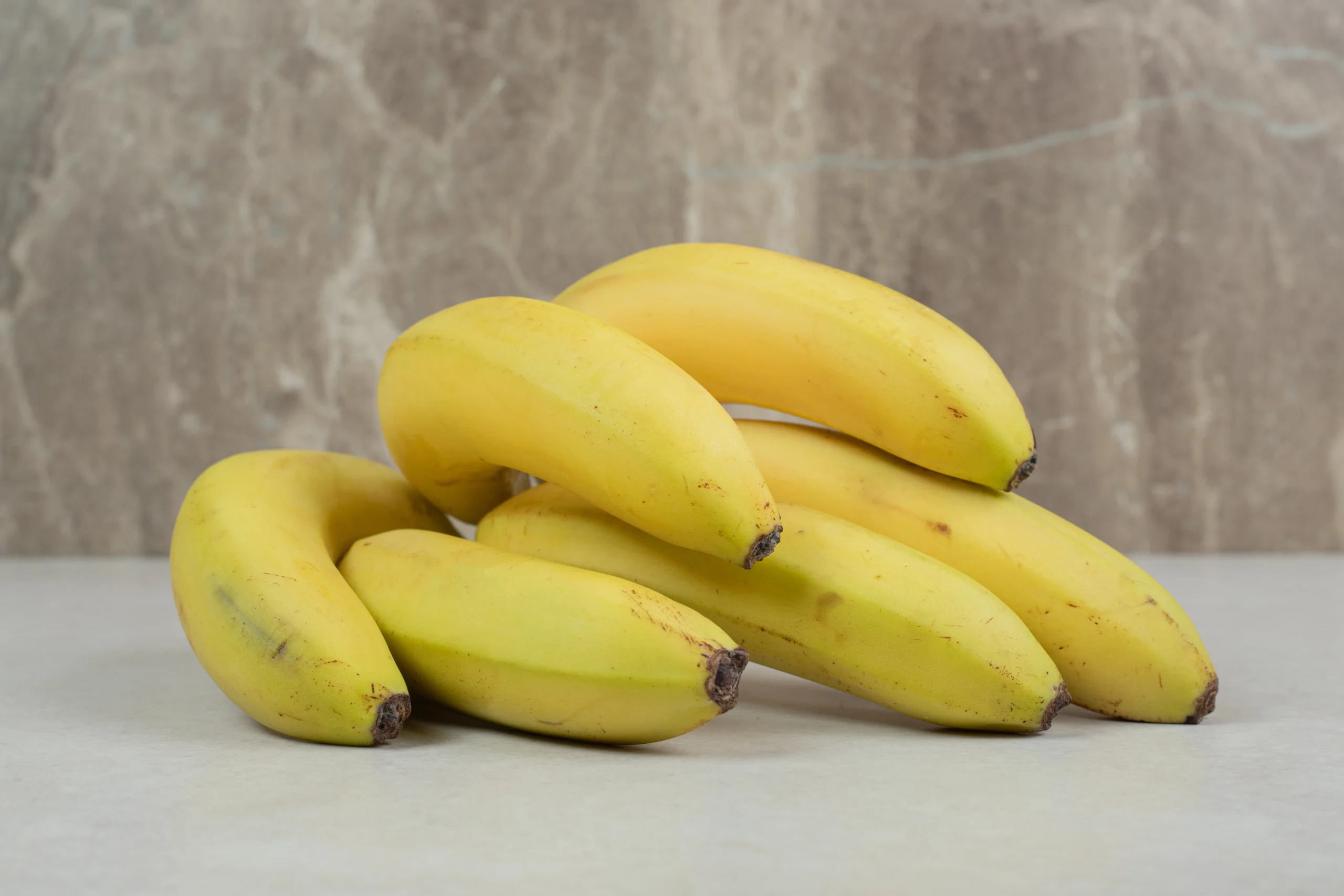
- Color: Ripe bananas are bright yellow with possible brown spots, indicating higher sugar content. Slightly ripe bananas are more uniformly yellow.
- Shape: Elongated and curved.
- Size: Typically 6 to 8 inches in length, depending on the variety.
- Texture: Ripe bananas are soft and easy to mash, while slightly ripe bananas are firmer and less mushy.
Culinary Uses
- Common Dishes: Ripe bananas are often eaten raw, used in baking for banana bread, muffins, or pancakes, and in smoothies for natural sweetness. Slightly ripe bananas are also eaten raw and may be preferred for their less sweet taste and firmer texture.
- Preparation Methods: No cooking is needed for raw consumption. For culinary uses, ripe bananas are mashed or blended, while slightly ripe bananas can be sliced into cereals or salads.
- Suitable Pairings: Ripe bananas pair well with oatmeal, yogurt, peanut butter, and chocolate. Slightly ripe bananas are versatile and can complement both sweet and savory dishes.
Geographical Information
- Origin: Southeast Asia and Papua New Guinea.
- Primary Growing Regions: Today, bananas are cultivated in tropical and subtropical regions around the world, with India, China, the Philippines, and Ecuador among the top producers.
- Seasonal Availability: Bananas, including ripe and slightly ripe varieties, are available year-round due to continuous harvest cycles in different regions.
Bananas, whether ripe or slightly ripe, are a nutritious and versatile fruit that serves as a key dietary staple in many cultures. Their ease of consumption, along with their health benefits and culinary flexibility, makes them a favored choice worldwide.
| Proximates: | |
| Water | 75.3g |
| Energy (Atwater General Factors) | 98kcal |
| Energy (Atwater Specific Factors) | 88kcal |
| Nitrogen | 0.12g |
| Protein | 0.74g |
| Total lipid (fat) | 0.29g |
| Ash | 0.7g |
| Carbohydrates: | |
| Carbohydrate, by difference | 23g |
| Carbohydrate, by summation | 21.2g |
| Fiber, total dietary | 1.7g |
| Sugars, Total | 15.8g |
| Sucrose | 4.18g |
| Glucose | 5.55g |
| Fructose | 6.09g |
| Lactose | <0.25g |
| Maltose | <0.25g |
| Galactose | <0.1g |
| Starch | 3.66g |
| Organic acids: | |
| Citric acid | 341mg |
| Malic acid | 369mg |
| Minerals: | |
| Calcium, Ca | 5mg |
| Iron, Fe | <0.4mg |
| Magnesium, Mg | 28mg |
| Phosphorus, P | 22mg |
| Potassium, K | 326mg |
| Sodium, Na | <4mg |
| Zinc, Zn | 0.16mg |
| Copper, Cu | 0.101mg |
| Manganese, Mn | 0.258mg |
| Iodine, I | <10µg |
| Selenium, Se | <2.5 µg |
| Vitamins and Other Components: | |
| Vitamin C, total ascorbic acid | 12.3mg |
| Thiamin | 0.056mg |
| Riboflavin | <0.1mg |
| Niacin | 0.662mg |
| Vitamin B-6 | 0.209mg |
| Biotin | <0.004µg |
| Folate, total | 14 µg |
| Vitamin A, RAE | 1 µg |
| Carotene, beta | 8 µg |
| cis-beta-Carotene | 1 µg |
| trans-beta-Carotene | 7 µg |
| Carotene, alpha | 7 µg |
| Vitamin K (phylloquinone) | 0.1µg |
| Vitamin K (Dihydrophylloquinone) | 0 µg |
| Vitamin K (Menaquinone-4) | 0 µg |