


Black beans, especially when canned with sodium added and then drained and rinsed, offer a convenient and nutritious option for a variety of dietary needs. Here’s a detailed overview based on the requested categories:
Basic Information
- Name: Black Beans, Canned, Sodium Added, Drained and Rinsed
- Scientific Name: Phaseolus vulgaris
- Category: Legume (Vegetable)
- Varieties: While this entry focuses on canned black beans with added sodium, black beans themselves do not have significant varieties in the context of canned goods. However, there might be slight differences in size and taste based on the brand and origin.
Nutritional Information
- Macronutrients:
- Carbohydrates: Approximately 19.8g per 100g, mainly from fibers and starches.
- Proteins: About 6.91g per 100g, making them a good plant-based protein source.
- Fats: Negligible; generally less than 1.27g per 100g.
- Micronutrients:
- Vitamins: Good source of folate (vitamin B9).
- Minerals: Rich in iron, magnesium, potassium, and zinc. The process of draining and rinsing can reduce the sodium content significantly compared to the undrained product.
- phytonutrients:
Black beans, even when canned with sodium added and subsequently drained and rinsed, retain a significant portion of their natural phytonutrients. These compounds contribute to the health benefits associated with consuming black beans. Below is an overview of the key phytonutrients found in black beans and their implications for health:
- Anthocyanins:
- These are a type of flavonoid that give black beans their deep, dark color. Anthocyanins are potent antioxidants that help combat oxidative stress in the body and have been linked to a reduced risk of chronic diseases such as heart disease and cancer.
- Flavonoids:
- Besides anthocyanins, black beans contain other flavonoids like quercetin and kaempferol, known for their anti-inflammatory and antioxidant properties. These substances can help reduce the risk of several chronic conditions and support overall health.
- Phenolic Acids:
- Black beans are a good source of phenolic acids, including ferulic acid, which has antioxidant properties. Phenolic acids can help protect the body against oxidative damage and support heart health.
- Tannins:
- Tannins, which have astringent properties, are also present in black beans. They are known for their ability to bind to proteins and other organic compounds, contributing to the antioxidant capacity of the beans.
- Saponins:
- These compounds are found in many legumes, including black beans. Saponins have been shown to possess anti-inflammatory and immune-boosting properties. They may also help lower cholesterol levels and reduce the risk of heart disease.
- Resistant Starch:
- While not a phytonutrient, resistant starch is noteworthy for its prebiotic properties, feeding beneficial gut bacteria and contributing to gut health. The process of canning may alter the levels of resistant starch, but significant amounts remain, especially in beans that are slightly under-ripe before canning.
Health Implications
The phytonutrients in black beans contribute to a variety of health benefits:
- Antioxidant and Anti-inflammatory Effects: The anthocyanins, flavonoids, and phenolic acids in black beans help reduce oxidative stress and inflammation in the body, which are linked to many chronic diseases.
- Heart Health: The saponins and resistant starch in black beans can improve heart health by lowering cholesterol levels and improving blood sugar regulation.
- Digestive Health: The fiber and resistant starch in black beans support healthy digestion and promote a healthy gut microbiome.
Considerations
Draining and rinsing canned black beans can reduce the sodium content significantly, making them a healthier option compared to undrained beans. While this process might slightly reduce the concentration of water-soluble phytonutrients, black beans remain a nutritious addition to the diet. To maximize the benefits of these phytonutrients, including black beans as part of a varied and balanced diet is recommended.
- Calorie Count: Approximately 90-110 calories per 100g.
- Glycemic Index: Low; estimated around 30, making them suitable for blood sugar management.
Physical Characteristics
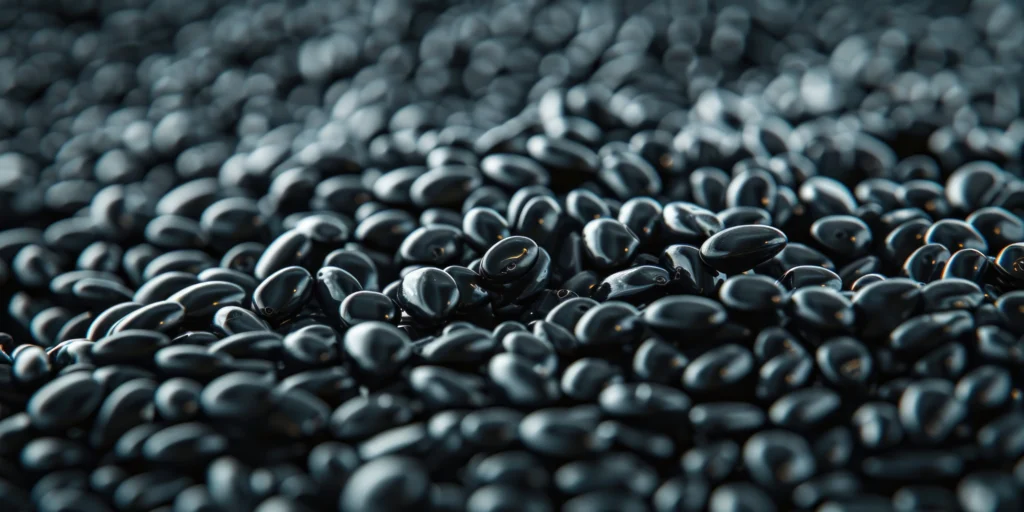
- Color: Deep black or dark purple, characteristic of black beans.
- Shape: Small, kidney-shaped.
- Size: About 1/2 inch long.
- Texture: Firm but tender with a creamy interior after cooking; the process of canning preserves their shape while making them softer than dried beans.
Culinary Uses
- Common Dishes: Widely used in soups, stews, salads, and as a side dish. Popular in Latin American cuisine, particularly in dishes like feijoada, black bean soup, and as a filling for tacos and burritos.
- Preparation Methods: Although canned and precooked, they are best heated and seasoned according to the recipe. Draining and rinsing help reduce the sodium content.
- Suitable Pairings: Complements rice in the classic dish “rice and beans,” pairs well with corn, avocados, tomatoes, and a variety of spices like cumin, chili, and garlic.
Geographical Information
- Origin: Black beans are native to the Americas, with a rich history particularly in South and Central American cuisines.
- Primary Growing Regions: Today, they are cultivated widely in various parts of the world, including India, Brazil, Indonesia, and the United States, especially in areas like North Dakota and Michigan.
- Seasonal Availability: Canned black beans are available year-round, offering a convenient and shelf-stable source of nutrition that bypasses the seasonality of fresh produce.
Canned black beans with added sodium, once drained and rinsed, provide a nutritious, versatile, and easy-to-prepare option that fits well into a variety of meals, contributing valuable nutrients and fiber to the diet.
| Proximates: | |
| Water | 70.8g |
| Energy (Atwater General Factors) | 118kcal |
| Energy (Atwater Specific Factors) | 115kcal |
| Nitrogen | 1.11g |
| Protein | 6.91g |
| Total lipid (fat) | 1.27g |
| Ash | 1.21g |
| Carbohydrates: | |
| Carbohydrate, by difference | 19.8g |
| Total dietary fiber | 6.69g |
| Starch | 11.8g |
| Minerals: | |
| Calcium, Ca | 43mg |
| Iron, Fe | 1.69mg |
| Magnesium, Mg | 32.5mg |
| Phosphorus, P | 91mg |
| Potassium, K | 253mg |
| Sodium, Na | 218mg |
| Zinc, Zn | 0.74mg |
| Copper, Cu | 0.336mg |
| Manganese, Mn | 0.332mg |