
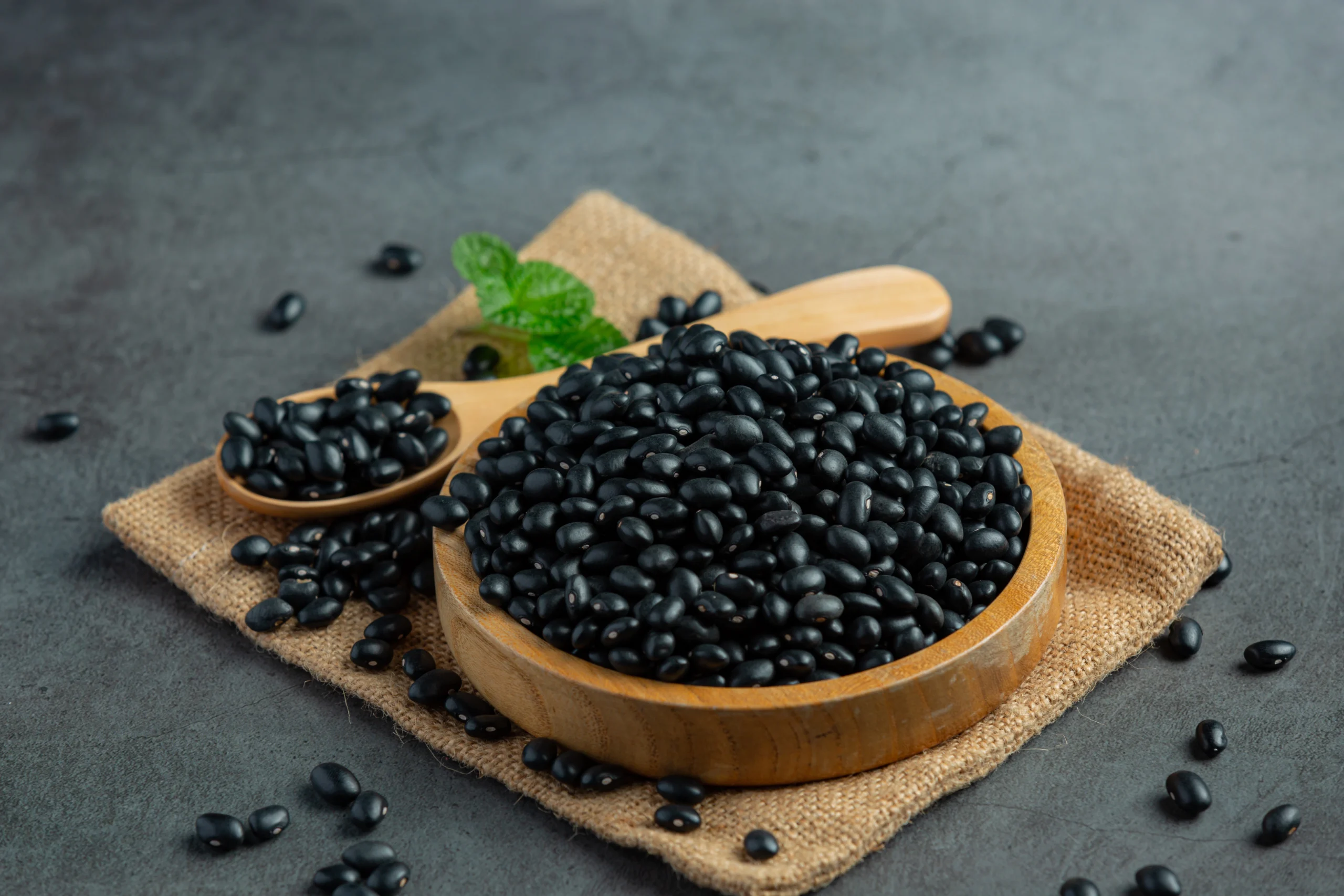
Dry black beans, a staple in many cuisines around the world, offer a wealth of nutrition and culinary versatility. Here’s a comprehensive overview:
Basic Information
- Name: Black Beans (Dry)
- Scientific Name: Phaseolus vulgaris
- Category: Legume (Vegetable)
- Varieties: While “black bean” generally refers to a single type, there are slight variations in size and taste depending on the region they are grown in. The most common variety consumed globally is often just referred to as the black bean.
Nutritional Information
- Macronutrients:
- Carbohydrates: Approximately 62g per 100g, with a significant portion being dietary fiber (about 16g).
- Proteins: About 24.4g per 100g, making them a rich source of plant-based protein.
- Fats: Low fat, with around 1.45g per 100g.
- Micronutrients:
- Vitamins: Contains B-vitamins, particularly folate (B9).
- Minerals: High in iron, magnesium, potassium, zinc, and calcium.
Phytonutrients
Dry black beans are not only a nutritious staple food but also a rich source of various phytonutrients that contribute to their health benefits. These compounds provide antioxidant, anti-inflammatory, and potential disease-preventing properties. Here’s an overview of the key phytonutrients found in dry black beans:
Phytonutrients in Dry Black Beans
- Anthocyanins:
- Dry black beans are particularly rich in anthocyanins, the pigments that give them their black color. Anthocyanins are powerful antioxidants that help protect cells from oxidative damage and may reduce the risk of chronic diseases such as heart disease and cancer.
- Flavonoids:
- Besides anthocyanins, black beans contain other flavonoids like quercetin and kaempferol. These substances have anti-inflammatory and antioxidant effects, which can contribute to the prevention of certain diseases and support overall health.
- Phenolic Acids:
- Black beans are a source of phenolic acids, including ferulic acid, which has antioxidant properties. These compounds help to neutralize free radicals, reducing oxidative stress and potentially lowering the risk of chronic diseases.
- Tannins:
- Tannins, which have astringent properties, are present in black beans. They contribute to the antioxidant activity of the beans and may also have antimicrobial and anti-parasitic effects.
- Phytosterols:
- Black beans contain phytosterols, plant compounds that can help lower cholesterol levels in the blood. Phytosterols are structurally similar to cholesterol and can block its absorption in the digestive system, promoting heart health.
- Resistant Starch:
- Although not a phytonutrient, resistant starch in black beans acts as a prebiotic, feeding beneficial gut bacteria and improving gut health. This type of starch may also aid in blood sugar control and provide a feeling of fullness.
- Saponins:
- Saponins found in black beans have immune-boosting properties and may help lower blood lipid and cholesterol levels. They also possess antioxidant and anti-inflammatory benefits.
Health Implications
The phytonutrients in dry black beans contribute to a variety of health benefits:
- Antioxidant and Anti-inflammatory Effects: The combination of anthocyanins, flavonoids, and phenolic acids in black beans helps to reduce inflammation and protect the body against oxidative stress.
- Heart Health: The phytosterols and saponins in black beans support cardiovascular health by improving lipid profiles and lowering cholesterol levels.
- Digestive Health: The prebiotic effects of resistant starch promote a healthy gut microbiome, which is crucial for overall digestive health and may impact systemic health beyond the gut.
Considerations
While black beans are highly nutritious, consuming them as part of a balanced and varied diet is essential to maximize health benefits. Preparing black beans properly by soaking and cooking them can enhance the bioavailability of these phytonutrients and reduce antinutrients that might inhibit mineral absorption.
- Calorie Count: Around 339 calories per 100g.
- Glycemic Index: Low to medium; estimated around 30, beneficial for blood sugar control.
Physical Characteristics
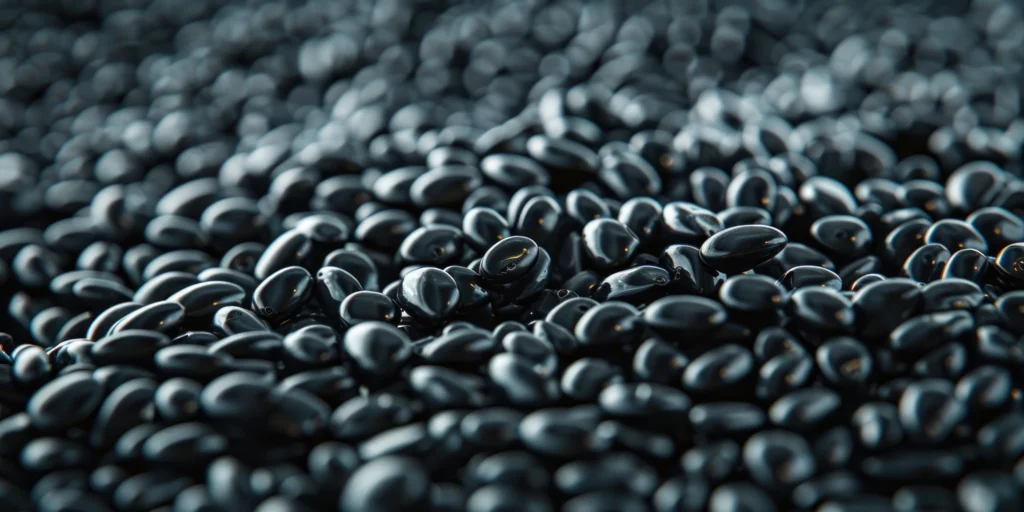
- Color: Black, sometimes with a slight shiny appearance.
- Shape: Small and oval with a slight kidney shape.
- Size: Generally about 1/2 inch long.
- Texture: Hard and dense when dry; become soft and creamy when cooked.
Culinary Uses
- Common Dishes: Integral to Latin American and Caribbean cuisines, used in soups, stews, salads, and as a main protein source in dishes like feijoada, black bean soup, and burritos.
- Preparation Methods: Require soaking (overnight or quick-soak methods) before cooking to reduce cooking time and improve digestibility. Can be boiled, simmered, or included in slow cooker recipes.
- Suitable Pairings: Complements rice in dishes like Moros y Cristianos, pairs well with corn, avocado, lime, cilantro, and a variety of spices such as cumin, garlic, and chili.
Geographical Information
- Origin: Originated in the Americas, with a significant history in both South and Central American diets.
- Primary Growing Regions: Today, they are widely cultivated in India, Brazil, Indonesia, China, and the United States, among others.
- Seasonal Availability: As a dry product, black beans are available year-round, providing a stable and long-lasting source of nutrition.
Dry black beans are prized for their nutritional benefits, including high fiber and protein content, which support heart health and digestive well-being. Their low glycemic index makes them an excellent choice for maintaining steady blood sugar levels. From a culinary standpoint, they offer a versatile base for a myriad of dishes, absorbing flavors well while contributing a satisfying texture.
| Proximates: | |
| Water | 0g |
| Protein | 24.4g |
| Total lipid (fat) | 1.45g |
| Carbohydrates: | |
| Fiber, total dietary | 4.2g |
| Starch | 36.6g |
| Minerals: | |
| Calcium, Ca | 191mg |
| Iron, Fe | 5.34mg |
| Magnesium, Mg | 180mg |
| Phosphorus, P | 522mg |
| Potassium, K | 1540mg |
| Zinc, Zn | 3.37mg |
| Copper, Cu | 1.12mg |
| Manganese, Mn | 2.08mg |
| Sulfur, S | 244mg |
| Nickel, Ni | 193µg |
| Molybdenum, Mo | 920µg |
| Cobalt, Co | 43.8µg |
| Boron, B | 1250µg |