
Basic Information
- Common Name: Beef Chuck Roast (Boneless)
- Scientific Name: Part of Bos taurus (domestic cattle)
- Category: Meat (Red Meat)
Varieties
Beef chuck roast comes from the chuck section of cattle, which is the shoulder area. This category includes various cuts, such as the chuck eye roast, chuck shoulder pot roast, and arm chuck roast. The term “choice” refers to the USDA grade, indicating high quality with moderate marbling.
Nutritional Information
- Macronutrients: Beef chuck roast is rich in proteins and fats, with no carbohydrates. A typical serving (100 grams of raw, choice, boneless beef chuck roast) contains:
- Proteins: About 18.4 grams
- Fats: Approximately 17.8 grams (varies with marbling)
- Carbohydrates: 0 grams
- Micronutrients: A good source of vitamins B12, B6, niacin, and minerals such as iron, selenium, zinc, and phosphorus.
Phytonutrients
Beef, including boneless chuck roast, is not typically discussed in terms of phytonutrients, as these compounds are predominantly found in plant-based foods and are responsible for various health benefits, including antioxidant and anti-inflammatory effects. Instead, beef is valued for its high content of proteins, vitamins, and minerals that are crucial for health. However, beef does contain several important nutrients and bioactive compounds worth noting:
1. Proteins and Amino Acids
- Beef is a rich source of high-quality protein, providing all nine essential amino acids necessary for the body’s growth, repair, and maintenance.
2. Fats
- Saturated and Monounsaturated Fats: Beef contains both saturated and monounsaturated fats, including omega-3 fatty acids, particularly in grass-fed beef.
- Conjugated Linoleic Acid (CLA): This naturally occurring trans fat in beef (and other ruminant meats) has been associated with various health benefits, including potential anti-carcinogenic properties and the ability to reduce body fat.
3. Vitamins
- B Vitamins: Beef is an excellent source of various B vitamins, particularly vitamin B12, which is essential for red blood cell formation, neurological function, and DNA synthesis. It also provides niacin (B3), riboflavin (B2), B6, and others.
- Fat-Soluble Vitamins: Depending on the diet of the cattle, beef can contain vitamins D and E, which play roles in bone health and as antioxidants, respectively.
4. Minerals
- Iron: Beef is a significant source of heme iron, the form of iron most easily absorbed by the body, crucial for carrying oxygen in the blood.
- Zinc: Essential for immune function, wound healing, and DNA synthesis.
- Selenium: Plays a critical role in the body’s antioxidant defense system and thyroid hormone metabolism.
5. Bioactive Compounds
- Creatine: Found naturally in beef, creatine supplies energy to muscles and is beneficial for improving muscle mass and performance in various types of exercise.
- Carnosine: A compound important for muscle function, beef is one of the dietary sources of carnosine, which has antioxidant and anti-glycation properties.
While beef does not contain phytonutrients in the way fruits and vegetables do, the nutrients and bioactive compounds it provides are essential for maintaining muscle mass, supporting metabolic processes, and overall health. Consuming beef as part of a balanced diet, especially when choosing leaner cuts and controlling portion sizes, can contribute to a healthy nutritional intake.
- Calorie Count: Roughly 250 calories per 100 grams.
- Glycemic Index: Not applicable (meat does not contain carbohydrates).
Physical Characteristics
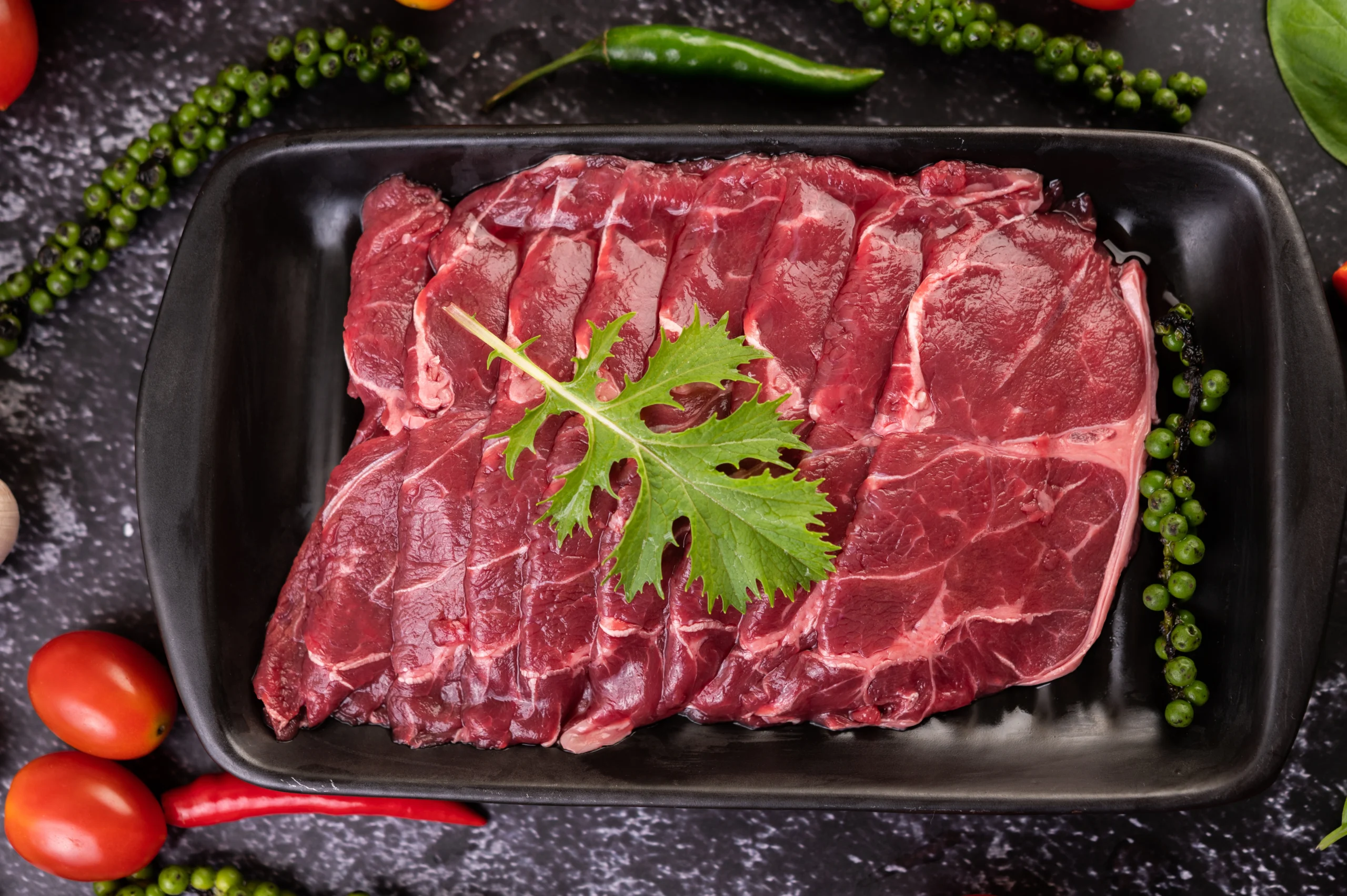
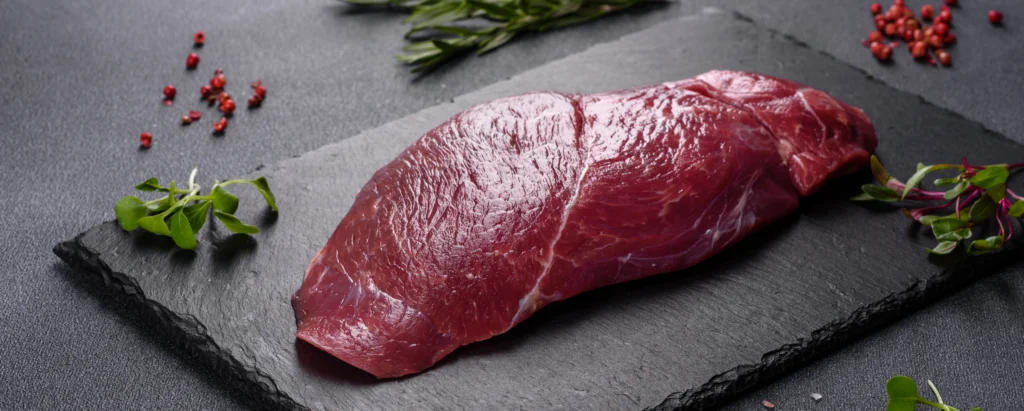
- Color: Raw beef chuck roast is a deep red color, with white marbling throughout.
- Shape: The shape can vary based on the specific cut but generally is a thick, rectangular piece.
- Size: Size can vary widely, but boneless chuck roasts are often between 2 to 5 pounds.
- Texture: Raw beef chuck is firm and slightly moist. The marbling (fat throughout the meat) contributes to its tenderness and flavor when cooked.
Culinary Uses
Beef chuck roast is well-suited for slow cooking methods due to its rich fat content and connective tissues, which break down and tenderize the meat over long cooking periods.
- Common Dishes: Pot roast, stews, and beef bourguignon. It’s also used for pulled beef recipes.
- Preparation Methods: Best cooked slowly, such as braising, slow roasting, or in a slow cooker. These methods help tenderize the meat and enhance its flavor.
- Suitable Pairings: Pairs well with root vegetables (carrots, potatoes, onions), as well as herbs and spices like rosemary, thyme, garlic, and bay leaves.
Geographical Information
- Origin: Domestic cattle (Bos taurus) have been raised for their meat, milk, and hides for thousands of years, with origins tracing back to Europe, Asia, and Africa.
- Primary Growing Regions: Beef is produced worldwide, with the United States, Brazil, and China being among the top producers.
- Seasonal Availability: Available year-round due to controlled farming and livestock management practices.
Beef chuck roast is a flavorful and versatile cut of meat that benefits from slow cooking methods, making it a popular choice for hearty meals and comfort food dishes. Its nutritional profile provides a rich source of protein and essential nutrients, making it a valuable part of a balanced diet when consumed in moderation.
| Proximates: | |
| Water | 63.4 g |
| Energy (Atwater General Factors) | 232 kcal |
| Energy (Atwater Specific Factors) | 237 kcal |
| Nitrogen | 2.94 g |
| Protein | 18.4 g |
| Total lipid (fat) | 17.8 g |
| Ash | 0.89 g |
| Carbohydrates: | |
| Carbohydrate, by difference | 0 g |
| Minerals: | |
| Calcium, Ca | 5 mg |
| Iron, Fe | 2.06 g |
| Magnesium, Mg | 17 mg |
| Phosphorus, P | 151 mg |
| Potassium, K | 281 mg |
| Sodium, Na | 48 mg |
| Zinc, Zn | 5.39 mg |
| Copper, Cu | 0.054 mg |
| Manganese, Mn | <0.0125mg |
| Lipids: | |
| Fatty acids, total saturated | 6.34 g |
| Fatty acids, total monounsaturated | 7.02 g |
| Fatty acids, total polyunsaturated | 0.552 g |
| Fatty acids, total trans | 0.669 g |
| Cholesterol | 67 mg |