


Basic Information
- Common Name: Ribeye Steak
- Scientific Name: Bos taurus
- Category: Meat (Red Meat)
- Varieties: The ribeye steak comes primarily in two varieties based on its bone status: bone-in and boneless. The “choice” grade indicates a high level of marbling and tenderness, sitting between “select” and “prime” in the USDA grading system.
Nutritional Information
- Macronutrients: Ribeye steak is known for its rich marbling, which contributes to its high fat content, alongside being an excellent source of protein. A typical serving (3 ounces or approximately 85 grams, raw, choice grade) contains:
- Proteins: About 18.7 grams
- Fats: Approximately 20 grams
- Carbohydrates: 0 grams
- Micronutrients: A good source of B vitamins, especially B12 and niacin, and minerals like zinc, selenium, and iron.
Phytonutrients
Beef, including ribeye steak, does not contain phytonutrients, as these compounds are specific to plants and are known for their health-promoting effects and ability to protect the body from various diseases. However, beef is a valuable source of several nutrients and bioactive compounds that play essential roles in health and wellness. Here’s an overview of the key nutrients and bioactive compounds found in beef, particularly in a choice grade, boneless, raw ribeye steak:
1. Proteins and Amino Acids
- Beef is an excellent source of high-quality protein, providing all essential amino acids necessary for the body’s growth, repair, and maintenance.
2. Fats
- Saturated Fats: Present in beef, these fats are essential for various bodily functions but should be consumed in moderation.
- Monounsaturated Fats: Also found in beef, including oleic acid, which is beneficial for heart health.
- Conjugated Linoleic Acid (CLA): This type of trans fat found in beef has been associated with several health benefits, including reduced body fat and improved immune function.
- Omega-3 Fatty Acids: Found in smaller amounts, especially in grass-fed beef, beneficial for heart health.
3. Vitamins
- B Vitamins: Ribeye steak is particularly rich in vitamin B12, essential for brain health and blood formation, and provides niacin (B3), vitamin B6, and riboflavin (B2), important for energy metabolism.
- Fat-Soluble Vitamins: Beef can contain vitamins D and E, with vitamin E acting as an antioxidant.
4. Minerals
- Iron: Provides heme iron, which is more easily absorbed by the body than non-heme iron from plant sources, crucial for transporting oxygen in the bloodstream.
- Zinc: Critical for immune function, wound healing, and DNA synthesis.
- Selenium: Important for antioxidant defense and healthy thyroid function.
5. Bioactive Compounds
- Creatine: Supports muscle function and energy production, beneficial for physical performance.
- Carnosine: Acts as an antioxidant, potentially protecting against aging and disease.
While beef ribeye steak does not offer the phytonutrients found in fruits and vegetables, its rich content of proteins, fats, vitamins, minerals, and other bioactive compounds makes it a nutritious food choice that contributes to a balanced diet. Consuming beef alongside a variety of plant-based foods can help ensure a comprehensive intake of essential nutrients for overall health.
- Calorie Count: Roughly 220-250 calories per 3-ounce serving.
- Glycemic Index: Not applicable, as it does not contain carbohydrates.
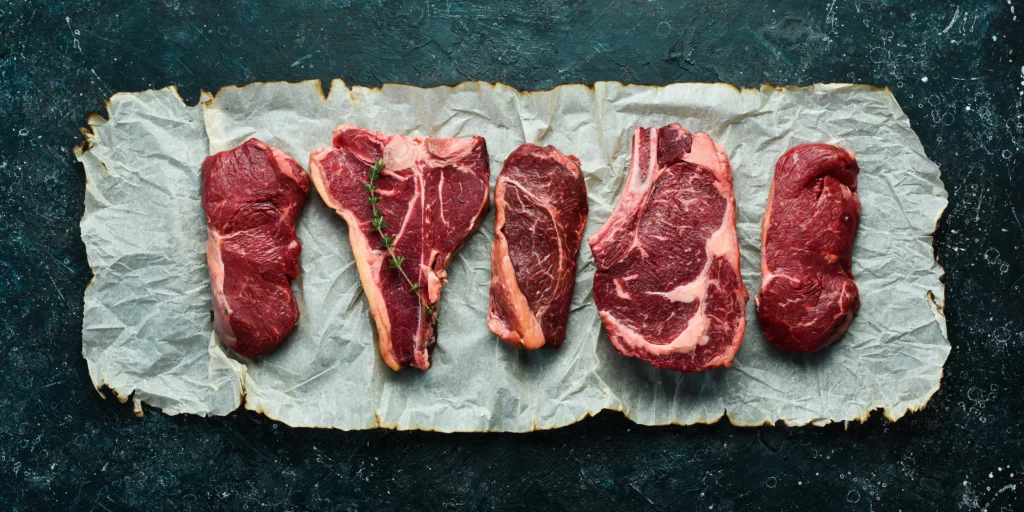
Physical Characteristics
- Color: Raw ribeye steak is a vibrant red, with white to yellowish marbling throughout.
- Shape: Typically round or oval, depending on the cut.
- Size: Thickness varies but is generally around 1 to 2 inches.
- Texture: Known for its tender texture and rich marbling, which provides juiciness and flavor.
Culinary Uses
Ribeye steak is highly prized for its flavor and tenderness:
- Common Dishes: Often grilled or pan-seared and served as a standalone main dish, sometimes accompanied by herb butter or sauces like béarnaise.
- Preparation Methods: Best cooked over high heat to develop a flavorful crust while maintaining a juicy interior. Can be cooked to various degrees of doneness, from rare to well-done, according to preference.
- Suitable Pairings: Complements hearty sides like roasted potatoes, grilled vegetables, or a simple salad. Pairs well with bold red wines.
Geographical Information
- Origin: Domestic cattle have been an integral part of agriculture for thousands of years, with origins in the Near East and spread across the globe.
- Primary Growing Regions: Beef is produced worldwide, with the United States, Brazil, the European Union, and China being among the largest producers.
- Seasonal Availability: Available year-round due to consistent beef production and distribution practices.
Ribeye steak, especially of the choice grade, is a favorite among steak enthusiasts for its rich flavor, tenderness, and succulent marbling. Its nutritional profile, providing a high content of protein and essential nutrients, makes it a valuable addition to a balanced diet when consumed in moderation and as part of a varied meal plan.
| Proximates: | |
| Water | 60.6 g |
| Energy (Atwater General Factors) | 254 kcal |
| Energy (Atwater Specific Factors) | 260 kcal |
| Nitrogen | 3 g |
| Protein | 18.7 g |
| Total lipid (fat) | 20 g |
| Ash | 0.89 g |
| Carbohydrates: | |
| Carbohydrate, by difference | 0 g |
| Minerals: | |
| Calcium, Ca | 4 mg |
| Iron, Fe | 1.64 mg |
| Magnesium, Mg | 16.7 mg |
| Phosphorus, P | 150 mg |
| Potassium, K | 288 mg |
| Sodium, Na | 43 mg |
| Zinc, Zn | 4.06 mg |
| Copper, Cu | 0.043 mg |
| Manganese, Mn | <0.0125 mg |
| Lipids: | |
| Fatty acids, total saturated | 7.79 g |
| Fatty acids, total monounsaturated | 7.73 g |
| Fatty acids, total polyunsaturated | 0.629 g |
| Fatty acids, total trans | 0.974 g |
| Cholesterol | 63 mg |