


Basic Information
- Common Name: Top Round (Beef)
- Scientific Name: Bos taurus
- Category: Meat (Red Meat)
- Varieties: The “choice” grade refers to a USDA classification that indicates a higher quality of beef with more marbling than “select” but less than “prime.” The top round is a specific cut from the hindquarter of the cow, just above the knee area, known for being lean and flavorful.
Nutritional Information
- Macronutrients: Top round beef is a lean cut, high in protein, with a moderate amount of fat, and contains no carbohydrates. A typical serving (100 grams of raw, choice grade) includes:
- Proteins: About 21.5 grams
- Fats: Approximately 5.7 grams, depending on specific trimming and marbling.
- Carbohydrates: 0.85 grams
- Micronutrients: Rich in B vitamins (especially B12 and niacin), and minerals such as iron, zinc, and selenium.
Phytonutrients
Beef, including the round, top round, boneless, choice, raw, does not contain phytonutrients, as these compounds are specific to plants. Phytonutrients are known for their health-promoting properties and are found in fruits, vegetables, grains, and other plant-based foods. However, beef provides a range of nutrients and bioactive compounds beneficial for health. Here’s an overview of the key nutrients found in beef, particularly in a choice grade, boneless, raw top round cut:
1. Proteins and Amino Acids
- Beef is an excellent source of high-quality protein, providing all essential amino acids needed for muscle growth, repair, and overall body maintenance.
2. Fats
- Contains both saturated and unsaturated fats, including monounsaturated fats and smaller amounts of polyunsaturated fats. The choice grade indicates moderate marbling, contributing to the flavor and juiciness of the meat.
3. Vitamins
- B Vitamins: Particularly rich in vitamin B12, crucial for nerve function and the production of red blood cells. It also provides niacin (B3), vitamin B6, and riboflavin (B2), supporting energy metabolism and general health.
- Fat-Soluble Vitamins: Beef may contain vitamins D and E, with vitamin E acting as an antioxidant.
4. Minerals
- Iron: Provides heme iron, the form most easily absorbed by the body, important for oxygen transport and energy production.
- Zinc: Essential for immune function, wound healing, and DNA synthesis.
- Selenium: Important for antioxidant protection and thyroid health.
5. Bioactive Compounds
- Creatine: Supports muscle energy storage and performance, beneficial for physical activity.
- Carnosine: Acts as an antioxidant and may have anti-glycation properties, protecting against aging and various diseases.
Although beef does not contain phytonutrients, its rich composition of proteins, fats, vitamins, minerals, and other bioactive compounds makes it a nutritious food choice that contributes to a balanced diet. Including lean beef cuts like the top round in moderation can help meet dietary needs for essential nutrients while supporting overall health and well-being.
- Calorie Count: Roughly 150-170 calories per 100 grams.
- Glycemic Index: Not applicable, as it contains no carbohydrates.
Physical Characteristics
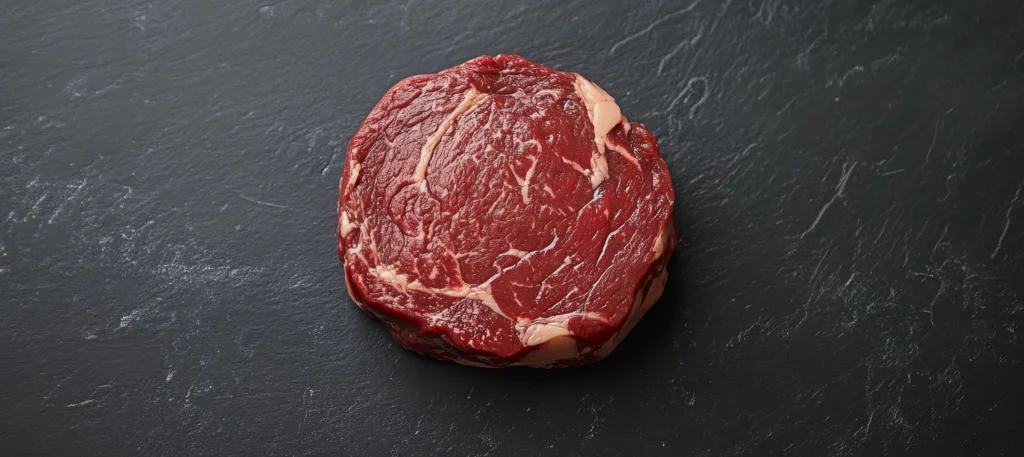
- Color: Raw top round beef is a bright red, indicating freshness and high oxygen content.
- Shape: Typically a thick, somewhat flat cut that can be large, as it’s often used for steaks or roasts.
- Size: The size can vary, but top round cuts are generally large, suitable for roasting or cutting into smaller steaks.
- Texture: Lean and firm with a coarse grain, making it less tender than some other cuts but flavorful.
Culinary Uses
Top round beef is versatile and well-suited for a variety of cooking methods:
- Common Dishes: Often used for roasts, steaks (especially when thinly sliced), and deli meats. It’s also popular for London broil, beef stroganoff, and stir-fry dishes.
- Preparation Methods: Best when marinated and cooked using moist heat methods like braising to enhance tenderness, or roasted and sliced thin. Can also be grilled or broiled if not overcooked.
- Suitable Pairings: Complements robust seasonings and marinades, as well as sides like roasted vegetables, mashed potatoes, and salads. Works well with hearty sauces and gravies.
Geographical Information
- Origin: Domesticated from wild ox thousands of years ago, with origins in regions that are now Europe, Asia, and Africa.
- Primary Growing Regions: Beef is produced worldwide, with significant production in countries such as the United States, Brazil, the European Union, and China.
- Seasonal Availability: Available year-round due to controlled agricultural practices.
Top round beef offers a lean, protein-rich option that’s versatile in the kitchen. Its nutritional profile, providing essential vitamins and minerals, makes it a valuable part of a balanced diet when consumed in moderation. Its adaptability in recipes from roasts to thinly sliced steaks for sandwiches ensures its popularity in various cuisines.
| Proximates: | |
| Water | 70.9 g |
| Energy (Atwater General Factors) | 170 kcal |
| Energy (Atwater Specific Factors) | 146 kcal |
| Nitrogen | 3.44 g |
| Protein | 21.5 g |
| Total lipid (fat) | 5.7 g |
| Ash | 1.09 g |
| Carbohydrates: | |
| Carbohydrate, by difference | 0.85 g |
| Minerals: | |
| Calcium, Ca | 4 mg |
| Iron, Fe | 1.9 mg |
| Magnesium, Mg | 22.1 mg |
| Phosphorus, P | 192 mg |
| Potassium, K | 352 mg |
| Sodium, Na | 46 mg |
| Zinc, Zn | 3.78 mg |
| Copper, Cu | 0.055 mg |
| Manganese, Mn | 0.003 mg |
| Lipids: | |
| Fatty acids, total saturated | 1.7 g |
| Fatty acids, total monounsaturated | 1.7 g |
| Fatty acids, total polyunsaturated | 0.238 g |
| Fatty acids, total trans | 0.228 g |
| Cholesterol | 59 mg |