


Basic Information
- Common Name: Blackeye Pea (also known as Black-eyed Bean or Cowpea)
- Scientific Name: Vigna unguiculata subsp. unguiculata
- Category: Legume (Vegetable)
- Varieties: Within the broader category of cowpeas, blackeye peas are a distinct variety recognized by their characteristic appearance. There are not distinct cultivar varieties marketed under “blackeye peas,” but there may be slight variations in size and taste depending on the region of cultivation.
Nutritional Information
- Macronutrients: Dry blackeye peas are a nutrient-dense food, high in carbohydrates and protein, with a low fat content. A typical serving (1/4 cup dry, approximately 45 grams) contains:
- Carbohydrates: About 61.8 grams
- Proteins: Approximately 21.2 grams
- Fats: Less than 2.42 gram
- Micronutrients: Excellent source of dietary fiber, folate, and other B vitamins. Rich in minerals such as iron, magnesium, potassium, and zinc.
Phytonutrients
Dry blackeye peas, like other legumes, are packed with a variety of phytonutrients that contribute to their health benefits, including antioxidant, anti-inflammatory, and overall health-promoting properties. These compounds are crucial for preventing chronic diseases and supporting overall health. Here’s an overview of the key phytonutrients and other beneficial compounds found in dry blackeye peas:
1. Fiber
- Type: Both soluble and insoluble fiber.
- Benefits: Supports digestive health, helps regulate blood sugar levels, and can lower cholesterol.
2. Phenolic Compounds
- Type: Includes flavonoids, tannins, and phenolic acids.
- Benefits: Antioxidant properties that help reduce inflammation and protect cells from oxidative stress, potentially lowering the risk of chronic diseases such as heart disease and cancer.
3. Isoflavones
- Type: A class of phytoestrogens found in legumes.
- Benefits: Linked to reduced risk of certain health conditions, such as heart disease and improved bone health. They may also have antioxidant effects.
4. Saponins
- Type: Plant compounds with a foaming characteristic.
- Benefits: May lower cholesterol, possess anti-cancer properties, and contribute to immune function.
5. Protease Inhibitors
- Type: Compounds that inhibit the action of certain enzymes involved in protein digestion.
- Benefits: Have been researched for their potential to reduce cancer risk.
6. Resistant Starch
- Type: A form of carbohydrate that resists digestion in the small intestine, acting similarly to fiber.
- Benefits: Feeds beneficial gut bacteria, improves gut health, and aids in blood sugar management.
7. Lectins
- Type: Proteins that can bind to carbohydrates on the surface of cells.
- Benefits: While high levels of lectins can be harmful, proper cooking (which is required for dry blackeye peas) neutralizes them, and they may have health benefits such as modulating immune function and reducing tumor growth.
Dry blackeye peas’ rich content of phytonutrients and fiber contributes to their numerous health benefits, including improving digestive health, supporting heart health, and potentially reducing the risk of chronic diseases. Incorporating dry blackeye peas into the diet offers a nutritious way to enjoy these benefits, especially when they are properly prepared to maximize nutrient absorption and reduce any anti-nutritional factors.
- Calorie Count: Roughly 160 calories per 1/4 cup dry.
- Glycemic Index: Medium (approximately 30-50), depending on preparation methods.
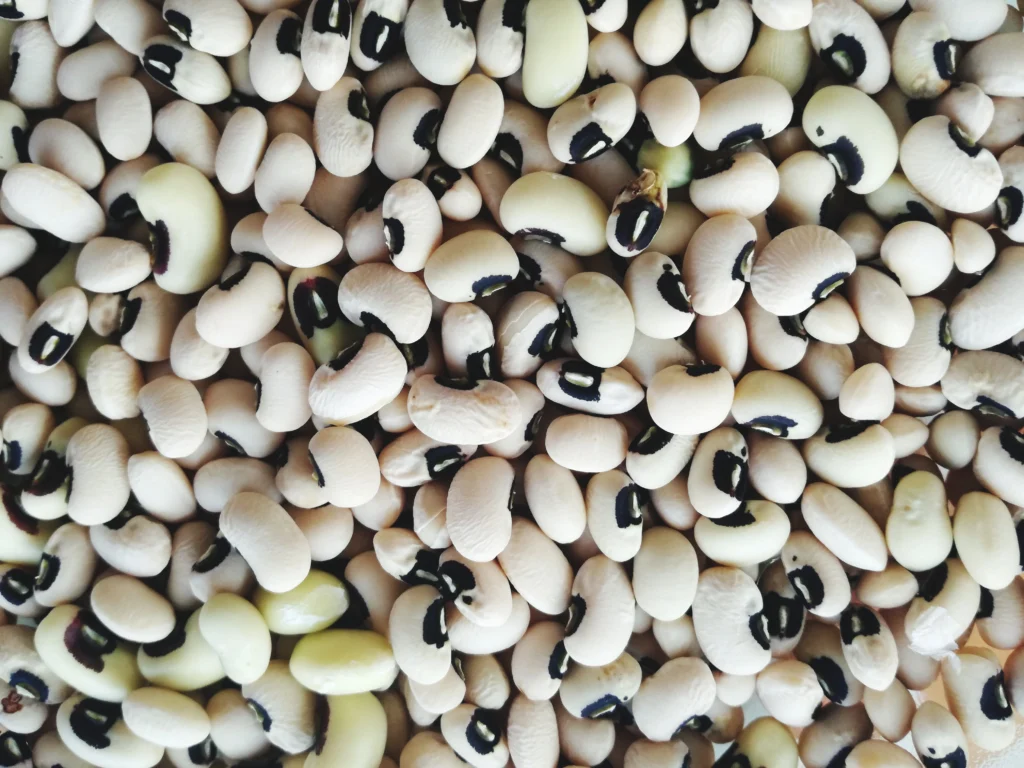
Physical Characteristics
- Color: Creamy white with a distinctive black spot where the pea was attached to the pod.
- Shape: Small, kidney-shaped with a somewhat oval appearance.
- Size: Typically about 1/4 to 1/2 inch in diameter.
- Texture: Hard when dry, becoming soft and creamy when cooked.
Culinary Uses
Dry blackeye peas are versatile in culinary use, suitable for various dishes:
- Common Dishes: Integral to many cultural cuisines, used in dishes like Hoppin’ John, soups, stews, salads, and curries.
- Preparation Methods: Require soaking before cooking to reduce cooking time and improve digestibility. Can be boiled until tender and used in a variety of recipes.
- Suitable Pairings: Complements flavors from smoked meats, greens (such as collard or kale), and spices. Works well in grain and vegetable dishes, offering a hearty protein source.
Geographical Information
- Origin: Native to Africa, blackeye peas have been cultivated and consumed for thousands of years, making them a staple in many traditional diets.
- Primary Growing Regions: Widely grown in Africa, the Southern United States, and parts of Asia and Latin America.
- Seasonal Availability: Dry blackeye peas are available year-round due to their stable shelf life when stored properly.
Dry blackeye peas offer a nutritious, plant-based protein source alongside a wealth of vitamins and minerals, contributing to a balanced diet. Their widespread cultivation and use in a variety of traditional and contemporary dishes underscore their versatility and nutritional value.
| Proximates: | |
| Water | 11 g |
| Energy (Atwater General Factors) | 354 kcal |
| Energy (Atwater Specific Factors) | 346 kcal |
| Nitrogen | 3.4 g |
| Protein | 21.2 g |
| Total lipid (fat) | 2.42 g |
| Ash | 3.51 g |
| Carbohydrates: | |
| Carbohydrate, by difference | 61.8 g |
| Starch | 37.4 g |
| Minerals: | |
| Calcium, Ca | 71 mg |
| Iron, Fe | 5.93 mg |
| Magnesium, Mg | 184 mg |
| Phosphorus, P | 428 mg |
| Potassium, K | 1240 mg |
| Sodium, Na | 3 mg |
| Zinc, Zn | 3.65 mg |
| Copper, Cu | 0.936 mg |
| Manganese, Mn | 1.29 mg |