
Basic Information
- Common Name: Whole-Wheat Bread
- Scientific Name: Made from Triticum aestivum
- Category: Food (Grain/Product)
- Varieties: There are various types of whole-wheat bread based on the specific wheat used and the baking process. Varieties include 100% whole wheat, honey whole wheat, and those that incorporate other whole grains alongside whole wheat for additional texture and nutritional benefits.
Nutritional Information
- Macronutrients (per typical slice, approximately 28-40 grams):
- Carbohydrates: About 12-20 grams, with dietary fiber ranging from 2 to 4 grams.
- Proteins: Approximately 3-6 grams
- Fats: 1-2 grams
- Micronutrients: Rich in B vitamins (especially niacin, thiamine, and folate), and minerals such as iron, magnesium, phosphorus, zinc, and selenium. Whole-wheat bread is also a good source of manganese.
- Calorie Count: Roughly 60-110 calories per slice, depending on the specific product and ingredients.
- Glycemic Index: Medium to high, typically ranging from 50 to 70, though whole grains can help moderate blood sugar levels compared to refined grains.
Phytonutrients
Whole-wheat bread, as a product made from the whole grain of wheat (Triticum aestivum), retains more of the nutrients and phytonutrients found in the original grain compared to refined white bread. While the focus on bread often highlights its macronutrient and micronutrient content, whole grains like wheat also contain beneficial phytonutrients that contribute to their health benefits. Here’s an overview of key phytonutrients present in whole-wheat bread:
1. Lignans
- Type: A group of polyphenolic compounds found in whole grains, seeds, and certain vegetables and fruits.
- Benefits: Lignans have antioxidant properties and are considered phytoestrogens, which may help in reducing the risk of certain types of cancer and cardiovascular diseases.
2. Phenolic Acids
- Types: Including ferulic acid, sinapic acid, and vanillic acid, among others.
- Benefits: Phenolic acids are known for their antioxidant activity, which can help protect cells from oxidative stress and reduce inflammation.
3. Flavonoids
- Types: Such as quercetin, kaempferol, and myricetin found in the bran layer of whole grains.
- Benefits: Flavonoids have strong antioxidant and anti-inflammatory properties, contributing to the prevention of chronic diseases.
4. Phytic Acid
- Type: Also known as inositol hexaphosphate, found in the bran of whole grains.
- Benefits: While often mentioned for its mineral-binding effects, which can reduce mineral absorption, phytic acid also has antioxidant properties. Proper bread-making processes, like fermentation, can reduce its impact on mineral absorption while maintaining its benefits.
5. Beta-Glucans
- Type: A type of soluble fiber found in significant amounts in certain whole grains.
- Benefits: While more prominent in oats and barley, whole wheat also contains beta-glucans that contribute to heart health by lowering cholesterol levels and improving blood sugar control.
6. Alkylresorcinols
- Type: Phenolic lipids found in the outer layers of wheat and rye grains.
- Benefits: Associated with antioxidant activity and potential anti-cancer properties, alkylresorcinols are markers of whole grain intake and contribute to the overall health benefits of whole grains.
Whole-wheat bread, by retaining the bran and germ of the wheat grain, offers a source of these phytonutrients, which can contribute to its health benefits, including reducing the risk of chronic diseases, supporting heart health, and providing antioxidant protection. Incorporating whole-wheat and other whole-grain bread into the diet is a way to enjoy these benefits alongside the essential nutrients these foods offer.

Physical Characteristics
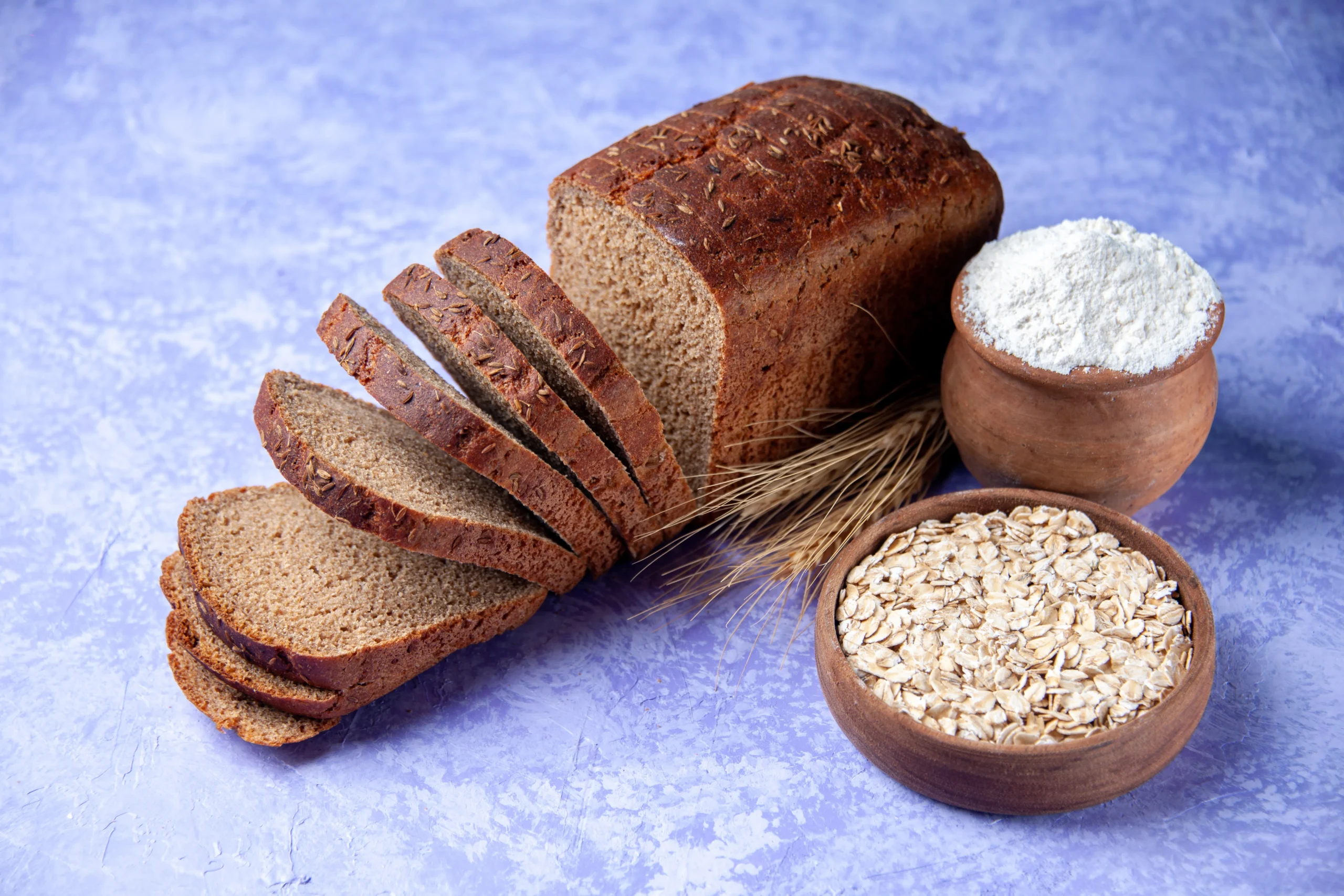
- Color: Varies from light brown to dark brown, depending on the type of whole wheat used and the baking process.
- Shape: Most commonly found in loaf form, sliced for convenience.
- Size: Slices can vary in size but are typically around 4 x 4 inches (10 x 10 cm) and up to an inch thick.
- Texture: Denser and chewier than white bread, with a more pronounced wheat flavor. May contain whole grains and seeds for added texture.
Culinary Uses
Whole-wheat bread is versatile and can be used in various culinary applications:
- Common Dishes: Sandwiches, toast, bruschetta, bread pudding, and as a base for various toppings and spreads.
- Preparation Methods: Can be eaten as is, toasted, or used as an ingredient in both savory and sweet dishes. It’s also suitable for grilling and making croutons.
- Suitable Pairings: Complements a wide range of flavors from savory meats and cheeses to sweet jams and nut butters. Pairs well with hearty soups and salads.
Geographical Information
- Origin: The cultivation of wheat for bread dates back over 10,000 years, with origins in the Fertile Crescent region of the Near East.
- Primary Growing Regions: Today, wheat is grown in numerous countries around the world, including China, India, the United States, Russia, and France.
- Seasonal Availability: Commercially prepared whole-wheat bread is available year-round due to global wheat production and modern storage and transportation methods.
Whole-wheat bread offers a nutritious alternative to white bread, providing additional fiber, vitamins, and minerals due to the inclusion of the entire wheat kernel (bran, germ, and endosperm). Choosing whole-wheat bread contributes to a healthier diet by offering more complex carbohydrates and nutrients that support overall well-being.
| Proximates: | |
| Water | 38.7 g |
| Energy (Atwater General Factors) | 254 kcal |
| Nitrogen | 1.97 g |
| Protein | 12.3 g |
| Total lipid (fat) | 3.55 g |
| Total fat (NLEA) | 2.98 g |
| Ash | 2.36 g |
| Carbohydrates: | |
| Carbohydrate, by difference | 43.1 g |
| Carbohydrate, by summation | 39.2 g |
| Fiber, total dietary | 6 g |
| Sugars, Total | 4.41 g |
| Sucrose | 0.03 g |
| Glucose | 1.1 g |
| Fructose | 2.24 g |
| Lactose | 0.01 g |
| Maltose | 1.03 g |
| Galactose | 0 g |
| Starch | 28.7 g |
| Minerals: | |
| Calcium, Ca | 163 mg |
| Iron, Fe | 2.56 mg |
| Magnesium, Mg | 76.6 mg |
| Phosphorus, P | 212 mg |
| Potassium, K | 250 mg |
| Sodium, Na | 450 mg |
| Zinc, Zn | 1.76 mg |
| Copper, Cu | 0.226 mg |
| Manganese, Mn | 2.18 mg |
| Selenium, Se | 25.8 µg |
| Vitamins and Other Components: | |
| Thiamin | 0.391 mg |
| Riboflavin | 0.166 mg |
| Niacin | 4.43 mg |
| Pantothenic acid | 0.65 mg |
| Vitamin B-6 | 0.216 mg |
| Folate, total | 42 µg |
| Choline, total | 27.2 |
| Choline, free | 16.3 mg |
| Choline, from phosphocholine | 0.4 mg |
| Choline, from phosphotidyl choline | 2.9 mg |
| Choline, from glycerophosphocholine | 7.6 mg |
| Choline, from sphingomyelin | 0 mg |
| Betaine | 126 mg |
| Vitamin E (alpha-tocopherol) | 2.82 mg |
| Tocopherol, beta | 0.24 mg |
| Tocopherol, gamma | 0.9 mg |
| Tocopherol, delta | 0.29 mg |
| Tocotrienol, alpha | 0.41 mg |
| Tocotrienol, beta | 1.27 mg |
| Tocotrienol, gamma | 0.37 mg |
| Tocotrienol, delta | 0.18 mg |
| Lipids: | |
| Fatty acids, total saturated | 0.732 g |
| SFA 4:0 | 0 g |
| SFA 6:0 | 0 g |
| SFA 8:0 | 0.002 g |
| SFA 10:0 | 0.008 g |
| SFA 11:0 | 0 g |
| SFA 12:0 | 0.013 g |
| SFA 14:0 | 0.008 g |
| SFA 15:0 | 0.003 g |
| SFA 16:0 | 0.44 g |
| SFA 17:0 | 0.004 g |
| SFA 18:0 | 0.235 g |
| SFA 20:0 | 0.008 g |
| SFA 22:0 | 0.007 g |
| SFA 24:0 | 0.004 g |
| Fatty acids, total monounsaturated | 0.616 g |
| MUFA 14:1 c | 0 g |
| MUFA 15:1 | 0 g |
| MUFA 16:1 c | 0.015 g |
| MUFA 17:1 | 0.002 g |
| MUFA 17:1 c | 0.002 g |
| MUFA 18:1 c | 0.582 g |
| MUFA 20:1 | 0.017 g |
| MUFA 20:1 c | 0.017 g |
| MUFA 22:1 c | 0 g |
| MUFA 24:1 c | 0 g |
| Fatty acids, total polyunsaturated | 1.61 g |
| PUFA 18:2 c | 1.46 g |
| PUFA 18:2 n-6 c,c | 1.46 g |
| PUFA 18:2 CLAs | 0 g |
| PUFA 18:3 c | 0.141 g |
| PUFA 18:3 n-3 c,c,c (ALA) | 0.139 g |
| PUFA 18:3 n-6 c,c,c | 0.002 g |
| PUFA 18:3i | 0 g |
| PUFA 18:4 | 0 g |
| PUFA 20:2 c | 0.002 g |
| PUFA 20:2 n-6 c,c | 0.002 g |
| PUFA 20:3 c | 0 g |
| PUFA 20:3 n-3 | 0 g |
| PUFA 20:3 n-6 | 0 g |
| PUFA 20:3 n-9 | 0 g |
| PUFA 20:4 | 0.004 g |
| PUFA 20:4c | 0.004 g |
| PUFA 20:5c | 0 g |
| PUFA 20:5 n-3 (EPA) | 0 g |
| PUFA 22:2 | 0 g |
| PUFA 22:5 c | 0 g |
| PUFA 22:4 | 0 g |
| PUFA 22:5 n-3 (DPA) | 0 g |
| PUFA 22:6 c | 0 g |
| PUFA 22:6 n-3 (DHA) | 0 g |
| Fatty acids, total trans | 0.022 g |
| Fatty acids, total trans-monoenoic | 0.017 g |
| TFA 16:1 t | 0 g |
| TFA 18:1 t | 0.017 g |
| TFA 22:1 t | 0 g |
| Fatty acids, total trans-dienoic | 0.005 g |
| TFA 18:2 t not further defined | 0.005 g |