


Basic Information
- Common Name: Buckwheat
- Scientific Name: Fagopyrum esculentum
- Category: Pseudocereal (Despite its name, buckwheat is not related to wheat and is gluten-free. It is considered a pseudocereal because it is used in much the same way as cereals due to its similar nutrient composition.)
- Varieties: The most common variety is common buckwheat (Fagopyrum esculentum). Another variety is Tartary buckwheat (Fagopyrum tataricum), which is known for its higher antioxidant content.
Nutritional Information
- Macronutrients (per 100 grams of cooked whole grain buckwheat):
- Carbohydrates: About 71.1 grams
- Proteins: Approximately 11.1 grams
- Fats: 3.04 gram
- Micronutrients: Buckwheat is rich in minerals such as magnesium, phosphorus, potassium, and iron. It also provides B vitamins, especially niacin (B3), folate (B9), and small amounts of vitamin K. It is particularly high in the flavonoid rutin, which has antioxidant properties.
- Calorie Count: Roughly 92 calories per 100 grams.
- Glycemic Index: Low to medium, approximately 50, making it a good option for blood sugar management.
Phytonutrients
Whole grain buckwheat is a rich source of various phytonutrients that contribute to its numerous health benefits. These compounds have antioxidant properties, support cardiovascular health, and may offer protective effects against chronic diseases. Here’s an overview of the key phytonutrients present in whole grain buckwheat:
1. Rutin (Quercetin Rutinoside)
- Type: A type of flavonoid.
- Benefits: Rutin is known for its strong antioxidant properties, helping to combat oxidative stress and inflammation. It supports blood vessel health, improves circulation, and can help in lowering blood pressure. Rutin has also been shown to strengthen capillaries and may have anti-thrombotic and anti-carcinogenic effects.
2. Quercetin
- Type: Another flavonoid found in smaller amounts in buckwheat.
- Benefits: Like rutin, quercetin is a powerful antioxidant with anti-inflammatory properties. It may help reduce the risk of various diseases, including heart disease and cancer, and supports immune function.
3. D-Chiro-Inositol
- Type: A compound that belongs to the inositol family, which plays a role in insulin signal transduction.
- Benefits: D-chiro-inositol has been studied for its potential to improve insulin sensitivity and reduce blood sugar levels, making it beneficial for managing diabetes.
4. Magnesium and Zinc
- While not phytonutrients, these minerals are worth mentioning due to their significant presence in buckwheat and their roles in supporting phytonutrient functions. Magnesium supports heart health and helps regulate blood pressure, while zinc is crucial for immune function and wound healing.
5. Tannins
- Type: Polyphenolic compounds.
- Benefits: Tannins have antioxidant properties and may contribute to the anti-inflammatory and anticancer effects attributed to whole grains like buckwheat.
6. Fiber
- Type: Both soluble and insoluble fiber are present in buckwheat.
- Benefits: Fiber supports digestive health, helps regulate blood sugar levels, and may reduce the risk of heart disease.
7. Proteins
- Type: High-quality proteins with a balanced amino acid profile.
- Benefits: While not phytonutrients, the proteins in buckwheat contribute to its nutritional value by providing essential amino acids necessary for muscle repair and growth.
Whole grain buckwheat’s unique composition of phytonutrients, combined with its vitamins, minerals, and high-quality proteins, underscores its value as a nutritious food. Including buckwheat in the diet can offer health benefits ranging from improved cardiovascular health to better blood sugar management and antioxidant protection.
Physical Characteristics
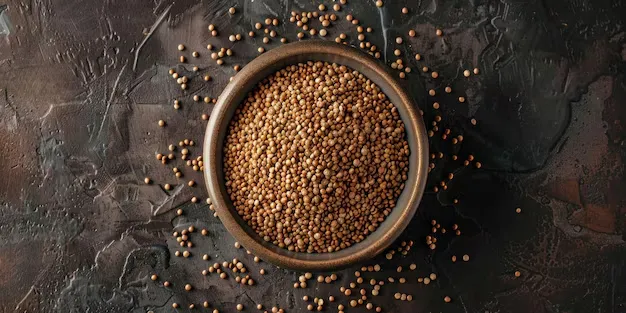
- Color: Whole grain buckwheat groats are light brown to greenish-brown.
- Shape: They have a distinctive triangular shape.
- Size: Small, similar in size to wheat kernels but with a unique pyramid-like shape.
- Texture: Raw buckwheat is hard and firm. When cooked, it becomes soft and chewy.
Culinary Uses
Buckwheat is versatile and can be used in a variety of dishes:
- Common Dishes: Buckwheat pancakes, soba noodles (in Japanese cuisine), porridge, salads, and as a rice alternative. Buckwheat flour is used in baking, especially for gluten-free options.
- Preparation Methods: Can be boiled, toasted (kasha), or ground into flour. Cooking usually involves simmering whole or cracked buckwheat groats in water or broth until tender.
- Suitable Pairings: Pairs well with mushrooms, vegetables, meats, and in sweet applications with honey, fruits, and dairy products.
Geographical Information
- Origin: Buckwheat is native to Northern Europe and Asia. It has been cultivated for at least 6,000 years.
- Primary Growing Regions: Major producers include Russia, China, Ukraine, France, and the United States. It thrives in cooler climates and is often grown in mountainous regions.
- Seasonal Availability: Buckwheat is harvested in the late summer and early fall, but as a stored grain, it is available year-round.
Buckwheat’s nutritional profile, including its high mineral content, B vitamins, and particularly its rich supply of rutin, contributes to its health benefits, such as improved heart health and blood sugar control. Its versatility in cooking and suitability for gluten-free diets make it a valuable grain in global cuisines.
| Proximates: | |
| Water | 13 g |
| Energy (Atwater General Factors) | 356 kcal |
| Energy (Atwater Specific Factors) | 332 kcal |
| Nitrogen | 1.9 g |
| Protein | 11.1 g |
| Total lipid (fat) | 3.04 g |
| Ash | 1.82 g |
| Carbohydrates: | |
| Carbohydrate, by difference | 71.1 g |
| Fiber, total dietary | 4 g |
| Total dietary fiber (AOAC 2011.25) | 4.8 g |
| High Molecular Weight Dietary Fiber (HMWDF) | 4.1 g |
| Low Molecular Weight Dietary Fiber (LMWDF) | <1 g |
| Beta-glucan | <0.1 g |
| Starch | 61.6 g |
| Minerals: | |
| Calcium, Ca | 14 mg |
| Iron, Fe | 2.44 mg |
| Magnesium, Mg | 203 mg |
| Phosphorus, P | 374 mg |
| Potassium, K | 414 mg |
| Sodium, Na | <2.5 mg |
| Zinc, Zn | 2.24 mg |
| Copper, Cu | 0.476 mg |
| Manganese, Mn | 1.23 mg |
| Selenium, Se | 13.6 µg |
| Molybdenum, Mo | 55.2 µg |
| Vitamins and Other Components: | |
| Thiamin | 0.539 mg |
| Riboflavin | 0.178 mg |
| Niacin | 5.35 mg |
| Vitamin B-6 | 0.278 mg |
| Biotin | 18.6 µg |