

Basic Information
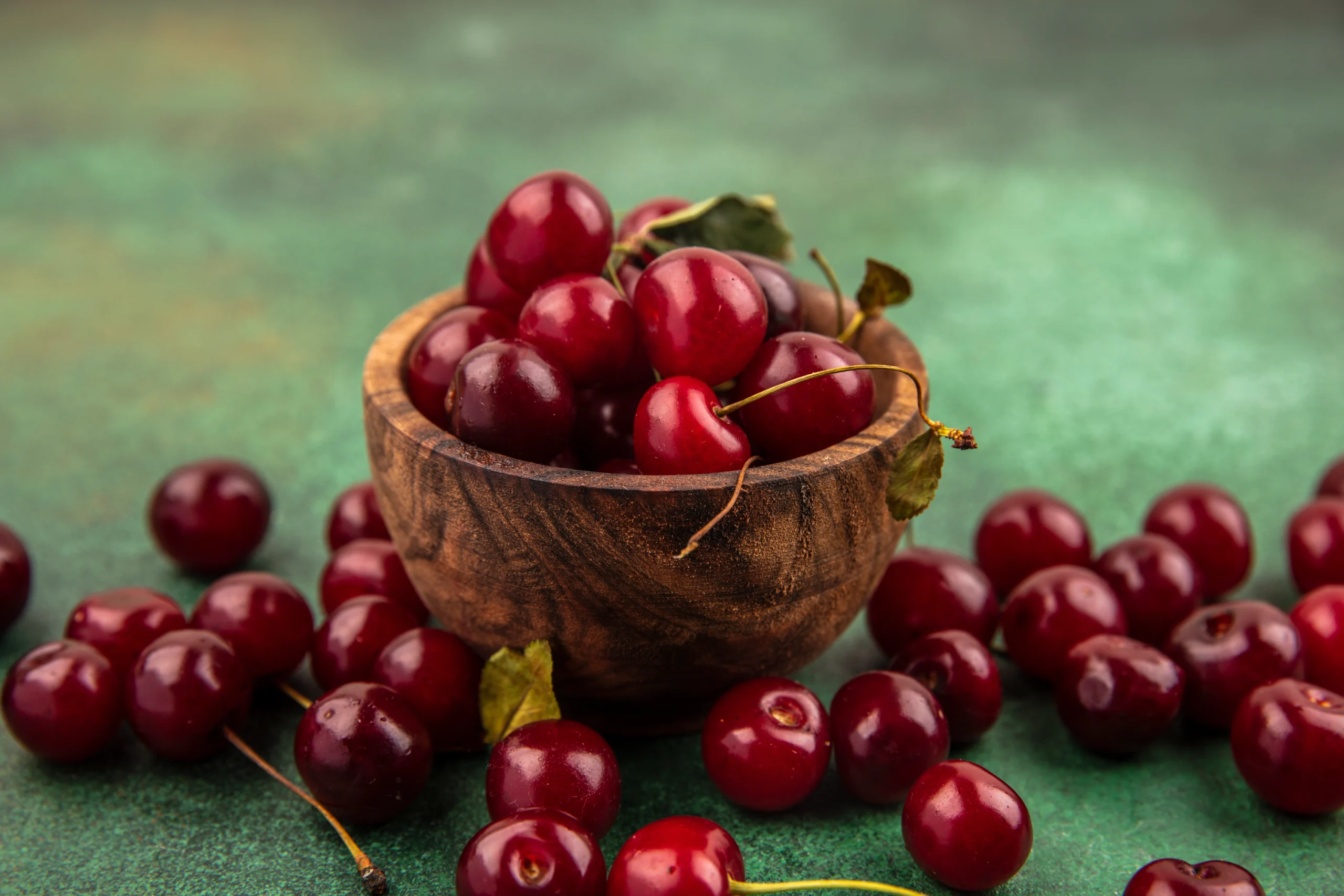
- Name (Common): Sweet, Dark Red Cherries
- Scientific: Prunus avium
- Category: Fruit
- Varieties: There are numerous varieties of sweet, dark red cherries, including Bing, Lambert, and Sweetheart. Each variety has subtle differences in taste, texture, and ripening times.
Nutritional Information
Macronutrients
- Carbohydrates: Approximately 16 grams per 100 grams, primarily from natural sugars and dietary fiber.
- Proteins: About 1 gram per 100 grams, providing a minimal protein source.
- Fats: Negligible, less than 0.5 grams per 100 grams.
Micronutrients
- Rich in Vitamin C, important for immune function and skin health.
- Contains Potassium, aiding in blood pressure regulation.
- Provides Vitamin A, Calcium, and Iron in smaller amounts.
- Offers a good source of antioxidants, including anthocyanins and quercetin.
phytonutrients
Sweet, dark red cherries are not only delicious but also packed with a variety of phytonutrients that contribute to their health benefits. These compounds have antioxidant properties and can play a role in preventing various diseases. Here’s an overview of the key phytonutrients present in sweet, dark red cherries:
Phytonutrients in Sweet, Dark Red Cherries
- Anthocyanins: These are powerful antioxidants responsible for the dark red color of the cherries. Anthocyanins have been studied for their potential to reduce inflammation, lower risk factors for heart disease, and play a role in cancer prevention.
- Quercetin: A type of flavonoid that acts as an antioxidant, quercetin can help fight inflammation and has been linked to heart health benefits, including the reduction of high blood pressure and prevention of atherosclerosis.
- Catechins: Also found in green tea, catechins are antioxidants that may help in preventing cell damage, reducing inflammation, and supporting cardiovascular health.
- Chlorogenic Acid: This compound is one of the most abundant polyphenols in cherries. It has antioxidant properties and may contribute to the prevention of cardiovascular disease, diabetes, and other conditions.
- Melatonin: While not a phytonutrient, melatonin is a hormone present in cherries that regulates sleep cycles. Its antioxidant properties may also play a role in protecting the nervous system.
- Ellagic Acid: Known for its anti-cancer properties, ellagic acid is another antioxidant found in cherries that can help neutralize harmful free radicals in the body.
- Perillyl Alcohol: This phytochemical is being studied for its potential to prevent certain types of cancer, including breast, lung, and liver cancers.
Health Benefits
The combination of these phytonutrients in sweet, dark red cherries provides a range of health benefits. These include anti-inflammatory effects, potential reduction in the risk of chronic diseases such as heart disease and diabetes, improved sleep patterns, and a lower risk of certain types of cancer. Moreover, the antioxidant properties of cherries can help combat oxidative stress, contributing to overall health and wellness.
Considerations
Sweet, dark red cherries are a nutrient-dense food that can be a valuable addition to a balanced diet. However, as with any food, they should be consumed in moderation, particularly by individuals who need to manage their sugar intake due to diabetes or other health concerns.
In summary, the phytonutrients present in sweet, dark red cherries contribute to their vibrant color, delicious taste, and a multitude of health benefits, making them a great choice for those looking to enhance their diet with nutritious fruits.
Calorie Count and Glycemic Index
- Calorie Count: Approximately 63 calories per 100 grams.
- Glycemic Index: Low to medium, generally in the range of 20 to 25.
Physical Characteristics
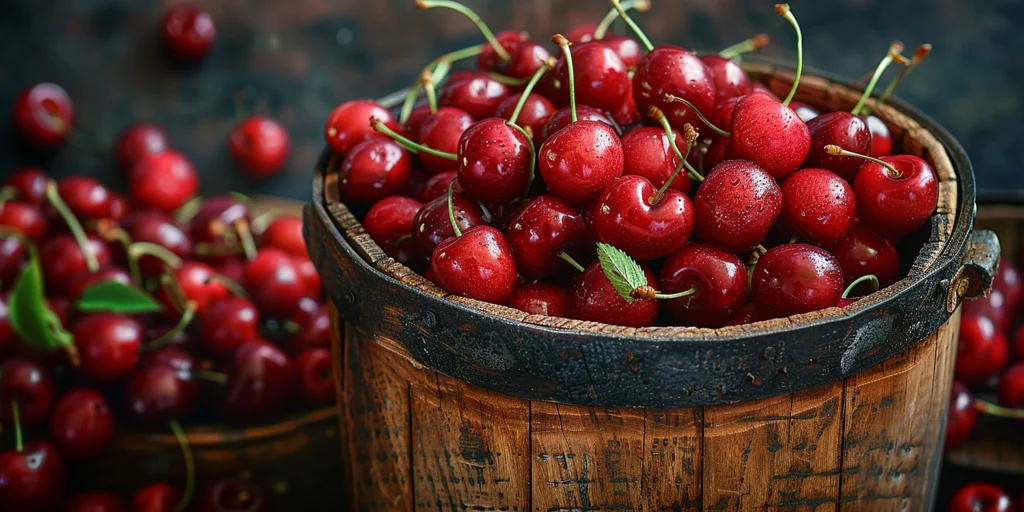
- Color: Deep red to nearly black, depending on the variety and ripeness.
- Shape: Round with a small pit in the center.
- Size: Typically about 2 to 3 centimeters in diameter.
- Texture: Firm and juicy with a smooth, glossy outer skin.
Culinary Uses
- Common Dishes: Eaten fresh as a snack, in fruit salads, desserts (like cherry pie and clafoutis), and as toppings for yogurt and ice cream.
- Preparation Methods: Often consumed raw, but can also be cooked, canned, or dried. The pits need to be removed before eating or cooking.
- Suitable Pairings: Pairs well with almonds, chocolate, vanilla, and creamy desserts. Also complements savory dishes like pork and duck when used in sauces.
Geographical Information
- Origin: Thought to have originated in the region between the Black and Caspian Seas.
- Primary Growing Regions: Widely cultivated in temperate regions worldwide, with significant production in the United States (Washington, Oregon, California), Europe, and parts of Asia.
- Seasonal Availability: Sweet cherries are typically in season during the late spring and summer months, with peak availability varying by region.
Sweet, dark red cherries are celebrated for their delicious taste, versatility in cooking, and nutritional benefits. They are a summertime favorite, offering a blend of sweetness and tartness that enhances a wide range of culinary creations.
| proximates: | |
| Water | 82.2 g |
| Energy (Atwater General Factors) | 71 kcal |
| Energy (Atwater Specific Factors) | 63 kcal |
| Nitrogen | 0.17 g |
| Protein | 1.04 g |
| Total lipid (fat) | 0.19 g |
| Ash | 0.42 g |
| Carbohydrates: | |
| Carbohydrate, by difference | 16.2 g |
| Sugars, Total | 13.9 g |
| Sucrose | <0.25 g |
| Glucose | 8.36 g |
| Fructose | 5.51 g |
| Lactose | <0.25 g |
| Maltose | <0.25 |
| Organic acid | |
| Citric acid | <40 mg |
| Malic acid | 762 mg |
| Oxalic acid | <40 mg |
| Pyruvic acid | <40 mg |
| Quinic acid | <40 mg |
| Minerals: | |
| Calcium, Ca | 12 mg |
| Iron, Fe | 0.11 mg |
| Magnesium, Mg | 12.1 mg |
| Phosphorus, P | 23 mg |
| Potassium, K | 230 mg |
| Sodium, Na | <2.5 mg |
| Zinc, Zn | 0.06 mg |
| Copper, Cu | 0.069 mg |
| Manganese, Mn | 0.073 mg |
| Molybdenum, Mo | 1 µg |
| Vitamins and Other Components: | |
| Vitamin C, total ascorbic acid | 10.4 mg |
| Vitamin B-6 | 0.049 mg |