

Cucumbers, with their peel, raw, are a widely consumed vegetable known for their crisp texture and refreshing taste. Here’s a comprehensive overview based on the specified categories.
Basic Information
Name: Cucumber (Common), Cucumis sativus (Scientific)
Category: Vegetable
Varieties: There are several varieties of cucumbers, including slicing cucumbers (commonly eaten raw), pickling cucumbers (used for pickles), and seedless or burpless cucumbers (which are easier to digest and have a thinner skin).
Nutritional Information
For a typical serving size of 1 medium cucumber (approximately 201 grams), with peel, raw:
Macronutrients
- Carbohydrates: About 2.95 grams, mostly from natural sugars and dietary fiber.
- Proteins: 0.62 grams; cucumbers contain a small amount of protein.
- Fats: 0.18 grams; cucumbers are very low in fat.
Micronutrients
Vitamins: A source of Vitamin K, Vitamin C, and some B vitamins.
Minerals: Contains potassium, magnesium, and small amounts of calcium and iron.
Phytonutrients
Cucumbers, especially when consumed with their peel, are a source of various phytonutrients that contribute to their health benefits. These plant-based compounds have antioxidant properties, among other health benefits. Here’s an overview of the key phytonutrients present in raw cucumbers with peel:
Key Phytonutrients in Cucumber
Cucurbitacins: Cucurbitacins are compounds found in the Cucurbitaceae family (which includes cucumbers, melons, and squash) known for their bitter taste and potential anti-cancer properties. They may inhibit the growth of cancer cells by disrupting their signaling pathways.
Flavonoids: Cucumbers contain several types of flavonoids, including quercetin, apigenin, luteolin, and kaempferol. These compounds have antioxidant and anti-inflammatory effects, which can help reduce the risk of chronic diseases, including heart disease and cancer.
Lignans: Pinoresinol, lariciresinol, and secoisolariciresinol are lignans found in cucumbers that may have heart-protective and anti-cancer properties. Lignans can be converted by gut bacteria into compounds that help in reducing the risk of estrogen-related cancers such as breast, uterine, ovarian, and prostate cancer.
Triterpenes (including saponins): Cucumbers contain triterpenes, which have potential anti-inflammatory and antioxidant benefits.
Nutritional Implications
The phytonutrients in cucumbers contribute to their health-promoting properties:
Antioxidant Activity: The flavonoids and cucurbitacins in cucumbers act as antioxidants, helping to neutralize harmful free radicals in the body. This can reduce oxidative stress and lower the risk of chronic disease.
Anti-inflammatory Effects: The anti-inflammatory properties of cucumbers can help in reducing the risk of inflammatory conditions, such as heart disease, arthritis, and certain forms of cancer.
Cancer Prevention: The presence of cucurbitacins and lignans in cucumbers has been linked to a reduced risk of several types of cancer through various mechanisms, including hormonal regulation and inhibition of cancer cell proliferation.
Consuming cucumbers with their peel maximizes the intake of beneficial phytonutrients. These compounds, along with cucumbers’ high water content and nutritional profile, make them a healthful addition to the diet. The low calorie and high fiber content also make cucumbers an excellent choice for those looking to maintain a healthy weight or improve digestion. To fully benefit from the phytonutrients in cucumbers, incorporating them raw into salads, snacks, and beverages is recommended, as cooking may reduce some of their beneficial properties.
Calorie Count and Glycemic Index
- Calorie Count: Approximately 30 calories.
- Glycemic Index: Low; cucumbers have a glycemic index of about 15, making them an excellent choice for blood sugar control.
Physical Characteristics
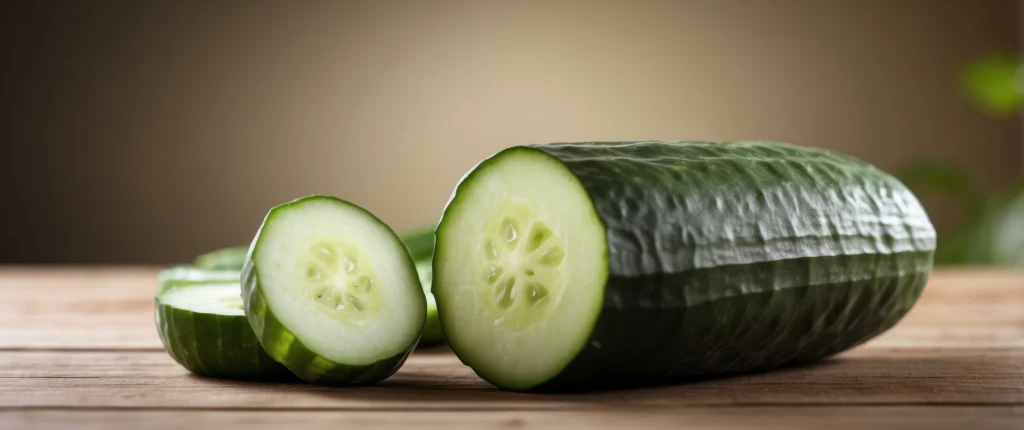
Color: Green skin with a lighter green to almost white interior.
Shape: Elongated cylinder, slightly curved.
Size: Can vary widely but typically 6-9 inches (15-23 cm) in length for slicing cucumbers.
Texture: Crisp and watery with a slightly crunchy flesh and a smooth, firm skin.
Culinary Uses
Common Dishes: Consumed raw in salads, sandwiches, and as garnishes. Cucumbers are also used to make pickles and can be featured in cold soups like gazpacho.
Preparation Methods: Can be sliced, chopped, or ribboned for use in various dishes. Often eaten raw but can also be lightly pickled for added flavor.
Suitable Pairings: Pairs well with dill, yogurt, vinegar, tomatoes, onions, and garlic. Complements creamy dressings and dips.
Geographical Information
Origin: Cucumbers are believed to have originated in India, where they have been cultivated for over 3,000 years.
Primary Growing Regions: Cucumbers are grown worldwide in temperate and tropical regions. Major producers include China, Turkey, Russia, Iran, and the United States.
Seasonal Availability: While available year-round in many places due to global agriculture, cucumbers are typically in season and at their best quality in the warmer months, from May through August in the northern hemisphere.
Cucumbers are celebrated for their hydration qualities, containing about 95% water, making them excellent for hydration and skin health. The inclusion of the peel increases the fiber content, which is beneficial for digestive health. As a low-calorie vegetable with a low glycemic index, cucumbers are a nutritious addition to a healthy diet, offering both versatility in culinary uses and a range of health benefits.
| Proximates: | |
| Water | 95.9 g |
| Energy (Atwater General Factors) | 16 kcal |
| Energy (Atwater Specific Factors) | 14 kcal |
| Nitrogen | 0.1 g |
| Protein | 0.62 g |
| Total lipid (fat) | 0.18 g |
| Ash | 0.38 g |
| Carbohydrates: | |
| Carbohydrate, by difference | 2.95 g |
| Minerals: | |
| Calcium, Ca | 16 mg |
| Iron, Fe | <0.25 mg |
| Magnesium, Mg | 10.1 mg |
| Phosphorus, P | 23 mg |
| Potassium, K | 170 mg |
| Sodium, Na | 2 mg |
| Zinc, Zn | 0.2 mg |
| Copper, Cu | 0.63 mg |
| Manganese, Mn | 0.085 mg |
| Molybdenum, Mo | 3.7 mg |
| Vitamins and Other Components: | |
| Biotin | 0.962 µg |
| Vitamin K (phylloquinone) | 24 µg |
| Vitamin K (Dihydrophylloquinone) | <0.1 µg |
| Vitamin K (Menaquinone-4) | <0.1 µg |