

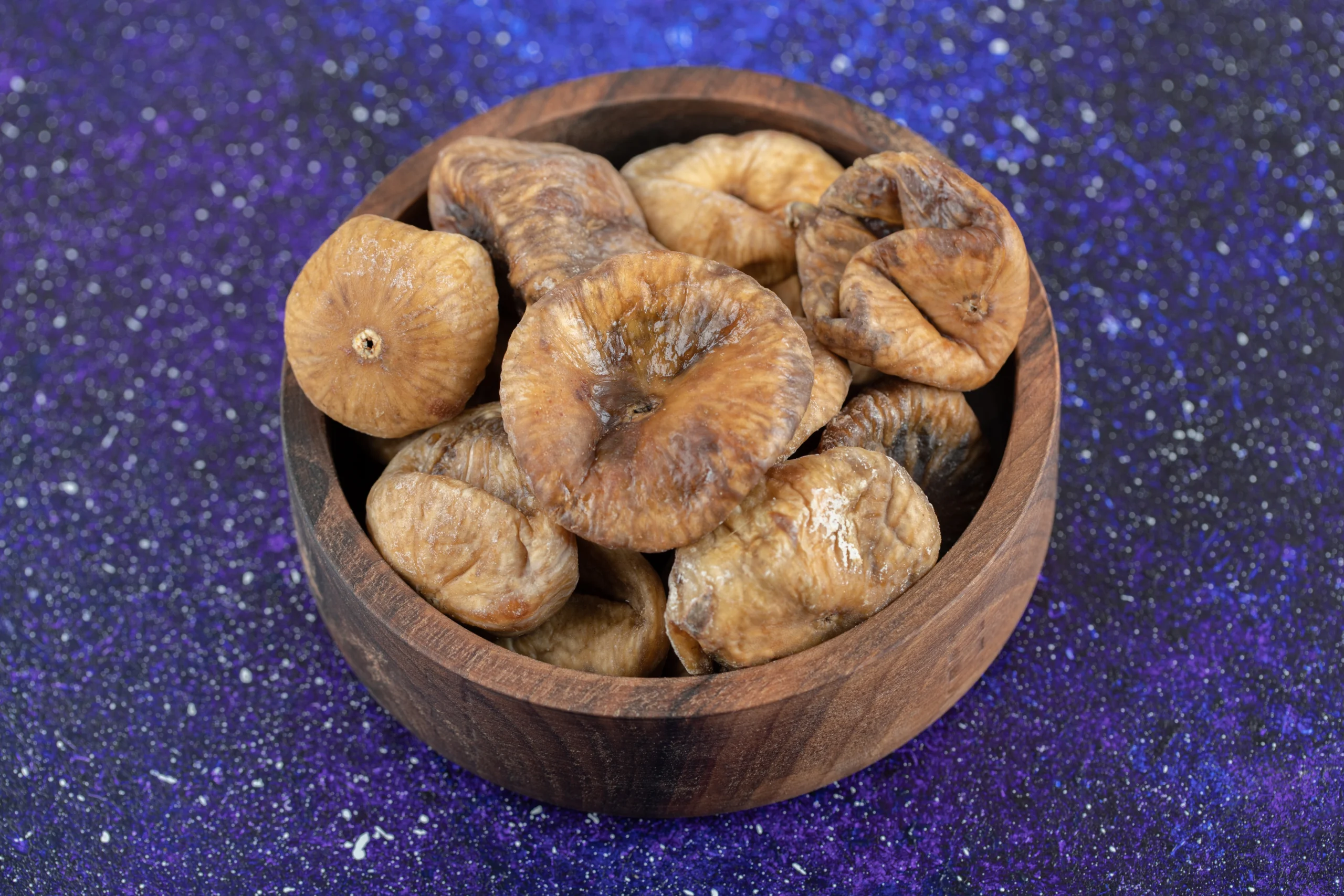
Basic Information
- Common Name: Dried Figs
- Scientific Name: Ficus carica
- Category: Fruit
Varieties
There are several varieties of figs, each with its unique flavor and texture. However, when it comes to dried figs, the variety is less distinguishable in the final dried product. Common varieties include Black Mission, Calimyrna (Smyrna), and Brown Turkey.
Nutritional Information
- Macronutrients:
- Carbohydrates: Dried figs are high in carbohydrates, primarily in the form of natural sugars and dietary fiber. A 100g serving contains about 63.9g of carbohydrates.
- Proteins: They have a moderate protein content, with about 3.3g per 100g serving.
- Fats: Very low in fat, with 0.92g per 100g serving.
- Micronutrients:
- Vitamins: Dried figs are a good source of vitamins such as vitamin A, B vitamins (especially B6), and vitamin K.
- Minerals: They are rich in minerals including potassium, magnesium, calcium, iron, and zinc.
Phytonutrients
Dried figs are not only appreciated for their sweet taste and nutritional benefits but also for their rich content of phytonutrients. Phytonutrients are plant compounds known for their health-promoting properties, including antioxidants, anti-inflammatory, and anti-carcinogenic effects. Here’s an overview of the key phytonutrients present in dried, uncooked figs:
- Flavonoids:
- These are powerful antioxidants that help to neutralize free radicals in the body, potentially reducing the risk of chronic diseases. Dried figs contain several types of flavonoids, including:
- Quercetin: Known for its anti-inflammatory and antioxidant properties.
- Rutin: Helps to strengthen blood vessels and has anti-inflammatory effects.
- Anthocyanins (in dark-skinned varieties): Provide antioxidant benefits and contribute to the color of the figs.
- Phenolic Acids:
- These compounds also have strong antioxidant properties and contribute to the overall health benefits of figs. Examples include:
- Chlorogenic acid: May help with weight management and glucose metabolism.
- Gallic acid: Known for its antimicrobial and anti-inflammatory properties.
- Furanocoumarins:
- Although found in small quantities, these compounds can have potent biological effects, including antimicrobial properties. It’s worth noting, however, that furanocoumarins can interact with certain medications by affecting their metabolism.
- Omega-3 and Omega-6 Fatty Acids:
- While figs are low in fat, they do provide some essential fatty acids, which are important for heart health and cognitive function.
- Fiber:
- While not a phytonutrient per se, the high fiber content in dried figs deserves mention. Figs are rich in both soluble and insoluble fiber, which can help with digestive health, blood sugar regulation, and satiety.
- Beta-carotene:
- Some dried figs contain beta-carotene, a precursor to vitamin A, which is important for vision, immune function, and skin health.
- Lutein and Zeaxanthin:
- These carotenoids are known for their role in eye health, particularly in protecting the retina from damage by blue light and oxidative stress.
Dried figs, like many fruits, offer a complex mix of nutrients and phytonutrients, contributing to their diverse health benefits. Their consumption can support overall health when included as part of a balanced diet. The specific amounts of these compounds can vary based on the fig variety, growing conditions, and drying process, making it challenging to quantify their exact levels in every serving of dried figs.
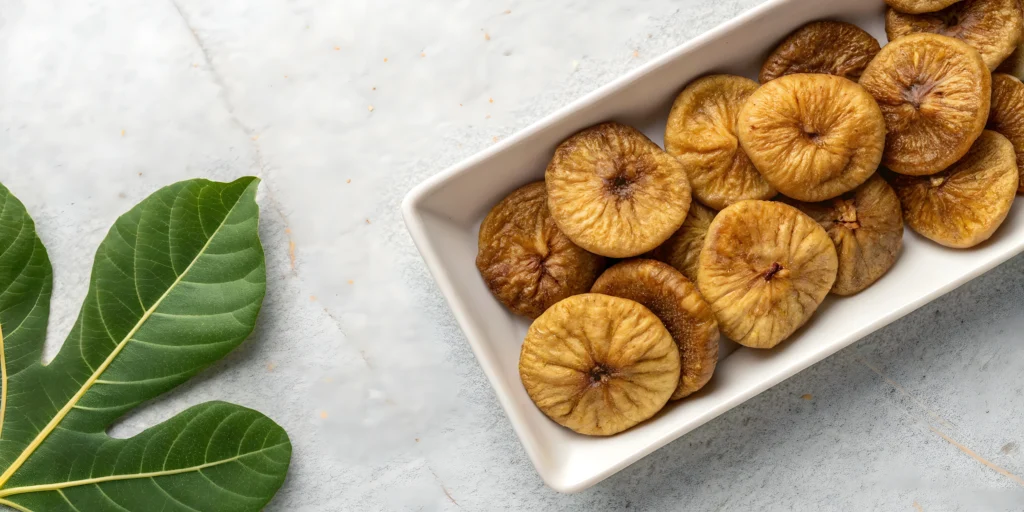
Calorie Count and Glycemic Index
- Calorie Count: A 100g serving of dried figs contains approximately 249 calories.
- Glycemic Index: The glycemic index of dried figs is around 61, which is considered medium.
Physical Characteristics
- Color: They range from light yellowish-brown to dark brown.
- Shape: Dried figs retain the bulbous shape of their fresh counterparts but are smaller and shriveled due to the drying process.
- Size: The size can vary depending on the variety, but they generally range from 2 to 5 centimeters in length.
- Texture: Chewy and soft with a slightly sticky surface. The seeds inside provide a crunchy texture.
Culinary Uses
- Common Dishes: Dried figs are versatile in the kitchen. They can be eaten as a snack, added to oatmeal or cereal, and used in baking for cakes, bread, and cookies.
- Preparation Methods: They can be rehydrated by soaking in water or other liquids to soften them before use in cooking or baking.
- Suitable Pairings: Dried figs pair well with nuts, cheese (especially goat cheese and blue cheese), and meats such as prosciutto. They also complement sweet and savory dishes alike.
Geographical Information
- Origin: Figs are believed to have originated in the Middle East and western Asia. They have been cultivated since ancient times.
- Primary Growing Regions: Today, figs are grown in many countries around the world with a Mediterranean climate, including Turkey, Greece, the USA (California), and Portugal.
- Seasonal Availability: While fresh figs have a short season in late summer to fall, dried figs are available year-round, making them a convenient and nutritious option for off-season consumption.
| proximates: | |
| Water | 30 g |
| Energy (Atwater General Factors) | 277 kcal |
| Energy (Atwater Specific Factors) | 249 kcal |
| Nitrogen | 0.53 g |
| Protein | 3.3 g |
| Total lipid (fat) | 0.92 g |
| Ash | 1.86 g |
| Carbohydrates: | |
| Carbohydrate, by difference | 63.9 g |
| Carbohydrate, by summation | 62.8 g |
| Fiber, total dietary | 9.8 g |
| Fiber, soluble | 1.5 g |
| Fiber, insoluble | 8.3 g |
| Sugars, Total | 47.9 g |
| Sucrose | 0.07 g |
| Glucose | 24.8 g |
| Fructose | 22.9 g |
| Lactose | 0 g |
| Maltose | 0 g |
| Galactose | 0.13 g |
| Starch | 5.07 g |
| Minerals: | |
| Calcium, Ca | 162 mg |
| Iron, Fe | 2.03 mg |
| Magnesium, Mg | 67.6 mg |
| Phosphorus, P | 67 mg |
| Potassium, K | 680 mg |
| Sodium, Na | 10 mg |
| Zinc, Zn | 0.66 mg |
| Copper, Cu | 0.287 mg |
| Manganese, Mn | 0.51 mg |
| Selenium, Se | 0.6 µg |
| Vitamins and Other Components: | |
| Vitamin C, total ascorbic acid | 1.2 mg |
| Thiamin | 0.085 mg |
| Riboflavin | 0.082 mg |
| Niacin | 0.619 mg |
| Pantothenic acid | 0.434 mg |
| Vitamin B-6 | 0.106 mg |
| Folate, total | 9 µg |
| Vitamin A, RAE | 0 µg |
| Carotene, beta | 6 µg |
| Carotene, alpha | 0 µg |
| Cryptoxanthin, beta | 0 µg |
| Lycopene | 0 µg |
| Lutein + zeaxanthin | 32 µg |
| Vitamin E (alpha-tocopherol) | 0.36 mg |
| Tocopherol, beta | 0.01 mg |
| Tocopherol, gamma | 0.37 mg |
| Tocopherol, delta | 0.01 mg |
| Tocotrienol, alpha | 0.02 mg |
| Tocotrienol, beta | 0 mg |
| Tocotrienol, gamma | 0 mg |
| Tocotrienol, delta | 0 mg |
| Vitamin K (phylloquinone) | 15.6 µg |
| Vitamin K (Dihydrophylloquinone) | 0 µg |
| Amino acids: | |
| Tryptophan | 0.019 g |
| Threonine | 0.078 g |
| Isoleucine | 0.082 g |
| Leucine | 0.116 g |
| Lysine | 0.081 g |
| Methionine | 0.031 g |
| Cystine | 0.033 g |
| Phenylalanine | 0.069 g |
| Tyrosine | 0.037 g |
| Valine | 0.113 g |
| Arginine | 0.07 g |
| Histidine | 0.034 g |
| Alanine | 0.123 g |
| Aspartic acid | 0.618 g |
| Glutamic acid | 0.271 g |
| Glycine | 0.098 g |
| Proline | 0.556 g |
| Serine | 0.119 g |