


Basic Information
- Common Name: Flaxseed (Ground)
- Scientific Name: Linum usitatissimum
- Category: Seed
Varieties
Flaxseeds are primarily available in two colors, which are nutritionally similar:
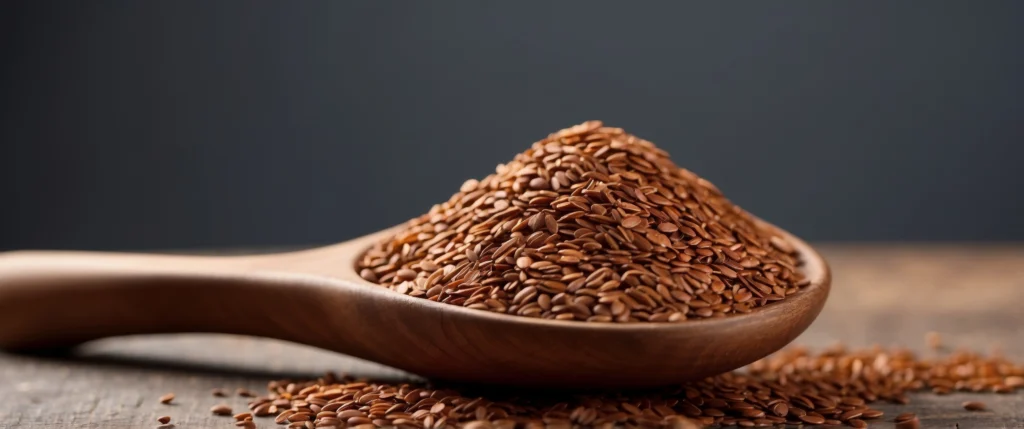
- Brown Flaxseed: More commonly found and used in a variety of food products.
- Golden Flaxseed: Lighter in color with a milder taste.
Nutritional Information
- Macronutrients:
- Carbohydrates: About 34.4g per 100g, primarily from fiber (27g).
- Proteins: High in protein with about 18g per 100g.
- Fats: Rich in healthy fats, particularly omega-3 fatty acids (ALA), with about 42g of fat per 100g.
- Micronutrients:
- Vitamins: Good source of B vitamins, including thiamin (B1) and folate (B9).
- Minerals: Rich in magnesium, phosphorus, and manganese. Also contains iron, potassium, and calcium.
Phytonutrients
Ground flaxseed is highly regarded for its nutritional content, particularly its rich supply of phytonutrients, which are plant-based compounds known to support health and help prevent various diseases. Here’s a detailed look at the phytonutrients present in ground flaxseed:
Lignans
- Primary Phytonutrient: Flaxseeds are one of the richest sources of lignans, a type of phytoestrogen that has antioxidant properties. Lignans are believed to have anti-cancer, anti-viral, and anti-bacterial properties.
- Secoisolariciresinol diglucoside (SDG): This is the main lignan found in flaxseed, which is converted by intestinal bacteria into enterolactone and enterodiol, compounds that are thought to have estrogenic and antiestrogenic effects, potentially reducing the risk of hormone-related cancers.
Omega-3 Fatty Acids
- Alpha-linolenic Acid (ALA): While not a phytonutrient, ALA is a crucial plant-based omega-3 fatty acid found abundantly in flaxseed. It has anti-inflammatory properties and contributes to heart health.
Fibers
- Soluble and Insoluble Fiber: Flaxseed contains both types of dietary fiber, which are beneficial for digestive health. Soluble fiber helps to regulate blood sugar levels and reduce cholesterol, while insoluble fiber aids in preventing constipation. Although fibers are not classified as phytonutrients, their presence in flaxseed significantly contributes to its health benefits.
Phenolic Acids and Flavonoids
- These compounds have antioxidant properties, contributing to the overall antioxidant capacity of flaxseed. They play a role in protecting the body against oxidative stress and inflammation.
Vitamins and Minerals
- While not phytonutrients, flaxseed is also a good source of certain vitamins and minerals, including B vitamins, vitamin E, magnesium, and manganese, which support various bodily functions and contribute to overall health.
The combination of these phytonutrients, along with its rich content of omega-3 fatty acids and dietary fiber, makes ground flaxseed a powerful superfood. Its consumption has been linked to a reduced risk of heart disease, cancer, stroke, and diabetes. Including ground flaxseed in the diet can provide a wide range of health benefits, from improving digestive health to reducing inflammation and enhancing cardiovascular health.
Calorie Count and Glycemic Index
- Calorie Count: A 100g serving of ground flaxseed contains approximately 545 calories.
- Glycemic Index: Low, due to its high fiber content and minimal impact on blood sugar levels.
Physical Characteristics
- Color: Depending on the variety, can range from golden yellow to dark brown.
- Shape: When ground, it becomes a fine meal.
- Size: As a ground powder, the size is uniform and fine.
- Texture: Ground flaxseed has a smooth, slightly oily texture due to its high-fat content.
Culinary Uses
- Common Dishes: Ground flaxseed is used as a nutritional supplement, in smoothies, yogurts, and as an egg substitute in vegan baking. It’s also added to bread, muffins, and breakfast cereals for a nutritional boost.
- Preparation Methods: Can be mixed directly into foods or used in baking. When mixed with water, it forms a gel-like substance, making it an excellent binder or egg replacement.
- Suitable Pairings: Complements both sweet and savory dishes. It pairs well with nuts, fruits, and whole grains.
Geographical Information
- Origin: Originally cultivated in the Middle East, flaxseed has been a staple food and fiber source for thousands of years.
- Primary Growing Regions: Today, flaxseed is grown in various parts of the world, with Canada, Russia, and China being the largest producers.
- Seasonal Availability: Ground flaxseed, due to its processed nature, is available year-round in supermarkets and health food stores.
Flaxseed, especially when ground, is a highly nutritious food source, rich in dietary fiber, omega-3 fatty acids, and lignans (a type of phytoestrogen with antioxidant properties). Its health benefits include improving digestive health, lowering blood cholesterol levels, and potentially reducing the risk of certain cancers. Given its versatility, ground flaxseed can be easily incorporated into daily meals to enhance their nutritional value.
| proximates: | |
| Water | 6.8 g |
| Energy (Atwater General Factors) | 545 kcal |
| Energy (Atwater Specific Factors) | 514 kcal |
| Nitrogen | 3.4 g |
| Protein | 18 g |
| Total lipid (fat) | 37.3 g |
| Ash | 3.52 g |
| Carbohydrates: | |
| Carbohydrate, by difference | 34.4 g |
| Fiber, total dietary | 23.1 g |
| Minerals: | |
| Calcium, Ca | 230 mg |
| Iron, Fe | 5.78 mg |
| Magnesium, Mg | 372 mg |
| Phosphorus, P | 556 mg |
| Potassium, K | 793 mg |
| Sodium, Na | 37 mg |
| Zinc, Zn | 4.74 mg |
| Copper, Cu | 1.34 mg |
| Manganese, Mn | 2.4 mg |
| Selenium, Se | 136 µg |
| Vitamins and Other Components: | |
| Thiamin | 0.537 mg |
| Niacin | 3.76 mg |
| Vitamin B-6 | 0.393 mg |
| Biotin | 33.8 µg |
| Folate, total | 41 µg |
| Vitamin E (alpha-tocopherol) | <0.001 mg |
| Vitamin K (phylloquinone) | 3.7 µg |
| Lipids: | |
| Fatty acids, total saturated | 3.28 g |
| SFA 16:0 | 1.91 g |
| SFA 18:0 | 1.19 g |
| Fatty acids, total monounsaturated | 5.94 g |
| MUFA 18:1 c | 5.76 g |
| MUFA 20:1 c | 0.158 g |
| Fatty acids, total polyunsaturated | 24.7 g |
| PUFA 18:2 n-6 c,c | 5.26 g |
| PUFA 18:3 n-3 c,c,c (ALA) | 19.4 g |
| Amino acids: | |
| Tryptophan | 0.301 g |
| Threonine | 0.931 g |
| Isoleucine | 0.938 g |
| Leucine | 0.138 g |
| Lysine | 0.932 g |
| Methionine | 0.402 g |
| Phenylalanine | 1.12 g |
| Tyrosine | 0.572 g |
| Valine | 1.14 g |
| Arginine | 2.21 g |
| Histidine | 0.514 g |
| Alanine | 1.08 g |
| Aspartic acid | 2.31 g |
| Glutamic acid | 4.85 g |
| Glycine | 1.39 g |
| Proline | 0.872 g |
| Serine | 1.14 g |
| Hydroxyproline | 0.191 g |
| Cysteine | 0.552 g |
| Isoflavones: | |
| Daidzein | 20.2 mg |
| Genistein | 0.013 mg |
| Daidzin | 30.2 mg |
| Genistin | 1.947 mg |
| Glycitin | 31.6 mg |