
Basic Information
- Common Name: 00 Flour
- Scientific Name: N/A (This categorization applies to wheat flour and does not have a specific scientific name.)
- Category: Grain (Wheat Flour)
- Varieties: While “00” refers to the fineness of the milling and not to a variety of wheat, it can be made from different types of wheat, affecting its protein content and best uses.
Nutritional Information
- Macronutrients:
- Carbohydrates: High in carbs, with about 74.4g per 100g serving.
- Proteins: Contains about 11.4g of protein per 100g, though this can vary slightly depending on the specific wheat used.
- Fats: Low in fat, with about 1.52g per 100g serving.
- Micronutrients:
- Vitamins: Generally, flour is not a significant source of vitamins but may contain small amounts of B vitamins, especially if it’s unbleached.
- Minerals: Provides minerals such as selenium, manganese, and phosphorus in small quantities.
Phytonutrients
00 flour, a highly refined wheat flour, is not typically recognized for its phytonutrient content. Phytonutrients are naturally occurring compounds found in plants, fruits, vegetables, grains, nuts, and seeds that have health-promoting properties. The refining process that 00 flour undergoes significantly reduces its phytonutrient content compared to whole grain or less processed flours. However, here’s an overview of what might be present in trace amounts or in less refined versions of wheat flour:
Potential Phytonutrients in Whole Wheat (Before Refinement)
- Phenolic Acids: Found in the bran and germ of wheat grains, these compounds have antioxidant properties. Examples include ferulic acid and caffeic acid.
- Alkylresorcinols: Present in the outer layers of the wheat grain, alkylresorcinols are thought to have antioxidant and potential anti-cancer properties.
- Lignans: Plant compounds that have been associated with reduced risk of heart disease and certain cancers.
- Phytic Acid: While often considered an anti-nutrient due to its ability to bind minerals and reduce their absorption, phytic acid also has antioxidant properties.
Impact of Refinement on Phytonutrients
The milling process to produce 00 flour involves removing the wheat kernel’s bran and germ, significantly reducing the flour’s content of fiber, vitamins, minerals, and phytonutrients. The result is a very fine, powdery flour with a lower nutrient density. Thus, 00 flour, while excellent for making fine-textured baked goods like pizza crusts and pastas, does not contribute significantly to the intake of phytonutrients compared to whole grain or less refined flours.
Nutritional Considerations
- While 00 flour is enriched in some regions, meaning certain vitamins and minerals (like iron and B vitamins) are added back after processing, this does not include phytonutrients.
- The primary nutritional value of 00 flour lies in its carbohydrate content, providing energy, and in some cases, protein quality for gluten development in baking.
For those looking to maximize their intake of phytonutrients from grains, whole grain flours are a more suitable choice. These flours retain the bran and germ, preserving more of the grain’s inherent nutrients and phytochemicals.
Calorie Count and Glycemic Index
- Calorie Count: A 100g serving of 00 flour contains approximately 366 calories.
- Glycemic Index: High, typically around 85, varying slightly depending on the specific product and its protein content.
Physical Characteristics
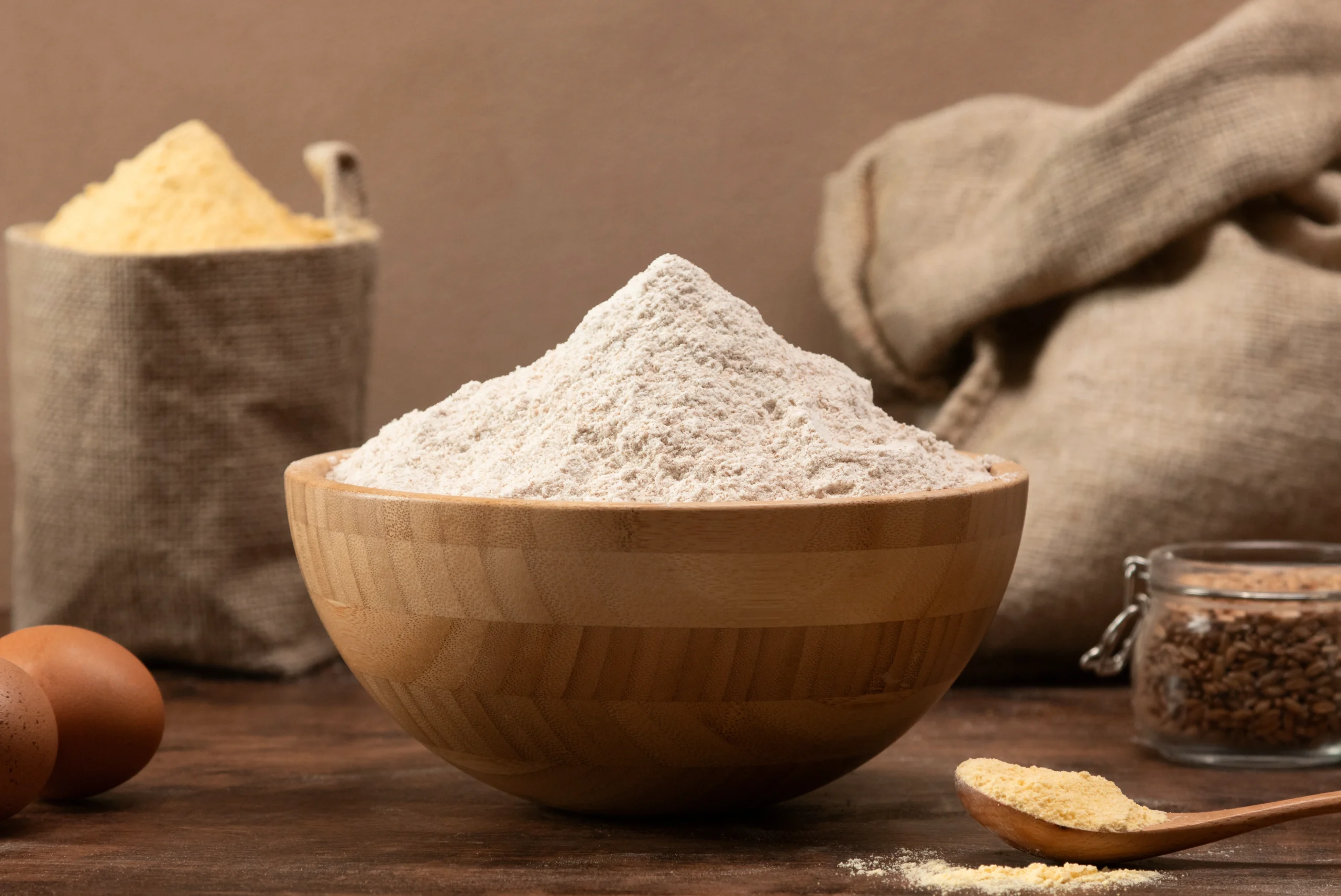
- Color: White
- Shape: Powder
- Size: Very fine grain size, finer than all-purpose flour.
- Texture: Silky and smooth, due to its very fine milling.
Culinary Uses
- Common Dishes: 00 flour is best known for its use in making high-quality pasta and Neapolitan pizza dough. It’s also used in pastries and some types of bread.
- Preparation Methods: The fine texture of 00 flour makes it particularly suited for pasta and thin pizza crusts that require a delicate yet elastic dough.
- Suitable Pairings: Pairs with traditional pizza and pasta ingredients, including tomatoes, basil, mozzarella cheese, and various meats and vegetables.
Geographical Information
- Origin: Italy, where the classification system based on the fineness of the flour (including 00, 0, 1, and 2) is most commonly used.
- Primary Growing Regions: The wheat used to make 00 flour can come from various regions, including Italy, the United States, and Canada, among others.
- Seasonal Availability: Flour, including 00 flour, is available year-round due to the storage and milling processes that make wheat products accessible at any time.
00 flour is prized for its fine texture and strong gluten network potential, making it a favorite among professional chefs and home cooks for creating authentic Italian pizzas and pastas. Its specific qualities come from the type of wheat used and the fine milling process, creating a distinct product that performs differently in recipes compared to all-purpose or bread flour.
| proximates: | |
| Water | 12.2 g |
| Energy (Atwater General Factors) | 357 kcal |
| Energy (Atwater Specific Factors) | 366 kcal |
| Nitrogen | 1.82 g |
| Protein | 11.4 g |
| Total lipid (fat) | 1.52 g |
| Ash | 0.46 g |
| Carbohydrates: | |
| Carbohydrate, by difference | 74.4 g |
| Fiber, total dietary | 2.7 g |
| Minerals: | |
| Calcium, Ca | 19 mg |
| Iron, Fe | 0.99 mg |
| Magnesium, Mg | 25.8 mg |
| Phosphorus, P | 106 mg |
| Potassium, K | 136 mg |
| Sodium, Na | <2.49 mg |
| Zinc, Zn | 0.79 mg |
| Copper, Cu | 0.168 mg |
| Manganese, Mn | 0.552 mg |
| Selenium, Se | 10.3 µg |
| Molybdenum, Mo | 34.4 µg |
| Vitamins and Other Components: | |
| Thiamin | 0.125 mg |
| Riboflavin | 0.091 mg |
| Niacin | 1.36 mg |
| Vitamin B-6 | 0.055 mg |
| Folate, total | 13 µg |