
Basic Information
- Common Name: Amaranth Flour
- Scientific Name: Amaranthus spp.
- Category: Grain (technically a pseudocereal)
Varieties
Amaranth encompasses several species, but the most commonly cultivated for grain are Amaranthus caudatus, Amaranthus cruentus, and Amaranthus hypochondriacus. The flour is typically made from the seeds of these plants without distinguishing between the species.
Nutritional Information
- Macronutrients:
- Carbohydrates: Approximately 68.8g per 100g. It’s a good source of complex carbohydrates and dietary fiber.
- Proteins: High in protein, with about 13.2g per 100g. Amaranth protein is known for its lysine content, an essential amino acid often lacking in grains.
- Fats: Contains around 6.24g of fat per 100g, including beneficial unsaturated fatty acids.
- Micronutrients:
- Vitamins: Provides B vitamins, especially riboflavin (B2) and folate (B9).
- Minerals: Rich in minerals such as magnesium, phosphorus, potassium, iron, and zinc. It’s particularly noted for its high iron content compared to other grains.
Phytonutrients
Amaranth flour, derived from the seeds of the Amaranthus plant, is not only notable for its excellent nutritional profile but also for its phytonutrients that contribute to its health benefits. These bioactive compounds have antioxidant, anti-inflammatory, and potentially anti-cancer properties. Here’s an overview of the key phytonutrients present in amaranth flour:
Squalene
- Squalene: A unique phytonutrient found in amaranth, squalene is a potent antioxidant that may have immune-boosting and cancer-preventive properties. It’s relatively rare in the plant kingdom, making amaranth a valuable source.
Phenolic Compounds
- Phenolic Acids: Amaranth contains a variety of phenolic acids, such as ferulic acid, which have strong antioxidant activities. These compounds help protect against oxidative stress and may reduce the risk of chronic diseases.
- Flavonoids: Amaranth seeds are rich in flavonoids, including quercetin and kaempferol, known for their anti-inflammatory and cardiovascular health benefits.
Tocotrienols and Tocopherols
- Vitamin E: Amaranth flour is a good source of vitamin E, particularly tocotrienols and tocopherols, which are powerful antioxidants. They play a crucial role in protecting cells from damage, supporting skin health, and possibly reducing the risk of heart disease and certain cancers.
Phytosterols
- Phytosterols: These plant sterols are known for their cholesterol-lowering effects. Amaranth contains higher levels of phytosterols compared to other grains, contributing to heart health by helping to reduce LDL cholesterol levels.
Peptides
- Peptides: Amaranth seeds produce peptides that have been shown to exhibit antioxidant and antihypertensive properties, further contributing to cardiovascular health.
Dietary Fiber
- While not a phytonutrient, the high dietary fiber content in amaranth flour deserves mention. Fiber has numerous health benefits, including promoting digestive health, helping to control blood sugar levels, and contributing to satiety which can aid in weight management.
Amaranth flour’s combination of phytonutrients, along with its vitamins, minerals, and macronutrients, makes it an exceptionally nutritious food that can contribute to a healthy diet. Its antioxidant and anti-inflammatory properties, in particular, highlight its potential role in preventing chronic diseases and supporting overall health.
Calorie Count and Glycemic Index
- Calorie Count: About 378 calories per 100g.
- Glycemic Index: Low to medium, which makes it a good option for blood sugar regulation.
Physical Characteristics
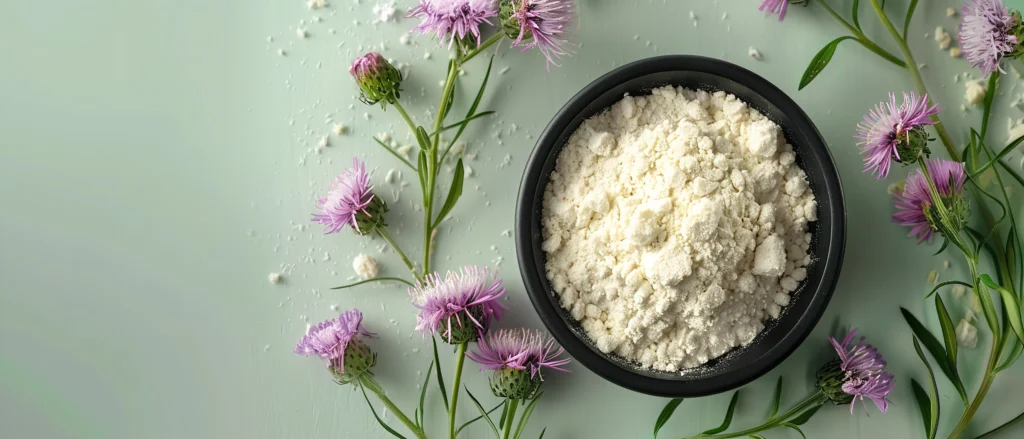
- Color: Light brown to beige.
- Shape: The flour is ground from amaranth seeds, resulting in a fine powder.
- Size: Fine particle size, similar to other flours.
- Texture: Slightly grainy texture compared to wheat flour, with a distinct earthy and nutty flavor.
Culinary Uses
- Common Dishes: Used in gluten-free baking for bread, pancakes, and muffins. It can also be used to thicken soups and sauces or as a breading.
- Preparation Methods: Often mixed with other gluten-free flours to improve texture in baked goods. Can be used in porridge or to make traditional dishes like Mexican atole.
- Suitable Pairings: Works well with both sweet and savory flavors, pairing nicely with fruits, nuts, chocolate, and spices in sweet dishes, or herbs and cheeses in savory dishes.
Geographical Information
- Origin: The amaranth plant is native to Mesoamerica and was a staple food of the Aztecs.
- Primary Growing Regions: Today, it’s grown in various parts of the world, including Mexico, Central America, India, Nepal, China, and parts of Africa.
- Seasonal Availability: Amaranth flour is made from the dried seeds of the amaranth plant and is available year-round.
Amaranth flour is valued for its nutritional profile, offering a gluten-free alternative to traditional grains with the added benefit of being high in protein and micronutrients. Its versatility in both sweet and savory dishes makes it a popular choice in gluten-free and health-conscious cooking.
| proximates: | |
| Water | 9.49 g |
| Energy (Atwater General Factors) | 384 kcal |
| Energy (Atwater Specific Factors) | 378 kcal |
| Nitrogen | 2.26 g |
| Protein | 13.2 g |
| Total lipid (fat) | 6.24 g |
| Ash | 2.29 g |
| Carbohydrates: | |
| Carbohydrate, by difference | 68.8 g |
| Fiber, total dietary | 7.2 g |
| Total dietary fiber (AOAC 2011.25) | 9.04 g |
| High Molecular Weight Dietary Fiber (HMWDF) | 7.86 g |
| Low Molecular Weight Dietary Fiber (LMWDF) | 1.09 g |
| Beta-glucan | <0.1 g |
| Starch | 55.7 g |
| Minerals: | |
| Calcium, Ca | 135 mg |
| Iron, Fe | 7.56 mg |
| Magnesium, Mg | 233 mg |
| Phosphorus, P | 425 mg |
| Potassium, K | 396 mg |
| Sodium, Na | <2.5 mg |
| Zinc, Zn | 3 mg |
| Copper, Cu | 0.518 mg |
| Manganese, Mn | 2.3 mg |
| Selenium, Se | 21.1 µg |
| Molybdenum, Mo | 35.1 µg |
| Vitamins and Other Components: | |
| Thiamin | 0.059 mg |
| Riboflavin | 0.175 mg |
| Niacin | 0.748 mg |
| Vitamin B-6 | 0.387 mg |
| Biotin | 25.4 µg |