
Glutinous rice flour, also known as sweet rice flour, is made from ground glutinous rice (Oryza sativa var. glutinosa). Despite its name, glutinous rice does not contain gluten; rather, the term “glutinous” refers to the sticky, glue-like texture of the rice when cooked. This flour is a staple ingredient in various Asian cuisines, known for its unique texture and ability to create chewy, sticky dishes.
Basic Information
- Common Name: Glutinous Rice Flour
- Scientific Name: Oryza sativa var. glutinosa
- Category: Cereal grain, specifically a variety of rice
- Varieties: Primarily derived from white glutinous rice, though there are both white and black glutinous rice varieties. The flour is usually made from the white variety due to its neutral flavor and color.
Nutritional Information
- Macronutrients:
- Carbohydrates: High in carbs, around 80-85 grams per 100 grams, mainly in the form of starch.
- Proteins: Low to moderate, about 6-8 grams per 100 grams.
- Fats: Very low, typically less than 1 gram per 100 grams.
- Micronutrients: Minimal in vitamins and minerals due to the milling process, but may contain trace amounts of B vitamins and iron.
Phytonutrients
Glutinous rice flour, derived from glutinous rice (Oryza sativa var. glutinosa), while primarily recognized for its starch content, also contains phytonutrients, albeit in smaller amounts compared to whole grains or colorful fruits and vegetables. The milling process to produce flour can reduce the content of some phytonutrients found in the whole grain. However, glutinous rice and its flour still offer certain beneficial compounds:
Phytonutrients in Glutinous Rice Flour
- Phenolic Acids: Glutinous rice contains phenolic compounds, albeit in lower amounts than in some other whole grains. These compounds, such as ferulic acid, have antioxidant properties, which can help protect cells from oxidative damage.
- Flavonoids: Although present in smaller quantities, flavonoids like tricin can be found in glutinous rice. Flavonoids are known for their antioxidant and anti-inflammatory effects, contributing to various health benefits, including reduced risk of chronic diseases.
- Gamma-Oryzanol: Found in rice bran, gamma-oryzanol is an antioxidant unique to rice, known for its potential to improve cholesterol levels and exhibit anti-inflammatory properties. The concentration in glutinous rice flour might be lower due to the removal of the bran during milling.
- Inositol: This naturally occurring compound, present in rice, plays a role in cell signaling and insulin regulation. It contributes to the maintenance of healthy blood sugar levels and has been studied for its potential benefits in mental health conditions.
Nutritional Context and Health Implications
The phytonutrient content in glutinous rice flour, while beneficial, is less pronounced than in more nutrient-dense sources. However, these compounds contribute to the overall nutritional value of the flour, providing antioxidant and anti-inflammatory benefits. When included as part of a varied diet, glutinous rice flour can contribute to a balanced intake of nutrients.
Considerations
It’s important to note that the primary nutritional value of glutinous rice flour comes from its carbohydrate content, specifically its high starch content, which is responsible for the flour’s unique textural properties in cooking and baking. For those looking to maximize their intake of phytonutrients, incorporating a variety of whole grains and colorful fruits and vegetables into the diet is recommended.
In summary, while glutinous rice flour is not a significant source of phytonutrients compared to some other foods, it does contain a range of beneficial compounds that can contribute to health. Its unique culinary properties make it a valuable ingredient in the preparation of traditional Asian dishes, offering both nutritional benefits and cultural significance.
Calorie Count and Glycemic Index
- Calorie Count: Approximately 358 calories per 100 grams.
- Glycemic Index: High, due to the high starch content, making it quickly digestible and capable of raising blood sugar levels rapidly.
Physical Characteristics
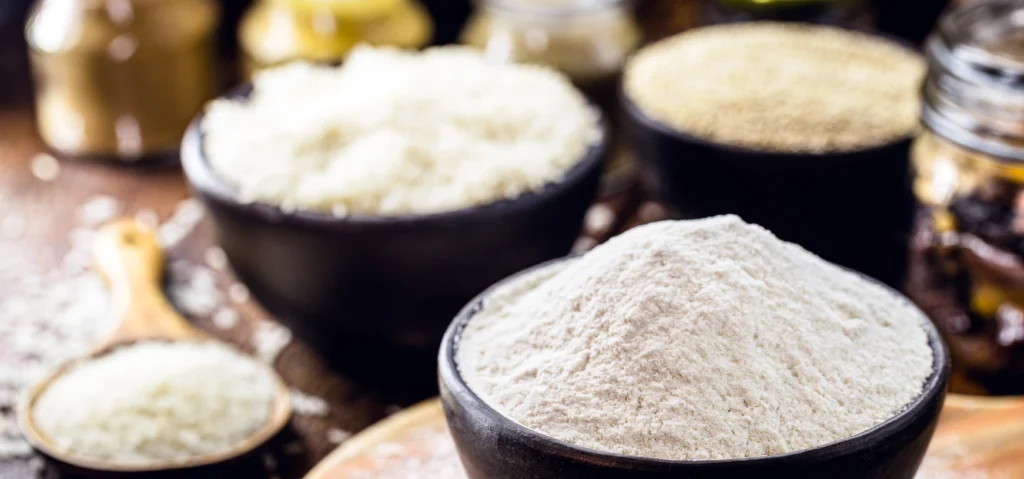
- Color: Fine white powder, though it can vary slightly if made from black glutinous rice.
- Shape: Powder form.
- Size: Consistency similar to other finely ground flours.
- Texture: Fine and powdery with a slightly granular feel when dry. When mixed with water, it becomes sticky and elastic.
Culinary Uses
Glutinous rice flour is essential in Asian cooking for both sweet and savory dishes:
- Common Dishes: Used in mochi, daifuku, and other Japanese sweets, Chinese tangyuan, and various Southeast Asian desserts and snacks like Filipino bibingka and Thai sticky rice with mango.
- Preparation Methods: Can be steamed, boiled, or baked. It’s often used to make doughs and batters that require a chewy, elastic texture.
- Suitable Pairings: Works well with coconut milk, sweet bean pastes, fruits, and sweet syrups. In savory dishes, it pairs well with meats and vegetables in dumplings or rolls.
Geographical Information
- Origin: Glutinous rice is native to Southeast Asia and East Asia, where it has been cultivated for thousands of years.
- Primary Growing Regions: Widely grown in China, Japan, Thailand, Laos, and the Philippines, among other Southeast Asian countries.
- Seasonal Availability: The flour is available year-round due to global cultivation and processing.
Glutinous rice flour is favored for its ability to create textures that are central to many traditional Asian desserts and snacks. Its unique sticky quality when cooked offers a distinctive mouthfeel not easily replicated with other flours, making it an indispensable ingredient in specific culinary traditions.
| proximates: | |
| Water | 11.8 g |
| Energy (Atwater General Factors) | 358 kcal |
| Energy (Atwater Specific Factors) | 368 kcal |
| Nitrogen | 1.07 g |
| Protein | 6.69 g |
| Total lipid (fat) | 1.16 g |
| Ash | 0.22 g |
| Carbohydrates: | |
| Carbohydrate, by difference | 80.1 g |
| Minerals: | |
| Calcium, Ca | 10 mg |
| Iron, Fe | 0.34 mg |
| Magnesium, Mg | 21.2 mg |
| Phosphorus, P | 63 mg |
| Potassium, K | 80 mg |
| Sodium, Na | 6 mg |
| Zinc, Zn | 1.34 mg |
| Copper, Cu | 0.17 mg |
| Manganese, Mn | 0.995 mg |
| Selenium, Se | 2 µg |
| Molybdenum, Mo | 40.7 µg |
| Vitamins and Other Components: | |
| Thiamin | 0.053 mg |
| Riboflavin | <0.02 mg |
| Niacin | 1.12 mg |
| Vitamin B-6 | 0.044 mg |