
Basic Information
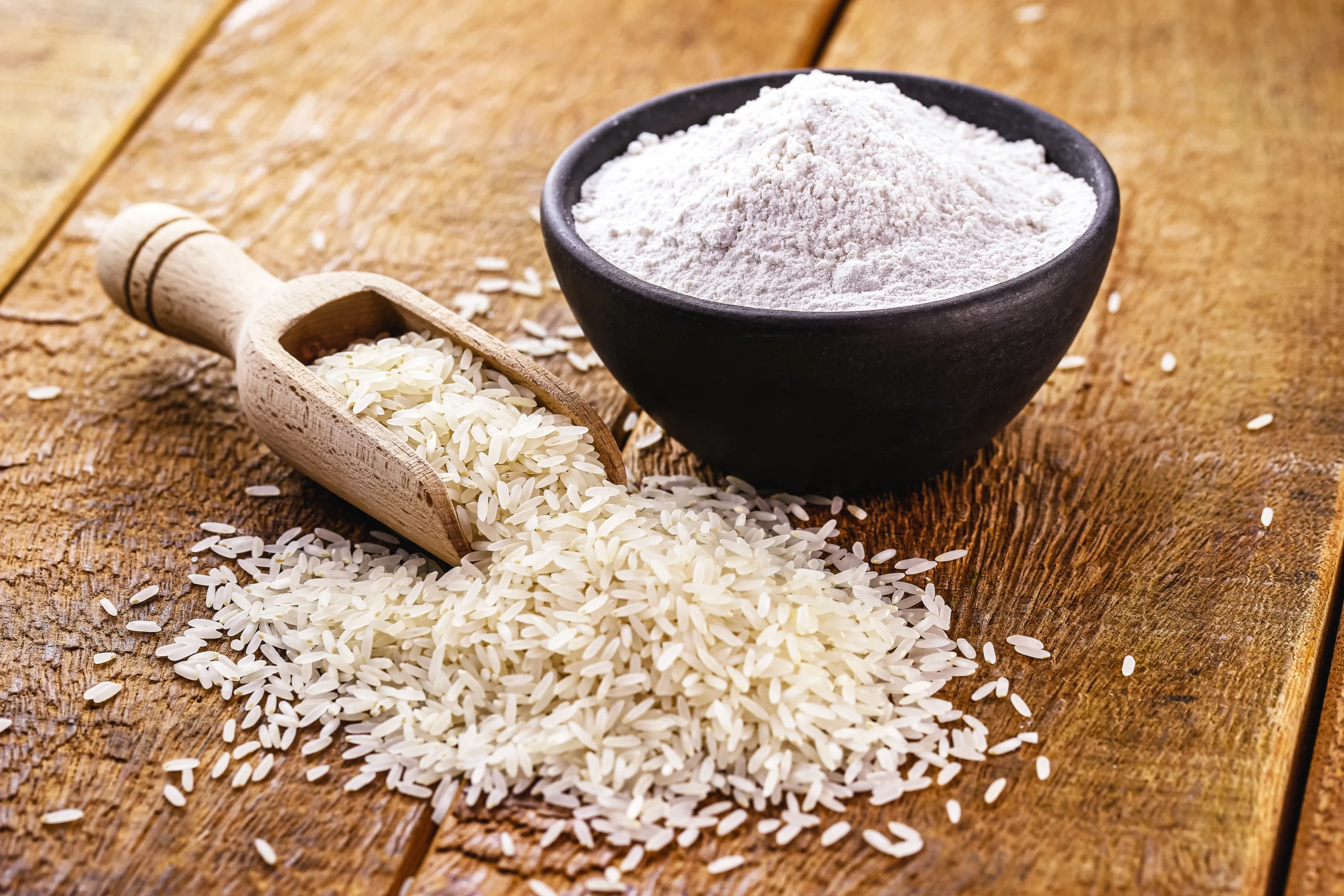
- Name: White Rice Flour
- Scientific Name: Oryza sativa
- Category: Grain, specifically a flour made from ground white rice.
Nutritional Information
- Macronutrients:
- Carbohydrates: High in carbs, with about 80g per 100g serving.
- Proteins: Relatively low, approximately 6g per 100g.
- Fats: Minimal, less than 1g per 100g.
- Micronutrients:
- Rich in minerals like manganese and selenium.
- Contains B vitamins, especially B1 (thiamine) and B3 (niacin) in unenriched forms.
Phytonutrients
Flour made from white rice, commonly referred to as white rice flour or simply rice flour when not enriched, lacks the diversity of phytonutrients found in whole grains or enriched flours. However, it still contains some beneficial compounds, primarily due to the minimal nutrients that remain after the refining process. The key phytonutrients and components in unenriched white rice flour include:
- Resistant Starch: Although not a phytonutrient in the traditional sense, resistant starch functions similarly by promoting gut health and may be present in small amounts in rice flour, especially if the flour is used in recipes that are cooked and then cooled. This type of starch resists digestion in the small intestine and ferments in the large intestine, acting as a prebiotic.
- Phytic Acid: Present in all seeds, including rice, phytic acid can bind minerals and reduce their absorption. While often considered an anti-nutrient, phytic acid also has antioxidant properties.
- Trace Minerals: While the refining process significantly reduces the mineral content, trace amounts of minerals like selenium, manganese, and phosphorus can be found. These minerals are crucial for various bodily functions, including antioxidant defense, bone health, and energy production.
- Vitamins: Unenriched white rice flour is generally low in vitamins, especially compared to whole grain or enriched flours. However, it may still contain trace amounts of B vitamins, which are essential for energy metabolism and brain function.
It’s important to note that unenriched white rice flour is primarily composed of starch and has a high glycemic index, which means it can cause a rapid increase in blood sugar levels. For this reason, it’s often used in combination with other flours and ingredients in gluten-free baking to balance out its nutritional profile.
For those seeking the health benefits of phytonutrients in rice products, brown rice flour or whole grain rice varieties offer a more nutrient-dense alternative, containing higher levels of fiber, vitamins, minerals, and antioxidants due to the presence of the bran and germ.
Calorie Count and Glycemic Index
- Calorie Count: Around 359 calories per 100g.
- Glycemic Index: High, typically ranging from 70 to 90, making it quick to digest and causing a rapid increase in blood sugar levels.
Physical Characteristics
- Color: White or off-white.
- Shape: Fine powder.
- Size: Very fine, similar to traditional wheat flour but can feel slightly grainier.
- Texture: Smooth when dry; when mixed with water, it has a slightly gritty texture compared to wheat flour.
Culinary Uses
- Common Dishes: Used in a variety of baked goods, like bread, cakes, and cookies. Also used for thickening sauces and soups and making noodles or dumplings.
- Preparation Methods: Can be used similarly to wheat flour in baking, although it may require adjustments in moisture content due to its different absorption rates.
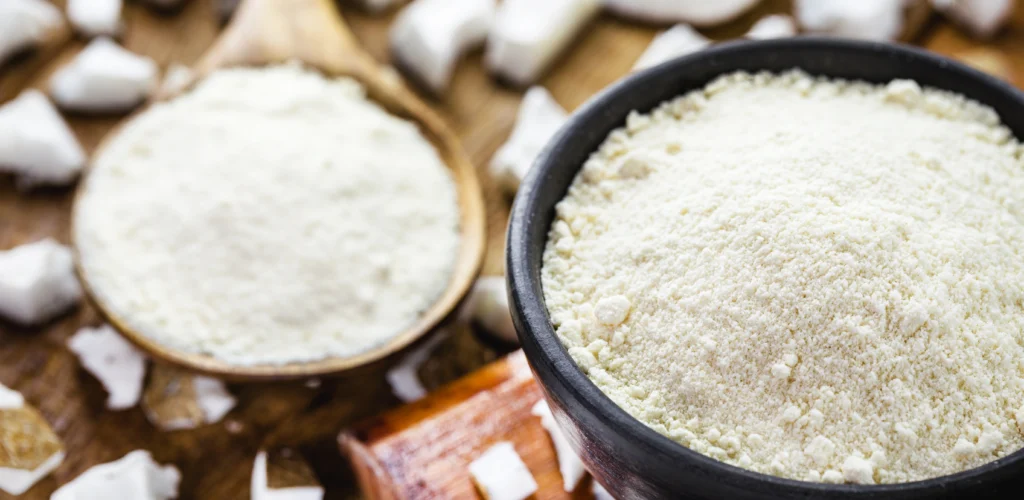
- Suitable Pairings: Pairs well with other gluten-free flours like almond or coconut flour to improve texture and flavor in gluten-free recipes.
Geographical Information
- Origin: Domesticated over 10,000 years ago, with origins traced back to the Yangtze River basin in China.
- Primary Growing Regions: Widely cultivated in Asia, with China and India being the largest producers. Also grown in parts of Africa, the Americas, and Australia.
- Seasonal Availability: As a stored grain, white rice flour is generally available year-round, though rice itself is typically harvested in the late summer to autumn months, depending on the region.
| proximates: | |
| Water | 11.6 g |
| Energy (Atwater General Factors) | 359 kcal |
| Energy (Atwater Specific Factors) | 369 kcal |
| Nitrogen | 1.11 g |
| Protein | 6.94 g |
| Total lipid (fat) | 1.3 g |
| Ash | 0.35 g |
| Carbohydrates: | |
| Carbohydrate, by difference | 79.8 g |
| Fiber, total dietary | 0.5 g |
| Minerals: | |
| Calcium, Ca | 6 mg |
| Iron, Fe | 0.22 mg |
| Magnesium, Mg | 22.9 mg |
| Phosphorus, P | 94 mg |
| Potassium, K | 75 mg |
| Sodium, Na | 5 mg |
| Zinc, Zn | 1.19 mg |
| Copper, Cu | 0.209 mg |
| Manganese, Mn | 0.892 mg |
| Selenium, Se | 5.3 µg |
| Molybdenum, Mo | 45.5 µg |
| Vitamins and Other Components: | |
| Thiamin | 0.09 mg |
| Niacin | 1.25 mg |
| Vitamin B-6 | 0.052 mg |
| Folate, total | 16 µg |