
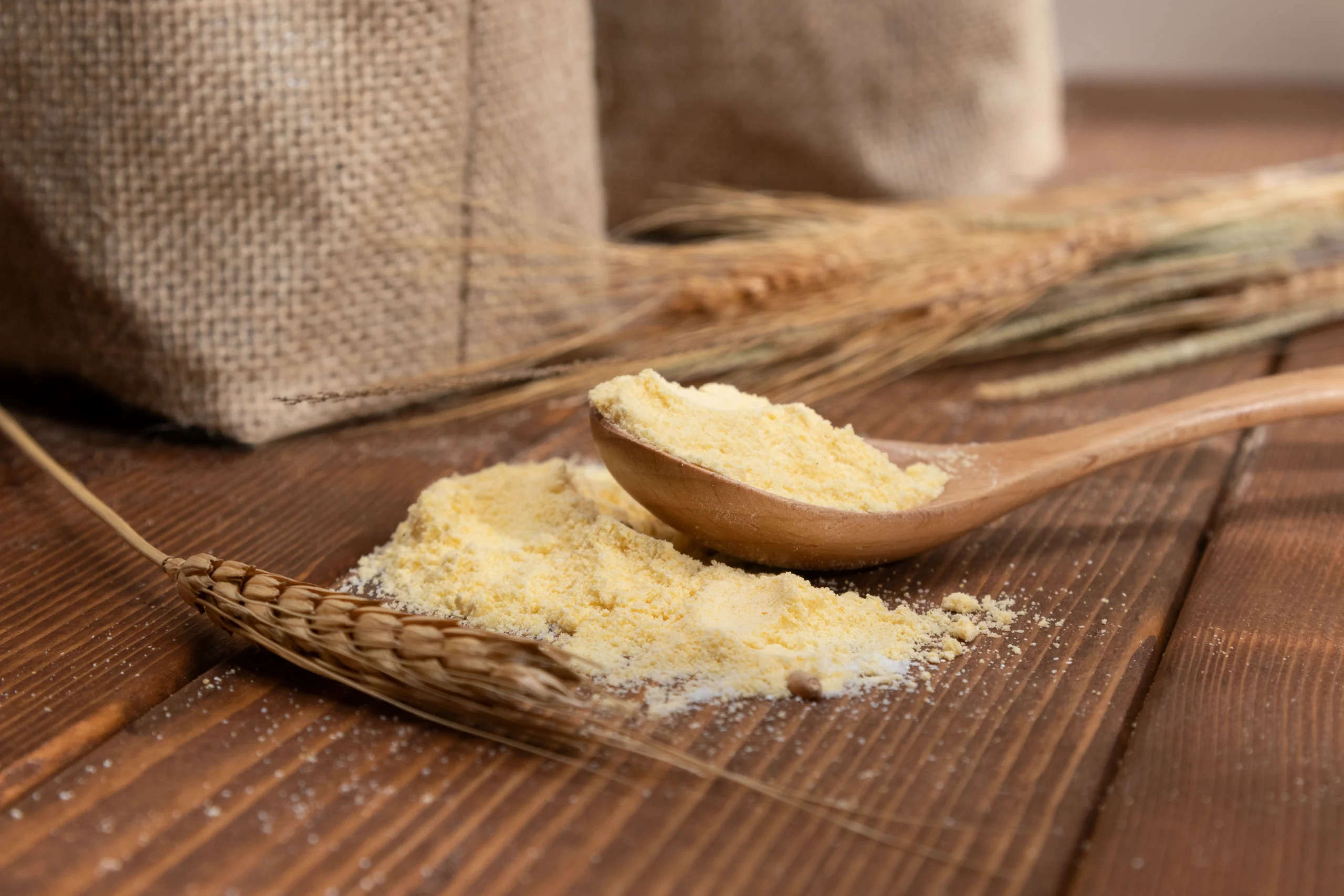
Fine semolina flour, produced from the endosperm of durum wheat (Triticum durum), is a key ingredient in a variety of culinary applications worldwide. Recognized for its distinctive yellow color and fine texture, it lends itself to both sweet and savory dishes. Here’s a comprehensive overview of fine semolina flour, covering its basic information, nutritional content, physical characteristics, culinary uses, and geographical background.
Basic Information
- Common Name: Fine Semolina Flour
- Scientific Name: Derived from Triticum durum
- Category: Grain (Cereal)
- Varieties: Semolina flour is categorized by its texture, ranging from fine to coarse. Fine semolina is more powdery and is preferred for certain types of dishes, such as desserts and some breads.
Nutritional Information
- Macronutrients: Fine semolina is primarily composed of carbohydrates, with a significant amount of protein and a low fat content. Its gluten content makes it unsuitable for individuals with gluten intolerance or celiac disease.
- Micronutrients: It is a good source of several vitamins and minerals, including B vitamins (particularly folate and thiamine), iron, magnesium, phosphorus, and zinc.
Phytonutrients
Fine semolina flour, sourced from the endosperm of durum wheat (Triticum durum), is integral to various culinary applications, especially in Mediterranean, Middle Eastern, and South Asian cuisines. Like its coarse counterparts, fine semolina flour is packed with essential phytonutrients that contribute to its health benefits. These bioactive compounds vary based on the wheat variety, growing conditions, and processing methods, but generally, fine semolina flour is known to contain several important phytonutrients.
Phytonutrients in Fine Semolina Flour
Carotenoids
- Lutein and Zeaxanthin: These carotenoids are crucial for eye health, helping to protect against age-related macular degeneration and cataracts. Semolina’s golden yellow color is partly due to its content of lutein.
Phenolic Acids
- Ferulic Acid: The primary phenolic acid in semolina, ferulic acid, offers antioxidant properties that can help combat oxidative stress and may reduce the risk of chronic diseases.
- Caffeic and p-Coumaric Acids: These acids are also present in smaller amounts and contribute to the antioxidant capacity of semolina flour.
Tocols
- Vitamin E (Tocopherols and Tocotrienols): Semolina contains vitamin E compounds, which are potent antioxidants. They play a role in protecting cells from damage and supporting overall health.
Alkylresorcinols
- Found predominantly in the bran layer of wheat, alkylresorcinols are bioactive compounds associated with potential health benefits, including anti-inflammatory and anticancer properties. Their presence in fine semolina would be lower than in whole grain varieties but still contributes to its health profile.
Betaine
- Betaine: This compound supports methylation processes in the body and has been linked to cardiovascular health and other chronic disease prevention.
Dietary Fiber
Although not a phytonutrient per se, the dietary fiber content in fine semolina flour merits attention. Fine semolina contains both soluble and insoluble fiber, important for digestive health, controlling blood sugar levels, and maintaining a healthy heart.
It’s important to note that the refining process to produce fine semolina flour may reduce the concentration of these phytonutrients compared to whole grain or coarser semolina flours. However, fine semolina still retains a portion of these health-promoting compounds, contributing to a balanced diet when consumed as part of a variety of whole and enriched grains.
Calorie Count and Glycemic Index
- Calorie Count: Approximately 358 calories per 100 grams.
- Glycemic Index: Fine semolina has a medium to high glycemic index, which may affect blood sugar levels more significantly than whole grain or lower GI foods.
Physical Characteristics
- Color: Golden yellow, due to the presence of carotenoids in durum wheat.
- Shape and Size: Fine semolina flour has a powdery texture, with much finer particles compared to its coarse counterparts.
- Texture: It has a slightly gritty texture when raw, but becomes smooth and firm when cooked.
Culinary Uses
- Common Dishes: Fine semolina is used in making a variety of dishes, including pasta (especially finer varieties like angel hair), porridge, desserts like semolina cake and halva, and some types of bread and pizza dough.
- Preparation Methods: It can be cooked into a porridge, used as a flour for baking, or incorporated into doughs. Its fine texture makes it particularly suitable for delicate pastas and smooth desserts.
- Suitable Pairings: Fine semolina pairs well with dairy ingredients in desserts, and with tomato-based sauces or pesto in pasta dishes.
Geographical Information
- Origin: Durum wheat, the source of semolina flour, originally comes from the Middle East and is one of the earliest cultivated forms of wheat.
- Primary Growing Regions: Today, major producers of durum wheat include Canada, Italy, and the United States, with significant cultivation also occurring in North Africa and the Middle East.
- Seasonal Availability: Semolina flour is available year-round, thanks to global production and distribution.
Fine semolina flour is prized for its versatility in the kitchen, enabling the creation of both hearty meals and delicate desserts. Its rich nutritional profile and distinctive texture make it a favorite among culinary professionals and home cooks alike, offering a touch of tradition and flavor to a wide array of dishes.
| proximates: | |
| Water | 12.1 g |
| Energy (Atwater General Factors) | 358 kcal |
| Energy (Atwater Specific Factors) | 366 kcal |
| Nitrogen | 2.13 g |
| Protein | 13.3 g |
| Total lipid (fat) | 1.84 g |
| Ash | 0.74 g |
| Carbohydrates: | |
| Carbohydrate, by difference | 72 g |
| Fiber, total dietary | 3.7 g |
| Minerals: | |
| Calcium, Ca | 20 mg |
| Iron, Fe | 2.43 mg |
| Magnesium, Mg | 46.3 mg |
| Phosphorus, P | 163 mg |
| Potassium, K | 208 mg |
| Zinc, Zn | 1.24 mg |
| Copper, Cu | 0.246 mg |
| Manganese, Mn | 0.842 mg |
| Selenium, Se | 44.1 µg |
| Molybdenum, Mo | 47.9 µg |
| Vitamins and Other Components: | |
| Thiamin | 0.695 mg |
| Riboflavin | 0.34 mg |
| Niacin | 5.6 mg |
| Vitamin B-6 | 0.108 mg |
| Folate, total | 164 µg |