
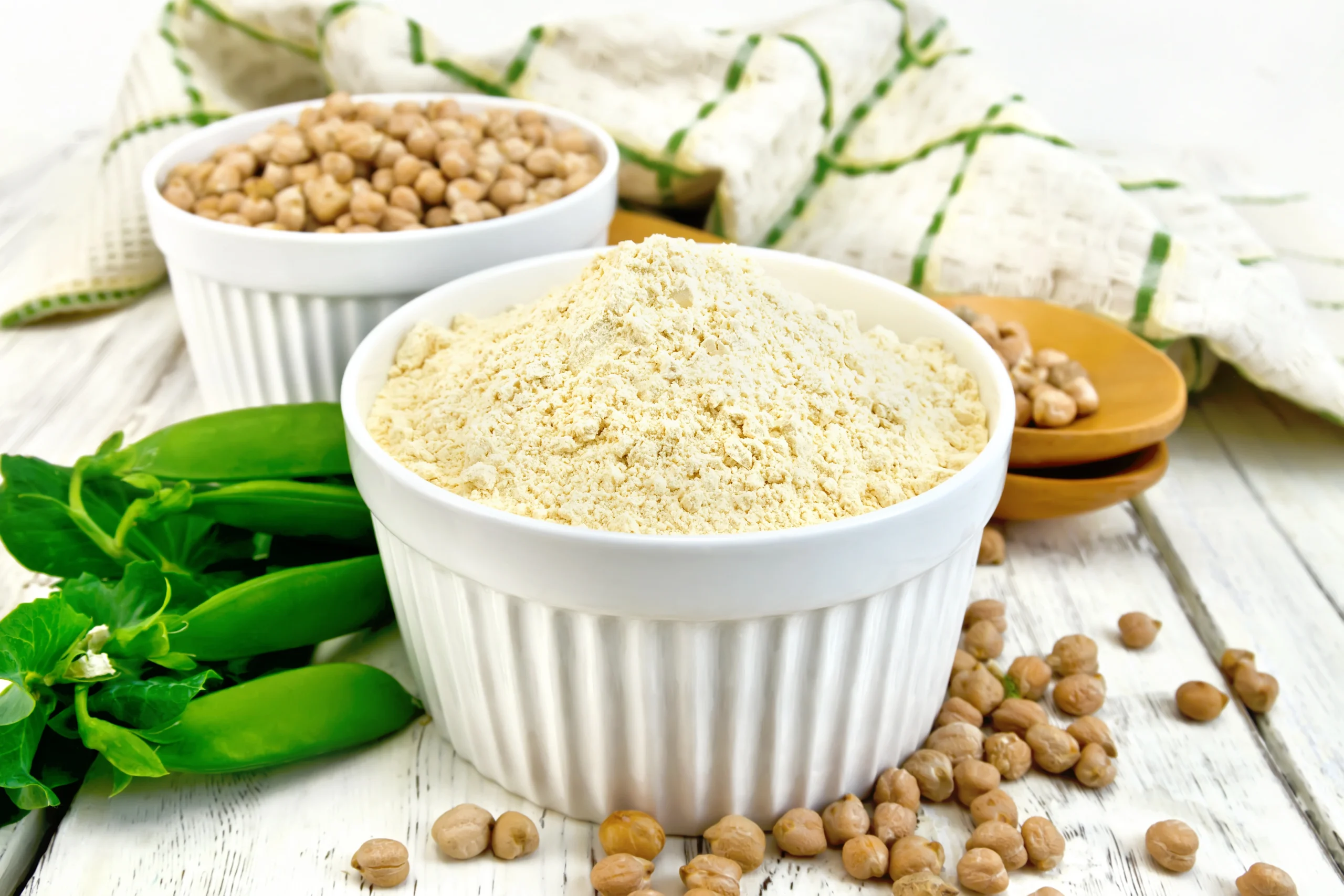
Defatted soy flour is produced from soybeans, with the scientific name Glycine max. It belongs to the legume family and is a valuable by-product of extracting soybean oil. The process involves removing most of the fat content, leaving a high-protein, low-fat flour that’s versatile in various culinary applications. Below is detailed information about defatted soy flour, encompassing its basic information, nutritional content, physical characteristics, culinary uses, and geographical background.
Basic Information
- Common Name: Defatted Soy Flour
- Scientific Name: Glycine max
- Category: Legume
- Varieties: Soy flour is available in full-fat, low-fat, and defatted varieties, with the defatted version being the focus here. It can also vary in terms of processing, such as raw or toasted.
Nutritional Information
- Macronutrients: Defatted soy flour is rich in proteins, providing around 50% protein by weight, making it an excellent source for vegetarians and vegans. It’s low in fat due to the defatting process and contains a moderate amount of carbohydrates, including dietary fiber.
- Micronutrients: It is a good source of minerals such as iron, calcium, and magnesium, and vitamins, particularly B vitamins like folate. It also contains isoflavones, which have been studied for their potential health benefits.
Phytonutrients
Defatted soy flour, derived from Glycine max, is a nutrient-rich food product known for its high protein content and low fat. Beyond these macronutrients, defatted soy flour is also packed with a variety of phytonutrients that contribute to its health benefits. These bioactive compounds play crucial roles in preventing diseases and promoting overall health. Here’s an overview of the key phytonutrients present in defatted soy flour:
Isoflavones
- Genistein, Daidzein, and Glycitein: These are the primary isoflavones found in soy products, including defatted soy flour. Isoflavones are a type of phytoestrogen, which means they can mimic estrogen in the body, but with weaker effects. They have been studied for their potential in reducing the risk of certain cancers, osteoporosis, and heart disease, as well as in alleviating menopausal symptoms.
Saponins
- Soy Saponins: These compounds are known for their antioxidant properties, which help protect the body against cellular damage. Saponins also have been suggested to have cholesterol-lowering effects, improve immune function, and may reduce the risk of certain cancers.
Phytosterols
- Beta-Sitosterol, Campesterol, and Stigmasterol: Phytosterols in soy can contribute to lowering cholesterol levels by limiting the absorption of cholesterol in the intestines, thereby potentially reducing the risk of heart disease.
Protease Inhibitors
- Bowman-Birk Inhibitor and Soybean Kunitz Inhibitor: These compounds can interfere with the action of enzymes necessary for the growth of cancer cells, thereby potentially playing a role in cancer prevention. However, their impact on human health is complex and subject to ongoing research.
Phytic Acid
- Phytic Acid: While often considered an anti-nutrient due to its ability to bind minerals and reduce their absorption, phytic acid also has antioxidant properties and may play a role in cancer prevention.
Dietary Fiber
- Insoluble and Soluble Fiber: Although not a phytonutrient per se, the fiber content in defatted soy flour is worth mentioning. Fiber promotes digestive health, helps regulate blood sugar levels, and can aid in maintaining a healthy weight.
Lecithins
- Lecithins (Phospholipids): These are fatty substances that can act as emulsifiers, helping to blend ingredients that typically do not mix well. Lecithins also have potential benefits for heart and liver health.
The phytonutrients in defatted soy flour contribute to its designation as a functional food, offering potential health benefits beyond basic nutrition. These benefits include antioxidant properties, potential protective effects against certain types of cancer, cardiovascular benefits, and support for bone health. However, the effects of these phytonutrients can vary depending on individual health conditions, the amount consumed, and the form in which soy is ingested. It’s also important to note that while defatted soy flour is a concentrated source of these compounds, the removal of fat can affect the bioavailability of fat-soluble components like some isoflavones.
Calorie Count and Glycemic Index
- Calorie Count: Approximately 339 calories per 100 grams.
- Glycemic Index: Low, making it a suitable option for people managing blood sugar levels.
Physical Characteristics
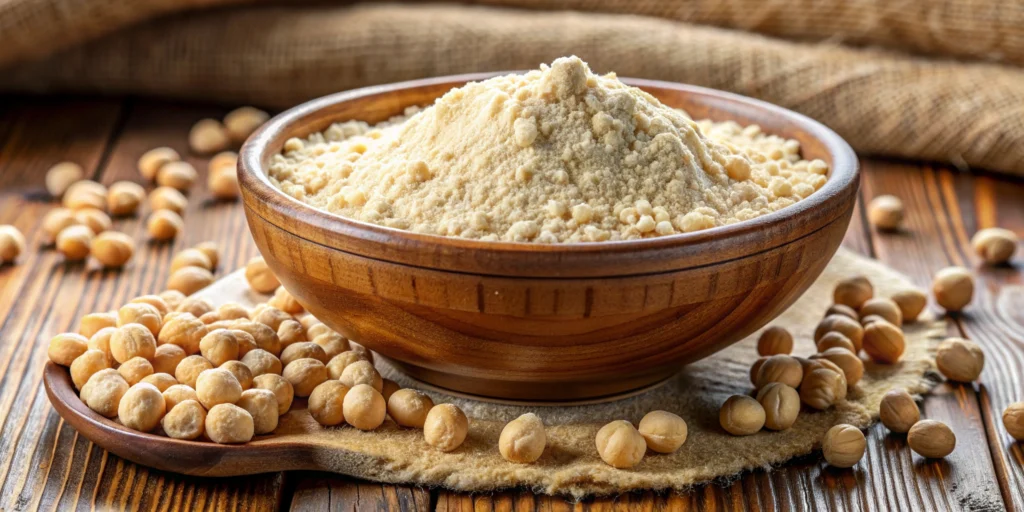
- Color: Pale yellow to creamy white.
- Shape and Size: It is a fine powder, similar in texture to conventional flour but slightly coarser due to its higher protein and fiber content.
- Texture: Depending on the processing method, it can have a slightly grainy texture.
Culinary Uses
- Common Dishes: Defatted soy flour is used in baking bread, cakes, and cookies to increase their protein content. It is also used in the production of pasta, cereal products, and as a thickening agent in soups and sauces.
- Preparation Methods: It can be used alone or mixed with other flours to enhance the nutritional profile of recipes. In baking, it’s recommended to substitute up to 30% of wheat flour with soy flour to improve protein content without compromising the texture.
- Suitable Pairings: Works well with savory and sweet dishes due to its neutral flavor. It pairs well with grains, nuts, and dairy substitutes in vegan recipes.
Geographical Information
- Origin: Soybeans are native to East Asia, with a cultivation history that spans over 3,000 years.
- Primary Growing Regions: Today, the largest producers of soybeans are the United States, Brazil, and Argentina, with significant production also occurring in China and India.
- Seasonal Availability: Defatted soy flour is available year-round due to global production and distribution.
Defatted soy flour stands out for its high protein content, versatility in food preparation, and potential health benefits, making it a popular ingredient in health-conscious and plant-based diets. Its production supports the efficient use of soybeans by utilizing by-products of the oil extraction process, contributing to sustainable food practices.
| proximates: | |
| Water | 6.24 g |
| Energy (Atwater General Factors) | 366 kcal |
| Energy (Atwater Specific Factors) | 339 kcal |
| Nitrogen | 8.18 g |
| Protein | 51.1 g |
| Total lipid (fat) | 3.33 g |
| Ash | 6.45 g |
| Carbohydrates: | |
| Carbohydrate, by difference | 32.9 g |
| Total dietary fiber (AOAC 2011.25) | 24.3 g |
| Minerals: | |
| Calcium, Ca | 338 mg |
| Iron, Fe | 7.34 mg |
| Magnesium, Mg | 313 mg |
| Phosphorus, P | 726 mg |
| Potassium, K | 2480 mg |
| Sodium, Na | 2 mg |
| Zinc, Zn | 4.44 mg |
| Copper, Cu | 1.51 mg |
| Manganese, Mn | 3.81 mg |
| Selenium, Se | 45.8 µg |
| Molybdenum, Mo | 211 µg |
| Vitamins and Other Components: | |
| Thiamin | 0.542 mg |
| Riboflavin | 0.298 mg |
| Niacin | 3.43 mg |
| Vitamin B-6 | 0.618 mg |
| Amino acids: | |
| Tryptophan | 0.616 g |
| Threonine | 1.97 g |
| Isoleucine | 2.31 g |
| Leucine | 4.11 g |
| Lysine | 3.06 g |
| Methionine | 0.622 g |
| Phenylalanine | 2.86 g |
| Tyrosine | 1.74 g |
| Valine | 2.31 g |
| Arginine | 3.93 g |
| Histidine | 1.27 g |
| Alanine | 2.86 g |
| Aspartic acid | 4.98 g |
| Glutamic acid | 9.08 g |
| Glycine | 1.79 g |
| Proline | 2.84 g |
| Serine | 2.7 g |
| Hydroxyproline | 0.176 g |
| Cysteine | 1.01 g |