
Full-fat soy flour is produced from whole soybeans (Glycine max), retaining all the natural oils present in the beans. This flour is part of the legume family and stands out due to its high protein and fat content, making it a nutritious alternative to traditional grain flours. Here is an overview of full-fat soy flour, covering its basic information, nutritional content, physical characteristics, culinary uses, and geographical background.
Basic Information
- Common Name: Full-fat Soy Flour
- Scientific Name: Glycine max
- Category: Legume
- Varieties: While the primary distinction in soy flour is between full-fat, defatted, and low-fat, full-fat soy flour can also vary based on the soybean cultivar used and the degree of grinding, affecting its texture and nutrient composition.
Nutritional Information
- Macronutrients: Full-fat soy flour is rich in proteins, offering a complete protein source with all essential amino acids. It is high in fats, including healthy unsaturated fats, and provides a moderate amount of carbohydrates.
- Micronutrients: It is a good source of iron, calcium, magnesium, and phosphorus, and contains B vitamins such as folate, thiamine, and riboflavin. Full-fat soy flour also includes significant levels of phytonutrients like isoflavones.
Phytonutrients
Full-fat soy flour, derived from the whole soybeans (Glycine max), is not just a rich source of protein and healthy fats but also packed with various phytonutrients. These bioactive compounds provide numerous health benefits, including antioxidant properties, potential reduction in the risk of certain diseases, and hormonal balance. Here’s a comprehensive overview of the phytonutrients present in full-fat soy flour:
Isoflavones
- Genistein, Daidzein, and Glycitein: These are potent antioxidants found in soybeans that mimic estrogen but with weaker effects, known as phytoestrogens. They have been studied for their potential to reduce the risk of certain cancers, osteoporosis, and heart disease, and to alleviate menopausal symptoms.
Saponins
- Soy Saponins: These compounds exhibit antioxidant and immune-boosting properties. Saponins may also help in lowering cholesterol levels, improving heart health, and potentially offering protection against certain cancers.
Phytosterols
- Beta-Sitosterol, Campesterol, and Stigmasterol: Phytosterols are known for their cholesterol-lowering effects by blocking the absorption of cholesterol in the intestines. This action can contribute to a reduced risk of heart disease.
Protease Inhibitors
- Bowman-Birk and Kunitz Inhibitors: These are compounds that may play a role in cancer prevention by inhibiting the growth of cancer cells. However, their effect on human health can be complex and is the subject of ongoing research.
Phytic Acid
- Phytic Acid: Often considered an anti-nutrient due to its ability to bind minerals and reduce their absorption, phytic acid also has antioxidant properties. It may help in reducing the risk of cancer development.
Lecithins (Phospholipids)
- Lecithins: These are beneficial for heart and liver health and can act as emulsifiers, helping to blend ingredients in food products.
Omega-3 and Omega-6 Fatty Acids
- Although not categorized as phytonutrients, the presence of omega-3 and omega-6 fatty acids in full-fat soy flour contributes to its nutritional profile. These essential fatty acids are crucial for brain health, reducing inflammation, and supporting cardiovascular health.
Dietary Fiber
- Full-fat soy flour is also a good source of dietary fiber, including both soluble and insoluble fiber. This is important for digestive health, blood sugar regulation, and may help in preventing colorectal cancer.
The phytonutrients in full-fat soy flour contribute to its health-promoting properties, making it a valuable addition to a balanced diet. These compounds work synergistically to offer antioxidant protection, support hormonal balance, and reduce the risk of chronic diseases. The high content of these bioactive compounds in full-fat soy flour, compared to its defatted counterpart, is due to the minimal processing it undergoes, preserving the nutritional integrity of the soybeans.
Calorie Count and Glycemic Index
- Calorie Count: Approximately 421 calories per 100 grams.
- Glycemic Index: Low, making it beneficial for blood sugar control.
Physical Characteristics
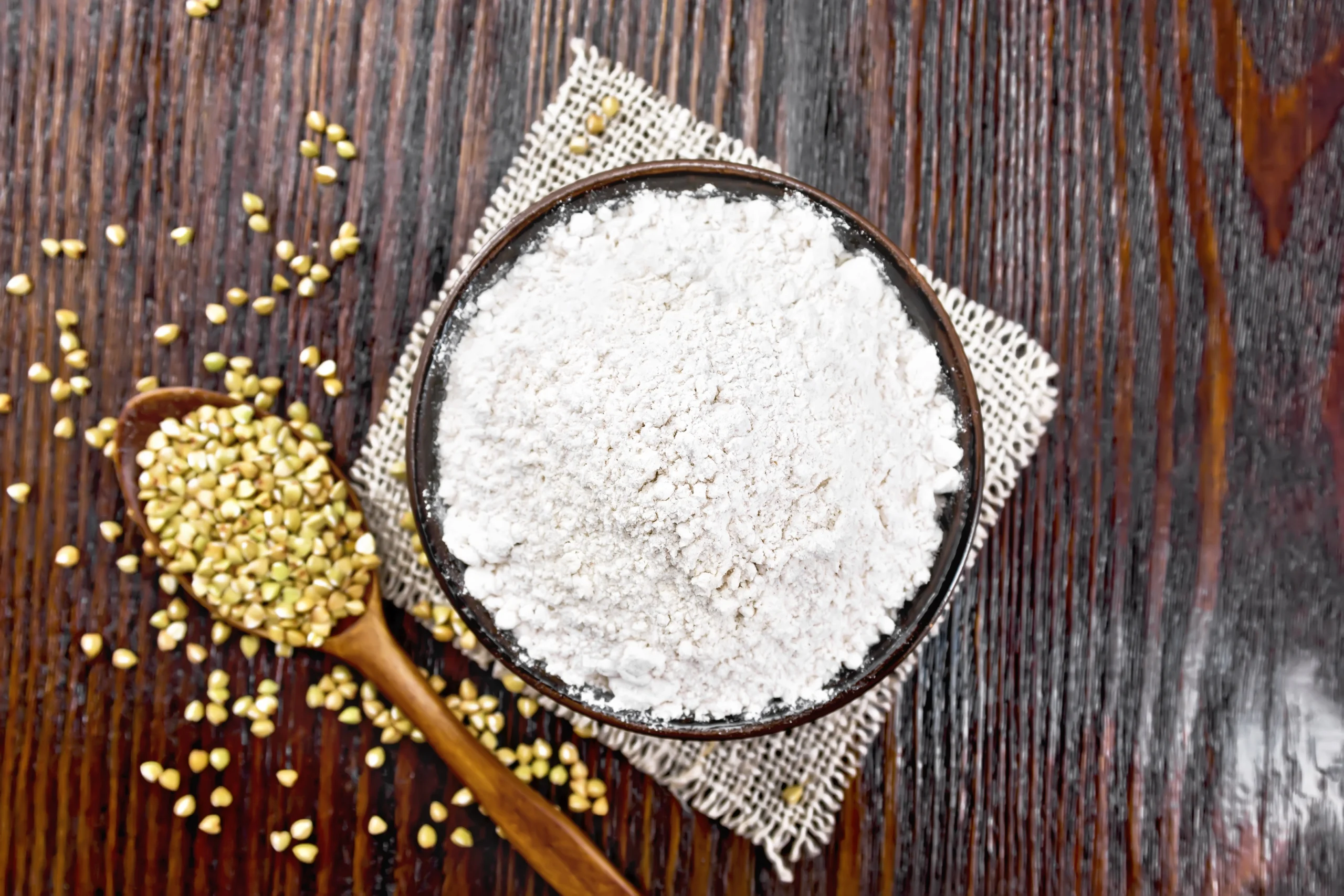
- Color: Light yellow to golden brown, depending on the soybean variety and processing.
- Shape and Size: It is a fine powder, though the texture may be slightly coarser than that of defatted soy flour due to the presence of natural oils.
- Texture: The flour has a richer texture and a more pronounced soy flavor compared to its defatted counterpart.
Culinary Uses
- Common Dishes: Full-fat soy flour is used in baked goods like bread, cookies, and cakes to increase their protein and nutrient content. It can also be used in vegetarian and vegan meat substitutes, dairy-free yogurts, and smoothies.
- Preparation Methods: It can be used alone or mixed with other flours to enhance nutritional content. Due to its high-fat content, adjustments in recipes may be needed to balance moisture.
- Suitable Pairings: Pairs well with flavors like chocolate, nuts, and spices in sweet dishes, and complements savory dishes with its rich, nutty flavor.
Geographical Information
- Origin: Soybeans are native to East Asia and have been cultivated for thousands of years, with evidence of domestication dating back to 7000 BCE in China.
- Primary Growing Regions: Today, the largest producers of soybeans are the United States, Brazil, and Argentina, with significant production also in China and India.
- Seasonal Availability: Full-fat soy flour is available year-round due to extensive cultivation and global trade.
Full-fat soy flour offers a nutrient-dense alternative to traditional flours, with its high protein and healthy fat content catering to a variety of dietary needs and preferences. Its versatility in both savory and sweet culinary applications makes it a valuable ingredient in health-conscious and plant-based diets. Its global production ensures its availability, making it a staple in diverse cuisines around the world.
| proximates: | |
| Water | 7.85 g |
| Energy (Atwater General Factors) | 452 kcal |
| Energy (Atwater Specific Factors) | 421 kcal |
| Nitrogen | 6.18 g |
| Protein | 38.6 g |
| Total lipid (fat) | 20.7 g |
| Ash | 4.92 g |
| Carbohydrates: | |
| Carbohydrate, by difference | 27.9 g |
| Minerals: | |
| Calcium, Ca | 258 mg |
| Iron, Fe | 9.51 mg |
| Magnesium, Mg | 254 mg |
| Phosphorus, P | 607 mg |
| Potassium, K | 1860 |
| Sodium, Na | 2 mg |
| Zinc, Zn | 3.75 mg |
| Copper, Cu | 1.09 mg |
| Manganese, Mn | 3.16 mg |
| Selenium, Se | 14.3 µg |
| Molybdenum, Mo | 314 µg |
| Vitamins and Other Components: | |
| Thiamin | 0.362 mg |
| Riboflavin | 0.363 mg |
| Niacin | 2.74 mg |
| Vitamin B-6 | 0.34 mg |
| Amino acids: | |
| Tryptophan | 0.45 g |
| Threonine | 1.48 g |
| Isoleucine | 1.74 g |
| Leucine | 3.06 g |
| Lysine | 2.14 g |
| Methionine | 0.485 g |
| Phenylalanine | 2.15 g |
| Tyrosine | 1.4 g |
| Valine | 1.74 g |
| Arginine | 2.74 g |
| Histidine | 0.95 g |
| Alanine | 2.14 g |
| Aspartic acid | 3.76 g |
| Glutamic acid | 6.8 g |
| Glycine | 1.35 g |
| Proline | 2.13 g |
| Serine | 2.07 g |
| Hydroxyproline | 0.207 g |
| Cysteine | 0.765 g |