

Basic Information
- Name: Kale (Frozen, Cooked, Boiled, Drained, Without Salt)
- Scientific Name: Brassica oleracea (Acephala Group)
- Category: Vegetable
Varieties
While this entry specifically addresses frozen kale, it’s worth noting that kale comes in several varieties, including curly kale, lacinato kale (also known as dinosaur kale), and red Russian kale, among others.
Nutritional Information
- Macronutrients:
- Carbohydrates: Approximately 5.3 g per 100 g
- Proteins: About 2.94 g per 100 g
- Fats: Negligible, less than 1.21 g per 100 g
- Micronutrients: Rich in Vitamin A, Vitamin C, Vitamin K, calcium, and iron. Also contains magnesium, potassium, and phosphorus.
phytonutrients
Kale, even when frozen, cooked, boiled, and drained, remains a nutrient-dense vegetable, rich in a variety of phytonutrients that contribute to its health benefits. These bioactive compounds have been studied for their potential antioxidant, anti-inflammatory, and anti-cancer properties. Here’s an overview of the key phytonutrients present in kale:
Types of Phytonutrients in Kale
- Glucosinolates: Kale is well-known for its high glucosinolate content. These sulfur-containing compounds can be converted into isothiocyanates (such as sulforaphane) during digestion, which have been shown to have anti-cancer, anti-inflammatory, and detoxifying effects.
- Carotenoids: Kale is a rich source of carotenoids, including beta-carotene (which the body can convert into vitamin A), lutein, and zeaxanthin. These antioxidants are important for eye health, protecting against macular degeneration and cataracts, and may also play a role in preventing chronic diseases.
- Flavonoids: Kale contains various flavonoids, including quercetin and kaempferol, which have antioxidant and anti-inflammatory properties. These compounds may help reduce the risk of heart disease, lower blood pressure, and combat oxidative stress.
- Vitamin C: While not a phytonutrient per se, the high vitamin C content in kale acts as a powerful antioxidant, supporting immune function, skin health, and collagen synthesis.
- Vitamin K: Again, while technically a vitamin, vitamin K found in kale is essential for blood clotting and bone health. It also has antioxidant properties.
Nutritional Implications
The phytonutrients in kale offer a range of health benefits:
- Antioxidant Protection: The antioxidants in kale, including carotenoids and flavonoids, help neutralize harmful free radicals, potentially reducing the risk of chronic diseases.
- Anti-inflammatory Effects: Compounds like quercetin and isothiocyanates can help reduce inflammation, which is a key factor in many chronic diseases, including arthritis and heart disease.
- Cancer Prevention: The glucosinolates in kale may help protect against several types of cancer by promoting the elimination of carcinogens and inhibiting the growth of cancer cells.
- Eye Health: The carotenoids lutein and zeaxanthin are particularly beneficial for protecting the eyes from UV light and oxidative damage.
Including kale in your diet can provide these phytonutrients, contributing to overall health and well-being. Despite the slight nutrient loss that can occur with boiling, kale remains a highly nutritious food choice, especially for those looking to increase their intake of vitamins and minerals through a varied and balanced diet.
Calorie Count and Glycemic Index
- Calorie Count: Roughly 44 calories per 100 g, depending on specific preparation and variety.
- Glycemic Index: Low
Physical Characteristics
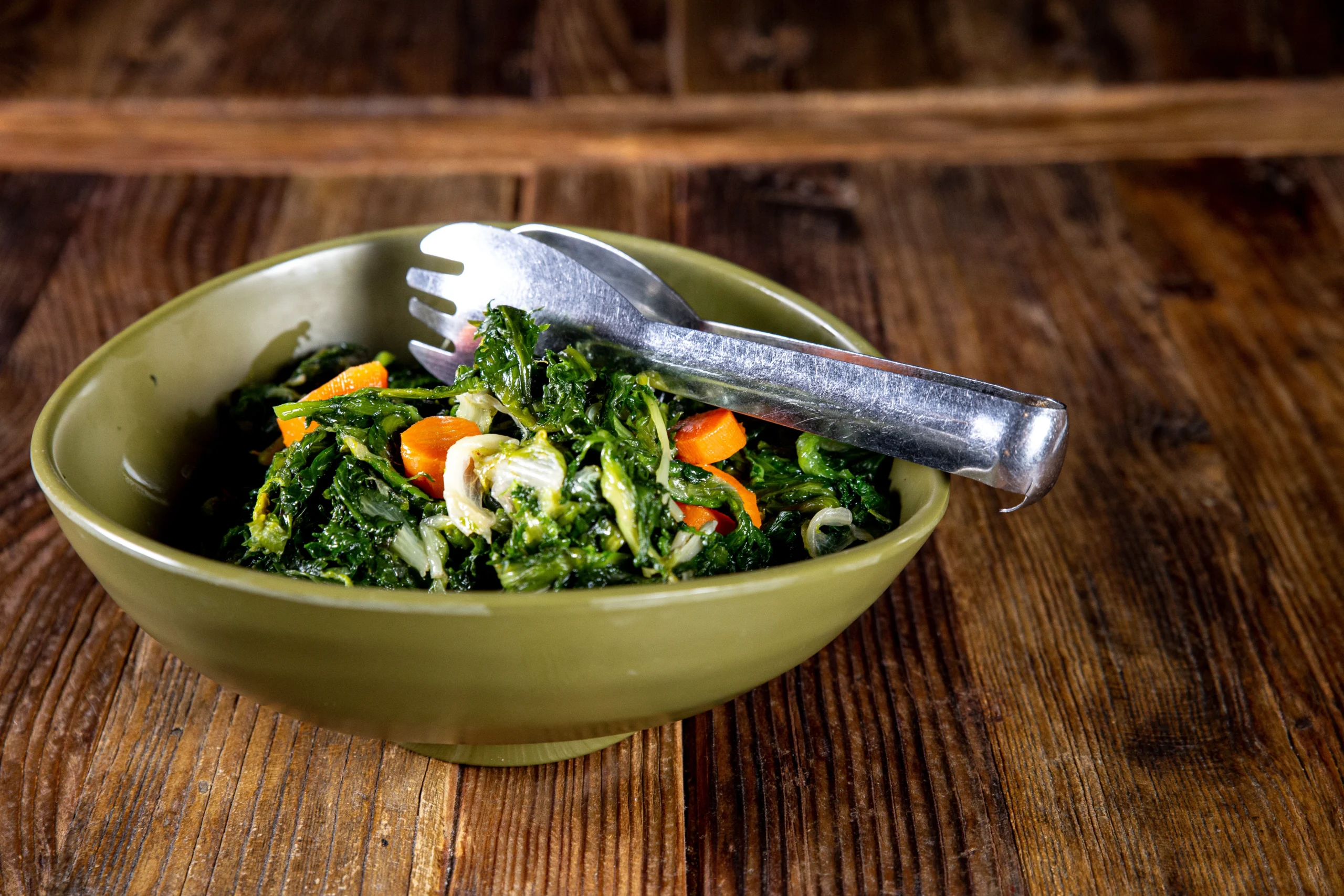
- Color: Dark green, although the intensity can vary based on the variety and cooking method.
- Shape: Leafy, though its structure becomes softer and more compact when boiled.
- Size: Leaves can vary in size; however, cooking reduces volume significantly.
- Texture: Tender and slightly chewy after being boiled and drained.
Culinary Uses
Frozen, cooked, boiled, and drained kale without salt is a versatile ingredient that can be used in a variety of dishes:
- Common Dishes: Often included in soups, stews, casseroles, and pasta dishes. Also used as a side dish, seasoned with olive oil, garlic, lemon, or mixed into mashed potatoes for added nutrition.
- Preparation Methods: While already cooked, it can be reheated with added flavors or ingredients. Suitable for sautéing, incorporating into baked dishes, or simply reheating as a side.
- Suitable Pairings: Pairs well with grains like quinoa or rice, legumes, garlic, onions, mushrooms, and a variety of proteins including chicken, beef, and tofu.
Geographical Information
- Origin: Kale is believed to have been cultivated in Europe as early as 2000 BC, making it one of the oldest known cabbage-related crops.
- Primary Growing Regions: Widely grown in temperate regions worldwide due to its tolerance of cold weather.
- Seasonal Availability: Fresh kale is typically harvested in fall through spring, but frozen kale is available year-round.
Kale, particularly when frozen, cooked, boiled, and drained, retains much of its nutritional value, making it a healthy and convenient option for adding greens to your diet. Its high content of vitamins and minerals supports overall health, including bone health, immune function, and vision.
| proximates: | |
| Water | 89.8 g |
| Energy (Atwater General Factors) | 44 kcal |
| Energy (Atwater Specific Factors) | 36 kcal |
| Nitrogen | 0.47 g |
| Protein | 2.94 g |
| Total lipid (fat) | 1.21 g |
| Ash | 0.73 g |
| Carbohydrates: | |
| Carbohydrate, by difference | 5.3 g |
| Sugars, Total | 1.12 g |
| Sucrose | 0.16 g |
| Glucose | 0.54 g |
| Fructose | 0.42 g |
| Minerals: | |
| Calcium, Ca | 150 mg |
| Iron, Fe | 0.84 mg |
| Magnesium, Mg | 25 mg |
| Phosphorus, P | 42 mg |
| Potassium, K | 144 mg |
| Sodium, Na | 16 mg |
| Zinc, Zn | 0.27 mg |
| Copper, Cu | 0.067 mg |
| Manganese, Mn | 0.542 mg |
| Vitamins and Other Components: | |
| Vitamin C, total ascorbic acid | 17.8 mg |
| Thiamin | 0.063 mg |
| Riboflavin | 0.14 mg |
| Niacin | 0.457 mg |
| Pantothenic acid | 0.17 mg |
| Vitamin B-6 | 0.063 mg |
| Folate, total | 65 µg |
| Vitamin A, RAE | 146 µg |
| Carotene, beta | 1730 µg |
| Carotene, alpha | 10 µg |
| Cryptoxanthin, beta | 26 µg |
| Lutein + zeaxanthin | 4980 µg |
| Vitamin E (alpha-tocopherol) | 1.61 mg |
| Tocopherol, gamma | 0.12 mg |
| Vitamin K (phylloquinone) | 418 µg |