

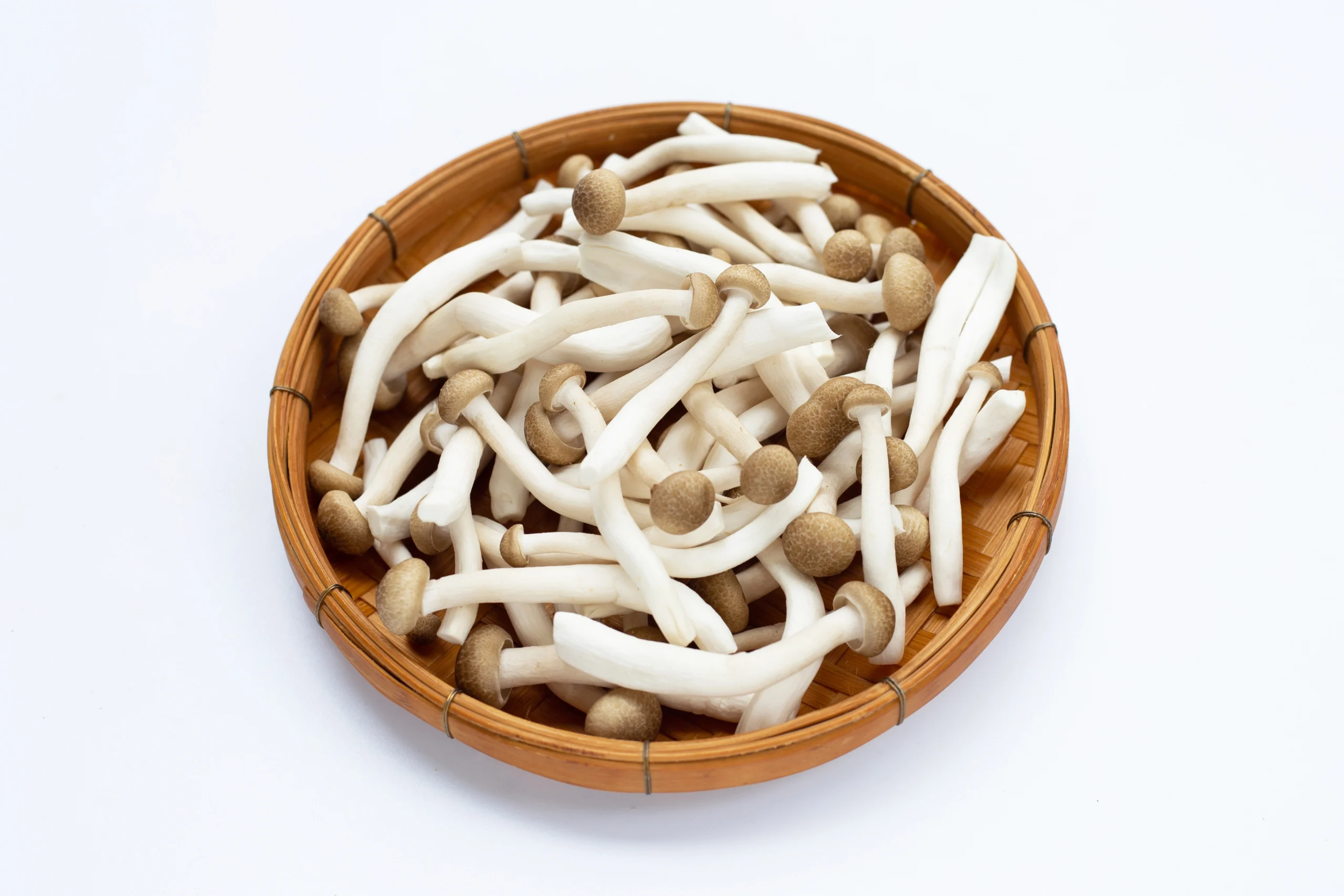
Certainly! Enoki mushrooms, with their unique appearance and texture, offer distinct flavors and nutritional benefits. Here’s a comprehensive overview based on your requested categories:
Basic Information
- Common Name: Enoki Mushroom
- Scientific Name: Flammulina velutipes
- Category: Fungi (commonly classified in culinary contexts as a vegetable)
- Varieties: While enoki mushrooms are a specific type, there are slight variations in color ranging from white to golden, depending on whether they are grown in the dark or with some light exposure.
Nutritional Information
Enoki mushrooms are low in calories but rich in nutrients, providing a good mix of vitamins and minerals.
- Macronutrients (per 100 grams):
- Carbohydrates: 8.14g
- Proteins: 2.42g
- Fats: 0.24g
- Micronutrients:
- Good source of niacin (Vitamin B3), pantothenic acid (B5), and thiamin (B1).
- Contains minerals such as phosphorus, potassium, and iron.
- Enoki mushrooms are noted for their high fiber content.
Phytonutrients
Enoki mushrooms, known for their distinctive slender stems and small caps, are not just unique in appearance but also in their nutritional content, particularly their phytonutrients. These mushrooms are scientifically named Flammulina velutipes and offer a range of health benefits attributed to their phytochemical composition.
Phytonutrients in Enoki Mushrooms
Enoki mushrooms contain various phytonutrients that contribute to their health benefits, including antioxidants, polysaccharides, and other bioactive compounds. Here’s an overview of the key phytonutrients found in enoki mushrooms:
- Polysaccharides: Enoki mushrooms are rich in polysaccharides, especially beta-glucans. These complex carbohydrates play a crucial role in immune system modulation and may have anti-tumor properties. They’re also known for their potential to lower blood cholesterol levels and improve gut health.
- Flavonoids: Like many other mushrooms, enoki mushrooms contain flavonoids, which are potent antioxidants. These compounds can help neutralize harmful free radicals in the body, reducing oxidative stress and potentially lowering the risk of chronic diseases.
- Lectins: Enoki mushrooms produce lectins, which have been studied for their selective toxicity against cancer cells without harming healthy cells. Lectins in enoki mushrooms may contribute to their reported anti-cancer properties.
- Triterpenoids: These compounds have been found in enoki mushrooms and are known for their anti-inflammatory, antiviral, and hepatoprotective effects. Triterpenoids may also contribute to the anti-cancer properties of enoki mushrooms.
- Ergothioneine: This is a naturally occurring amino acid and is a powerful antioxidant found in enoki mushrooms. Ergothioneine helps to protect cells from damage and has been linked to reduced inflammation and lowered risk of chronic diseases.
- Vitamins and Minerals: While not phytonutrients per se, enoki mushrooms are also a source of essential vitamins and minerals, including Vitamin D, B vitamins, selenium, and potassium, contributing to overall health and wellness.
Health Benefits
The phytonutrients in enoki mushrooms contribute to a variety of health benefits:
- Immune System Support: The beta-glucans and other polysaccharides enhance immune function and may help the body fight off infections and cancer.
- Antioxidant Protection: Flavonoids and ergothioneine provide cellular protection against oxidative stress, reducing the risk of chronic diseases.
- Cancer Risk Reduction: Specific compounds like lectins and triterpenoids have been studied for their potential to inhibit cancer cell growth.
Conclusion
Enoki mushrooms are not only a delicious and versatile ingredient in culinary applications but also a rich source of beneficial phytonutrients. Their consumption can contribute to immune health, antioxidant defense, and potentially reduce the risk of certain cancers, making them a valuable addition to a healthy diet.
Calorie Count and Glycemic Index
- Calorie Count: Approximately 37 calories per 100 grams.
- Glycemic Index: Low (due to their low carbohydrate content and high fiber).
Physical Characteristics
- Color: Typically white, although wild varieties can be more golden.
- Shape: Characterized by their long, thin stems and small caps.
- Size: Stems can grow up to 12 centimeters in length.
- Texture: Crisp and slightly chewy when raw, becoming tender when cooked.
Culinary Uses
Enoki mushrooms are celebrated for their delicate texture and subtle, slightly fruity flavor.
- Common Dishes: Often used in Asian cuisine, including soups, salads, stir-fries, and hot pots.
- Preparation Methods: Can be eaten raw or cooked. When cooking, they are usually added at the end of the cooking process to maintain their texture.
- Suitable Pairings: Works well with light sauces and broths, complements seafood, tofu, and vegetables. Their mild flavor pairs well with soy sauce, garlic, and sesame oil.
Geographical Information
- Origin: Enoki mushrooms are native to Japan, China, and Korea.
- Primary Growing Regions: Widely cultivated in East Asia, but also grown in other parts of the world due to their popularity.
- Seasonal Availability: Available year-round due to controlled cultivation practices.
Enoki mushrooms, with their distinct appearance and nutritional profile, are a versatile ingredient in various culinary traditions, especially suited to Asian-inspired dishes. Their health benefits and subtle flavors make them a popular choice for a variety of meals.
| proximates: | |
| Water | 88.3 g |
| Energy (Atwater General Factors) | 44 kcal |
| Energy (Atwater Specific Factors) | 37 kcal |
| Nitrogen | 0.39 g |
| Protein | 2.42 g |
| Total lipid (fat) | 0.24 g |
| Ash | 0.91 g |
| Carbohydrates: | |
| Carbohydrate, by difference | 8.14 g |
| Fiber, total dietary | 2.9 g |
| Beta-glucan | 2.18 g |
| Minerals: | |
| Calcium, Ca | 1 mg |
| Iron, Fe | 1.28 mg |
| Magnesium, Mg | 12.8 mg |
| Phosphorus, P | 84 mg |
| Potassium, K | 402 mg |
| Sodium, Na | <2.49 mg |
| Zinc, Zn | 0.48 mg |
| Copper, Cu | 0.093 mg |
| Manganese, Mn | 0.09 mg |
| Selenium, Se | <2.5 µg |
| Vitamins and Other Components: | |
| Thiamin | 0.012 mg |
| Riboflavin | 0.24 mg |
| Niacin | 6.99 mg |
| Vitamin B-6 | 0.119 mg |
| Biotin | 12.5 µg |
| Glutathione | 25.7 mg |
| Phytosterols: | |
| Stigmasterol | <0.2 mg |
| Campesterol | <0.2 mg |
| Beta-sitosterol | <0.2 mg |
| Ergosta-7-enol | 3.02 mg |
| Ergosta-5,7-dienol | 15.2 mg |
| Ergosta-7,22-dienol | 0.632 mg |
| Ergosterol | 36 mg |
| Beta-sitostanol | <0.2 mg |
| Delta-5-avenasterol | <0.2 mg |
| Delta-7-Stigmastenol | <0.2 mg |
| Amino acids: | |
| Ergothioneine | 26 mg |