
King oyster mushrooms, also known as king trumpet mushrooms, are a unique and increasingly popular variety of edible fungi, appreciated for their meaty texture and savory flavor. Here’s a comprehensive overview based on your requested categories:
Basic Information
- Common Name: King Oyster Mushroom
- Scientific Name: Pleurotus eryngii
- Category: Fungi
- Varieties: While “king oyster” refers specifically to Pleurotus eryngii, there are various subspecies and closely related species within the Pleurotus genus.
Nutritional Information
King oyster mushrooms are a low-calorie food rich in protein, fiber, and a range of vitamins and minerals, making them a nutritious addition to any meal.
- Macronutrients (per 100 grams):
- Carbohydrates: Approximately 8.5g
- Proteins: Approximately 2.41g
- Fats: Less than 0.31g
- Micronutrients:
- Rich in Vitamin D, B vitamins (especially niacin and riboflavin), and minerals such as phosphorus, potassium, and selenium.
Phytonutrients
King oyster mushrooms (Pleurotus eryngii) are not only favored for their delicious taste and meaty texture but also for their beneficial phytonutrients. These compounds contribute to the mushroom’s health-promoting properties, including antioxidant, anti-inflammatory, and potentially anti-cancer effects. Here’s a detailed overview of the key phytonutrients found in king oyster mushrooms:
1. Polysaccharides
- Beta-Glucans: King oyster mushrooms are rich in beta-glucans, a type of soluble dietary fiber known for its immune-modulating effects. These compounds can enhance the immune system’s effectiveness and may help in the prevention of infections and certain cancers.
- Glycoproteins: These are proteins with oligosaccharide chains attached. They play various roles in immune system function and have been researched for their potential anti-tumor effects.
2. Antioxidants
- Ergothioneine: A naturally occurring amino acid and potent antioxidant found in king oyster mushrooms. Ergothioneine helps protect cells from oxidative damage and may reduce the risk of chronic diseases.
- Selenium: While not a phytonutrient per se, selenium acts as a powerful antioxidant when incorporated into enzymes in the body. King oyster mushrooms are a good plant-based source of selenium.
3. Triterpenoids
- These compounds are known for their anti-inflammatory, antiviral, and hepatoprotective properties. Research has suggested that triterpenoids found in king oyster mushrooms may also have anti-cancer potential, although more studies are needed to fully understand their effects.
4. Lovastatin
- Lovastatin: King oyster mushrooms contain this natural statin, which can help lower cholesterol levels in the blood. Lovastatin works by inhibiting an enzyme involved in the production of cholesterol in the liver.
5. Vitamins and Minerals
- Although not phytonutrients, it’s worth noting that king oyster mushrooms are rich in vitamins B2 (riboflavin), B3 (niacin), B5 (pantothenic acid), and minerals like potassium and phosphorus. These contribute to overall health and well-being.
Health Benefits Associated with Phytonutrients in King Oyster Mushrooms
The phytonutrients in king oyster mushrooms contribute to various health benefits:
- Immune System Support: Beta-glucans enhance immune response, potentially offering protection against infections and cancer.
- Antioxidant Protection: Compounds like ergothioneine and selenium protect against oxidative stress and may reduce the risk of chronic diseases.
- Heart Health: The presence of lovastatin aids in managing cholesterol levels, which is beneficial for heart health.
- Anti-inflammatory Effects: Triterpenoids and other anti-inflammatory compounds can help reduce inflammation in the body, potentially mitigating the risk of many inflammatory conditions.
King oyster mushrooms, with their rich array of phytonutrients, offer a blend of flavors and health benefits, making them a valuable addition to a nutritious diet.
Calorie Count and Glycemic Index
- Calorie Count: Approximately 38 calories per 100 grams.
- Glycemic Index: Low (mushrooms typically have a low glycemic index due to their low carbohydrate content).
Physical Characteristics
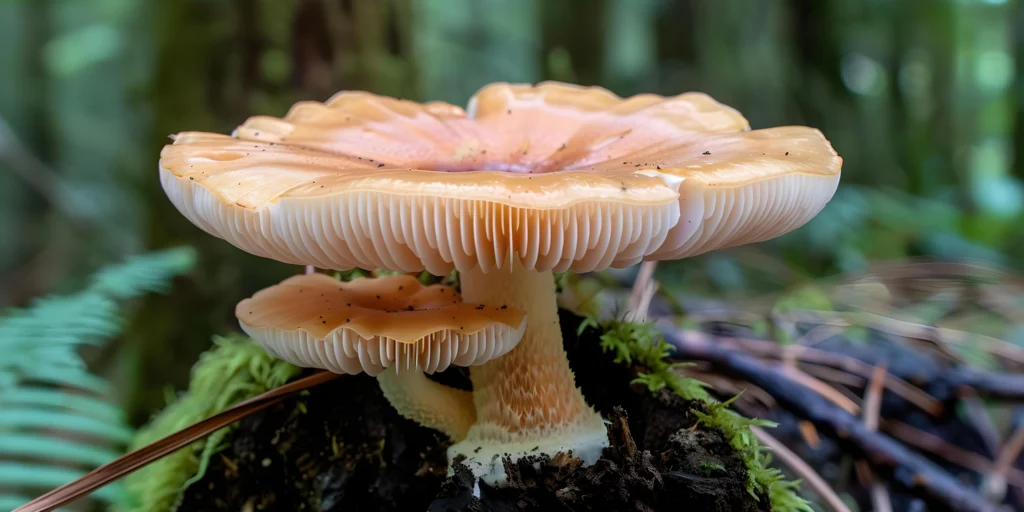
- Color: The cap is light brown, while the stem is white.
- Shape: Features a large, thick stem with a small cap relative to the stem’s size.
- Size: Can grow up to 8 inches in height, with the stem being up to 2 inches thick.
- Texture: Dense and meaty, with a chewy texture, especially when cooked.
Culinary Uses
King oyster mushrooms are prized for their texture and flavor, making them versatile in culinary applications.
- Common Dishes: Often used in stir-fries, grilled, roasted, or sautéed dishes. They are a popular meat substitute in vegetarian and vegan cooking.
- Preparation Methods: Can be sliced, diced, or shredded and cooked using various methods including grilling, roasting, sautéing, and simmering.
- Suitable Pairings: Pairs well with robust flavors like soy sauce, garlic, and herbs. Excellent in dishes alongside poultry, seafood, and beef, or as a standalone feature in vegetarian dishes.
Geographical Information
- Origin: Native to the Mediterranean, Middle East, North Africa, and parts of Asia.
- Primary Growing Regions: Now cultivated worldwide, with significant production in Asia, Europe, and North America.
- Seasonal Availability: Available year-round due to indoor farming techniques.
King oyster mushrooms are a favorite for chefs and home cooks alike, offering a substantial texture and rich flavor that can enhance a wide variety of dishes. Their nutritional profile also makes them a valuable component of a health-conscious diet.
| proximates: | |
| Water | 88.1 g |
| Energy (Atwater General Factors) | 46 kcal |
| Energy (Atwater Specific Factors) | 38 kcal |
| Nitrogen | 0.38 g |
| Protein | 2.41 g |
| Total lipid (fat) | 0.31 g |
| Ash | 0.66 g |
| Carbohydrates: | |
| Carbohydrate, by difference | 8.5 g |
| Fiber, total dietary | 3 g |
| Beta-glucan | 4.42 g |
| Minerals: | |
| Calcium, Ca | <2.49 mg |
| Iron, Fe | 0.34 mg |
| Magnesium, Mg | 13.5 mg |
| Phosphorus, P | 90 mg |
| Potassium, K | 294 mg |
| Sodium, Na | 1 mg |
| Zinc, Zn | 0.63 mg |
| Copper, Cu | 0.047 mg |
| Manganese, Mn | 0.091 mg |
| Selenium, Se | 1.2 µg |
| Vitamins and Other Components: | |
| Thiamin | 0.006 mg |
| Riboflavin | 0.244 mg |
| Niacin | 6.45 mg |
| Vitamin B-6 | 0.119 mg |
| Biotin | 10.8 µg |
| Vitamin D (D2 + D3), International Units | 2.8 IU |
| Vitamin D (D2 + D3) | 0.07 µg |
| Vitamin D2 (ergocalciferol) | 0.07 µg |
| Vitamin D4 | 0.02 µg |
| Glutathione | 15.7 mg |
| Phytosterols: | |
| Stigmasterol | <0.2 mg |
| Campesterol | <0.2 mg |
| Beta-sitosterol | <0.2 mg |
| Ergosta-7-enol | 1.12 mg |
| Ergosta-7,22-dienol | 0.804 mg |
| Ergosta-5,7-dienol | 4.64 mg |
| Ergosterol | 49 mg |
| Beta-sitostanol | <0.2 mg |
| Delta-5-avenasterol | <0.2 mg |
| Delta-7-Stigmastenol | <0.2 mg |
| Amino acids: | |
| Ergothioneine | 24 mg |