

Portabella mushrooms, known for their large size and meaty texture, are a favorite among mushroom varieties for culinary use. Here’s a comprehensive overview based on your requested categories:
Basic Information
- Common Name: Portabella Mushroom
- Scientific Name: Agaricus bisporus
- Category: Fungi
- Varieties: Portabella mushrooms are mature forms of cremini mushrooms, which in turn are brown versions of the common white button mushroom. There are no distinct varieties of portabella, but they are differentiated from their younger selves (cremini/button mushrooms) by size and age.
Nutritional Information
Portabella mushrooms are low in calories and provide a good source of protein, fiber, and various micronutrients with minimal fat.
- Macronutrients (per 100 grams):
- Carbohydrates: About 4.66g
- Proteins: Approximately 2.75g
- Fats: Less than 0.31g
- Micronutrients:
- Rich in B vitamins, especially niacin (B3) and riboflavin (B2).
- Contains minerals such as selenium, potassium, and phosphorus.
- Some portabellas exposed to ultraviolet light can also be good sources of Vitamin D.
Phytonutrients
Portabella mushrooms (Agaricus bisporus), in their mature stage, are not only valued for their meaty texture and versatility in cooking but also for their nutritional and health-promoting properties, attributed to various phytonutrients. These compounds contribute to the mushroom’s benefits, including antioxidant, anti-inflammatory, and potentially anticancer effects. Here’s a comprehensive look at the key phytonutrients found in portabella mushrooms:
1. Polysaccharides
- Beta-Glucans: Portabella mushrooms contain beta-glucans, a type of soluble dietary fiber recognized for its immune-boosting properties. These compounds can activate immune system cells like macrophages and natural killer cells, offering protection against infections and potentially having anti-tumor effects.
2. Antioxidants
- Selenium: Portabella mushrooms are a good source of selenium, a mineral with strong antioxidant properties that help protect cells from damage caused by free radicals, supporting immune function and reducing the risk of chronic diseases.
- Ergothioneine: A potent antioxidant amino acid found in mushrooms, ergothioneine is particularly effective in protecting cells from oxidative stress, thereby playing a role in preventing inflammation and reducing the risk of chronic diseases.
3. Vitamins
- Vitamin D: When exposed to sunlight or ultraviolet light, portabella mushrooms can provide significant amounts of vitamin D, essential for bone health, immune function, and overall well-being.
- B Vitamins: Portabella mushrooms contain several B vitamins, including niacin (B3) and riboflavin (B2), which are vital for energy production, DNA repair, and maintaining healthy skin and blood cells.
4. Minerals
- In addition to selenium, portabellas offer other essential minerals such as potassium, which is crucial for maintaining normal cell function, and phosphorus, important for healthy bones and teeth.
Health Benefits Associated with Phytonutrients in Portabella Mushrooms
The phytonutrients in portabella mushrooms contribute to various health benefits:
- Immune System Support: The beta-glucans enhance the immune system’s ability to fight off pathogens and may contribute to cancer prevention.
- Antioxidant Protection: Selenium and ergothioneine provide significant antioxidant protection, which can reduce the risk of chronic diseases by combating oxidative stress and inflammation.
- Nutritional Support: The vitamins and minerals in portabella mushrooms support overall health by contributing to bone health, energy production, and the maintenance of vital bodily functions.
Portabella mushrooms, with their rich array of phytonutrients, offer more than just culinary versatility; they provide a variety of health benefits, making them a valuable addition to a healthy diet. Their potential to support the immune system, provide antioxidant protection, and supply essential nutrients highlights the importance of including mushrooms in a balanced diet.
Calorie Count and Glycemic Index
- Calorie Count: Around 26 calories per 100 grams.
- Glycemic Index: Low, making them a suitable choice for people managing their blood sugar levels.
Physical Characteristics
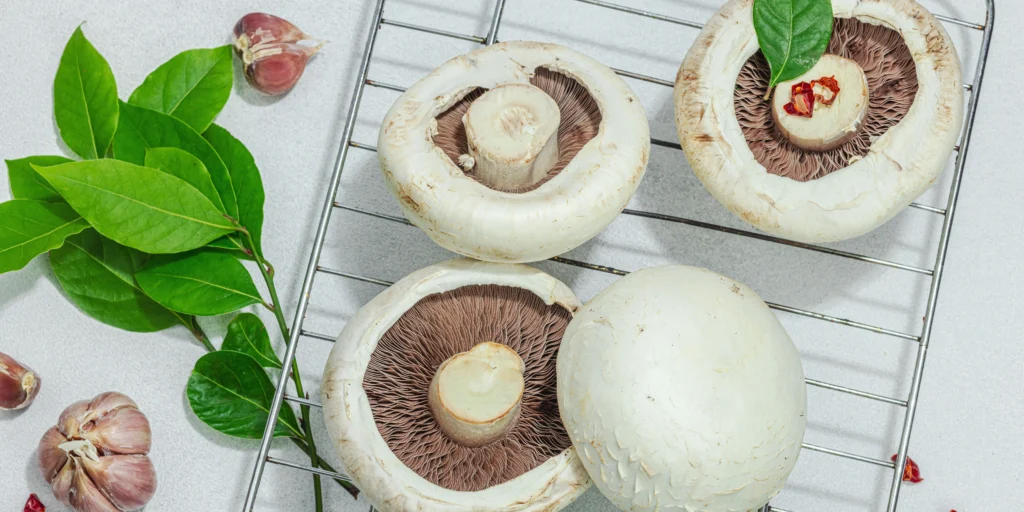
- Color: Dark brown cap and gills with a white to brown stem.
- Shape: Broad, flat cap with open, well-developed gills underneath. The stem is thick and short.
- Size: The cap can measure up to 6 inches (15 cm) in diameter.
- Texture: Meaty and firm, making them an excellent meat substitute in various dishes.
Culinary Uses
Portabella mushrooms are celebrated for their robust texture and rich, umami flavor.
- Common Dishes: Often grilled, roasted, or used as meat substitutes in burgers, sandwiches, and steaks. They’re also popular in stir-fries, pasta, and as a filling for ravioli.
- Preparation Methods: Can be marinated, grilled, baked, sautéed, or stuffed. Their large caps make them ideal for stuffing with a variety of ingredients.
- Suitable Pairings: Pairs well with strong flavors like garlic, onions, balsamic vinegar, and robust herbs such as rosemary and thyme. Works well with cheese, spinach, and tomatoes.
Geographical Information
- Origin: Agaricus bisporus, including portabellas, was first cultivated in Europe, but has a history that spans globally.
- Primary Growing Regions: Now cultivated worldwide, with significant production in the United States, Canada, Europe, and Asia.
- Seasonal Availability: Available year-round due to indoor farming practices.
Portabella mushrooms are a versatile and nutritious option for those looking to add depth and meatiness to their meals without the added calories or fat, making them a staple in both vegetarian and non-vegetarian diets alike.
| proximates: | |
| Water | 91.5 g |
| Energy (Atwater General Factors) | 32 kcal |
| Energy (Atwater Specific Factors) | 26 kcal |
| Nitrogen | 0.44 g |
| Protein | 2.75 g |
| Total lipid (fat) | 0.31 g |
| Ash | 0.8 g |
| Carbohydrates: | |
| Carbohydrate, by difference | 4.66 g |
| Fiber, total dietary | 1.9 g |
| Beta-glucan | 1.15 g |
| Minerals: | |
| Calcium, Ca | 3 mg |
| Iron, Fe | 0.14 mg |
| Magnesium, Mg | 9 mg |
| Phosphorus, P | 87 mg |
| Potassium, K | 349 mg |
| Sodium, Na | 5 mg |
| Zinc, Zn | 0.39 mg |
| Copper, Cu | 0.203 mg |
| Manganese, Mn | 0.049 mg |
| Selenium, Se | 14.7 µg |
| Vitamins and Other Components: | |
| Thiamin | 0.005 mg |
| Riboflavin | 0.465 mg |
| Niacin | 3.9 mg |
| Vitamin B-6 | 0.097 mg |
| Biotin | 11.1 µg |
| Glutathione | 5 mg |
| Phytosterols: | |
| Stigmasterol | <0.2 mg |
| Campesterol | <0.2 mg |
| Beta-sitosterol | <0.2 mg |
| Ergosta-7-enol | 1.76 mg |
| Ergosta-7,22-dienol | 1.82 mg |
| Ergosta-5,7-dienol | 4.68 mg |
| Ergosterol | 49 mg |
| Beta-sitostanol | <0.2 mg |
| Delta-5-avenasterol | <0.2 mg |
| Delta-7-Stigmastenol | <0.2 mg |
| Amino acids: | |
| Ergothioneine | 2 mg |