

Shiitake mushrooms, with their rich umami flavor and numerous health benefits, are a popular choice in various cuisines worldwide. Here’s a comprehensive overview based on your requested categories:
Basic Information
- Common Name: Shiitake Mushroom
- Scientific Name: Lentinula edodes
- Category: Fungi
- Varieties: While primarily known as “shiitake,” there are several strains cultivated that vary slightly in size, color, and texture, but Lentinula edodes is the species universally recognized as shiitake.
Nutritional Information
Shiitake mushrooms are low in calories but packed with nutrients, offering a good balance of macronutrients and essential micronutrients.
- Macronutrients (per 100 grams of fresh mushrooms):
- Carbohydrates: Approximately 8.17g
- Proteins: Around 2.41g
- Fats: Less than 0.2g
- Micronutrients:
- High in B vitamins, especially niacin (B3) and riboflavin (B2).
- Good source of minerals like selenium, zinc, and copper.
- Contains vitamin D (especially when dried mushrooms are exposed to sunlight).
Phytonutrients
Shiitake mushrooms (Lentinula edodes) are not only celebrated for their distinctive taste and culinary versatility but also for their rich composition of phytonutrients, contributing to a wide range of health benefits. These bioactive compounds include polysaccharides, terpenoids, sterols, and more, each playing a unique role in promoting health. Here’s a detailed overview of the key phytonutrients present in shiitake mushrooms and their potential benefits:
1. Polysaccharides
- Lentinan: A beta-glucan polysaccharide that is one of the most studied components of shiitake mushrooms. Lentinan is known for its immune-boosting properties, including the stimulation of the immune system, enhancement of gut immunity, and potential anti-cancer effects.
- Beta-Glucans: Apart from lentinan, shiitake mushrooms contain other beta-glucans that contribute to immune system modulation and have been associated with lowering cholesterol levels.
2. Eritadenine
- Eritadenine: A compound that has been shown to have cholesterol-lowering effects by influencing the way cholesterol is absorbed and processed in the body.
3. Terpenoids
- Terpenoids present in shiitake mushrooms have been studied for their antiviral, antimicrobial, and anti-inflammatory properties. These compounds can contribute to the overall health benefits of shiitake, including potential protection against infections and diseases.
4. Phenolic Compounds
- Shiitake mushrooms contain phenolic compounds that exhibit antioxidant properties. These antioxidants help in neutralizing harmful free radicals, reducing oxidative stress, and potentially lowering the risk of chronic diseases.
5. Vitamins and Minerals
- While not phytonutrients per se, shiitake mushrooms are a valuable source of vitamins D, B2 (riboflavin), B3 (niacin), and minerals such as selenium, zinc, and copper. These nutrients are crucial for maintaining bone health, energy metabolism, and supporting the immune system.
Health Benefits Associated with Phytonutrients in Shiitake Mushrooms
The combination of phytonutrients in shiitake mushrooms contributes to several health benefits:
- Immune System Support: Lentinan and other beta-glucans enhance immune function and may help the body fight against infections and cancer.
- Cholesterol Management: Eritadenine and beta-glucans in shiitake mushrooms contribute to lower cholesterol levels, supporting cardiovascular health.
- Antioxidant Protection: Phenolic compounds provide antioxidant benefits, reducing oxidative stress and potentially lowering the risk of chronic diseases.
- Antiviral and Antimicrobial Effects: Terpenoids offer protective effects against viruses and bacteria, adding to the immune-boosting properties of shiitake mushrooms.
Shiitake mushrooms, with their rich array of phytonutrients, are a valuable food for promoting overall health and well-being. Their unique compounds not only enhance the flavor of dishes but also provide significant immune support, cardiovascular benefits, and antioxidant protection.
Calorie Count and Glycemic Index
- Calorie Count: About 36 calories per 100 grams.
- Glycemic Index: Low, making them a suitable food for managing blood sugar levels.
Physical Characteristics
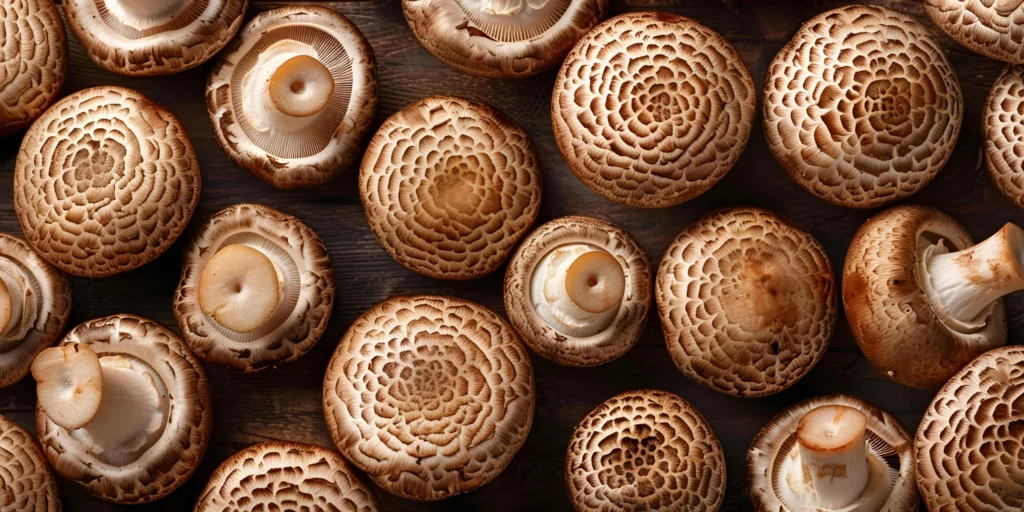
- Color: Ranges from light brown to dark brown.
- Shape: Characterized by their broad, umbrella-shaped caps and slender, cream-colored stems.
- Size: Caps can range from 2 to 4 inches (5 to 10 cm) in diameter.
- Texture: When cooked, shiitake mushrooms have a meaty texture and a slightly chewy consistency.
Culinary Uses
Shiitake mushrooms are revered for their distinctive earthy flavor and versatility in the kitchen.
- Common Dishes: Used in soups, stir-fries, broths, and sautéed dishes. They’re a staple in Asian cuisine but have been widely adopted in Western cooking as well.
- Preparation Methods: Can be used fresh or dried. Drying concentrates their flavor, making them particularly potent. Rehydrate dried shiitakes before use to restore their texture.
- Suitable Pairings: Complements soy sauce, garlic, ginger, and green onions. Works well in dishes with vegetables, tofu, poultry, and beef.
Geographical Information
- Origin: Native to East Asia, shiitake mushrooms have been cultivated in China, Japan, and Korea for centuries.
- Primary Growing Regions: Predominantly grown in China, Japan, and South Korea, but cultivation has spread globally due to their popularity.
- Seasonal Availability: Cultivated year-round, fresh shiitake mushrooms are generally available at any time. However, their natural growing season is spring and fall.
Shiitake mushrooms offer a unique blend of flavor, nutrition, and health benefits, making them a favorite ingredient in a variety of dishes and a valuable component of a balanced diet.
| proximates: | |
| Water | 88.6 g |
| Energy (Atwater General Factors) | 44 kcal |
| Energy (Atwater Specific Factors) | 36 kcal |
| Nitrogen | 0.39 g |
| Protein | 2.41 g |
| Total lipid (fat) | 0.2 g |
| Ash | 0.62 g |
| Carbohydrates: | |
| Carbohydrate, by difference | 8.17 g |
| Fiber, total dietary | 4.2 g |
| Beta-glucan | 2.8 g |
| Minerals: | |
| Calcium, Ca | 1 mg |
| Iron, Fe | 0.14 mg |
| Magnesium, Mg | 14.1 mg |
| Phosphorus, P | 76 mg |
| Potassium, K | 243 mg |
| Sodium, Na | 1 mg |
| Zinc, Zn | 0.76 mg |
| Copper, Cu | 0.05 mg |
| Manganese, Mn | 0.173 mg |
| Selenium, Se | 1.2 µg |
| Vitamins and Other Components: | |
| Thiamin | 0.001 mg |
| Riboflavin | 0.216 mg |
| Niacin | 2.74 mg |
| Vitamin B-6 | 0.159 mg |
| Biotin | 6.05 µg |
| Folate, total | 32 µg |
| Vitamin D (D2 + D3), International Units | 2.2 IU |
| Vitamin D (D2 + D3) | 0.06 µg |
| Vitamin D2 (ergocalciferol) | 0.06 µg |
| Glutathione | 12.8 mg |
| Phytosterols: | |
| Stigmasterol | <0.2 mg |
| Campesterol | <0.2 mg |
| Beta-sitosterol | <0.2 mg |
| Ergosta-7-enol | 6.41 mg |
| Ergosta-5,7-dienol | 3.61 mg |
| Ergosta-7,22-dienol | 1.51 mg |
| Ergosterol | 61 mg |
| Beta-sitostanol | <0.2 mg |
| Delta-5-avenasterol | <0.2 mg |
| Delta-7-Stigmastenol | <0.2 mg |
| Amino acids: | |
| Ergothioneine | 11 mg |