
Prepared yellow mustard is a popular condiment worldwide, known for its tangy flavor and bright color, adding both taste and zest to various dishes. Here’s a comprehensive overview based on your requested categories:
Basic Information
- Common Name: Yellow Mustard (Prepared)
- Scientific Name: Derived from the seeds of the Sinapis alba (white mustard) plant.
- Category: Condiment
- Varieties: While the focus here is on prepared yellow mustard, it’s worth noting that there are many varieties of mustard, including Dijon, honey mustard, whole grain mustard, etc., each with distinct flavors and uses.
Nutritional Information
Prepared yellow mustard is low in calories and carbohydrates, making it a diet-friendly condiment. Its nutritional profile can vary slightly based on the brand and recipe.
- Macronutrients (per 1 tablespoon, approximately 5g):
- Carbohydrates: About 5.3g
- Proteins: Approximately 4.25g
- Fats: Less than 3.38g
- Micronutrients:
- Contains small amounts of calcium, potassium, and vitamin C.
- Some brands might be fortified with additional vitamins and minerals.
Phytonutrients
Prepared yellow mustard, while primarily known for its use as a condiment, contains several phytonutrients that contribute to its health benefits, though in smaller amounts due to its typical consumption pattern. The primary ingredients in yellow mustard are water, mustard seeds (from the Sinapis alba plant), vinegar, turmeric, and sometimes additional spices or flavorings. Here’s a breakdown of the key phytonutrients found in prepared yellow mustard and their potential health benefits:
1. Glucosinolates
- Found in Mustard Seeds: Glucosinolates are sulfur-containing compounds found in mustard seeds, the base ingredient of yellow mustard. When mustard seeds are crushed or chewed, glucosinolates are broken down into isothiocyanates by the enzyme myrosinase.
- Health Benefits: Isothiocyanates have been studied for their potential anticancer properties, including inhibiting the growth of cancer cells and protecting cells from DNA damage.
2. Curcumin
- Found in Turmeric: Turmeric gives yellow mustard its vibrant color and contains curcumin, a compound known for its anti-inflammatory and antioxidant properties.
- Health Benefits: Curcumin has been widely studied for its potential to reduce inflammation in the body, which is linked to a variety of chronic conditions. It also helps neutralize free radicals, contributing to its antioxidant capabilities.
3. Vitamins and Minerals
- While not phytonutrients, it’s worth noting that yellow mustard contains small amounts of vitamins and minerals due to the mustard seeds and added ingredients. These include selenium, a mineral with antioxidant properties, and magnesium, which is important for bone health and metabolism.
4. Dietary Fiber
- Mustard Seeds: Mustard seeds provide a small amount of dietary fiber, which supports digestive health. Although the amount of fiber in a typical serving of prepared mustard is minimal, it contributes to the overall intake when consumed as part of a diet rich in fruits, vegetables, and whole grains.
5. Antioxidants
- Overall Composition: Beyond specific compounds, mustard seeds and turmeric contribute general antioxidant properties to prepared yellow mustard. Antioxidants help combat oxidative stress in the body, which can lead to cellular damage and is associated with various chronic diseases.
Consumption Considerations
The phytonutrients in prepared yellow mustard are present in relatively small quantities due to the nature of how mustard is consumed (typically in small amounts as a condiment). However, incorporating mustard into a diet that includes a variety of fruits, vegetables, whole grains, and other nutrient-dense foods can contribute to a healthy intake of phytonutrients and other beneficial compounds.
Prepared yellow mustard adds not just flavor but also a touch of nutritional value to meals, thanks to its components. Its inclusion in a balanced diet, especially when paired with nutrient-rich foods, can help enhance overall health and well-being.
Calorie Count and Glycemic Index
- Calorie Count: Typically around 61 calories per tablespoon.
- Glycemic Index: Low; mustard is not significant enough in carbohydrates to impact blood sugar levels appreciably.
Physical Characteristics
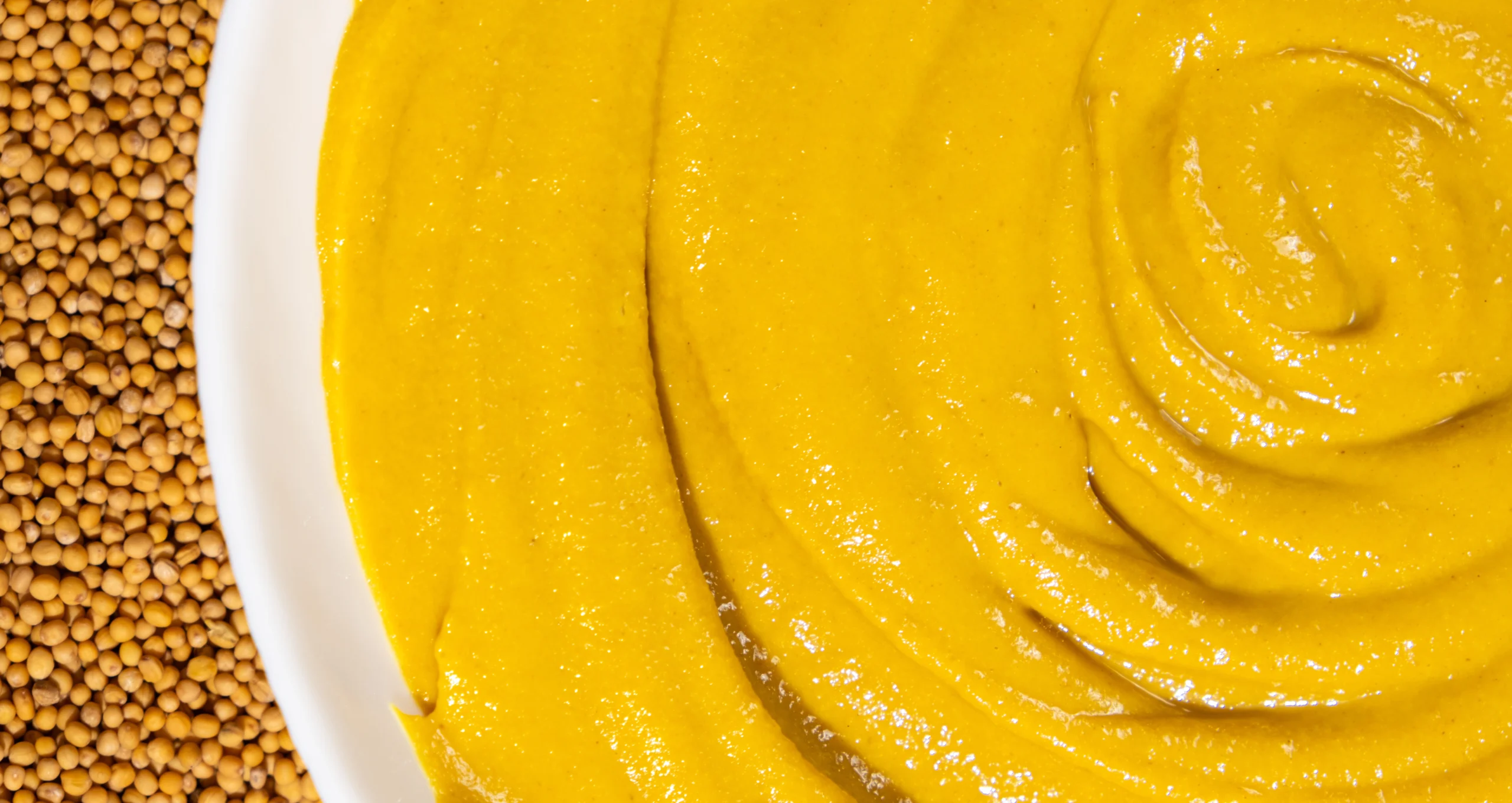
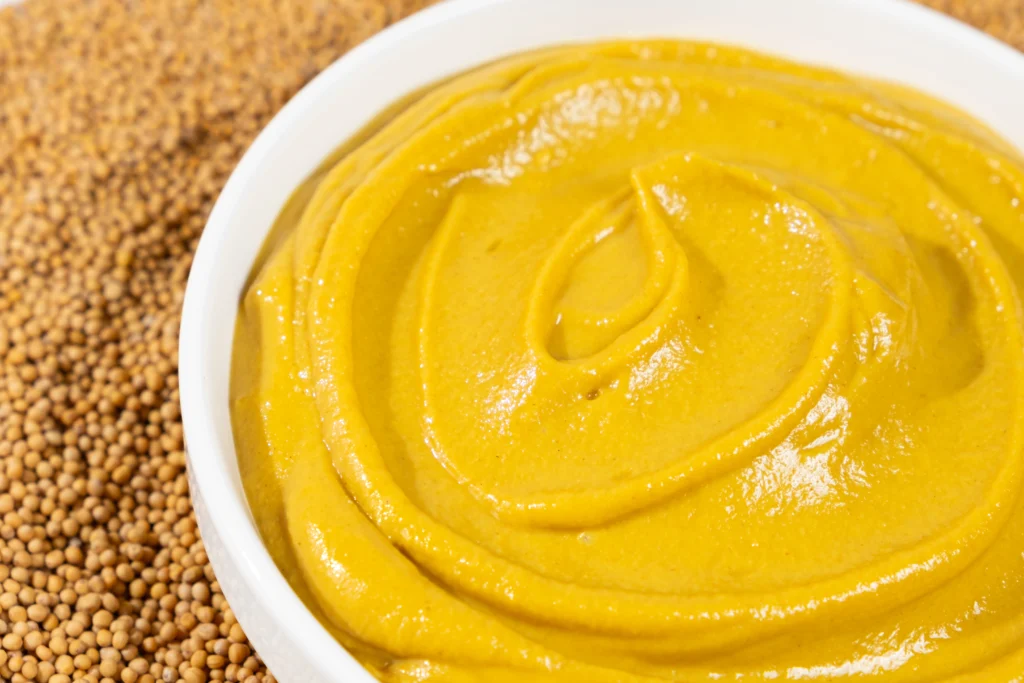
- Color: Bright yellow, achieved through the addition of turmeric or sometimes food coloring.
- Shape: It’s a smooth paste.
- Size: Sold in various sized containers, from small bottles to large foodservice packs.
- Texture: Smooth with a consistent paste-like quality, though some variations might include whole mustard seeds for added texture.
Culinary Uses
Yellow mustard is incredibly versatile, used in a myriad of culinary applications.
- Common Dishes: A staple on hot dogs, hamburgers, and sandwiches. It’s also used as a base for salad dressings, marinades, and sauces.
- Preparation Methods: Ready to use as is from the bottle or jar. Can be mixed into dressings, spreads, or used as a glaze.
- Suitable Pairings: Pairs well with meats like beef, pork, and poultry, and complements other condiments like ketchup and mayonnaise.
Geographical Information
- Origin: Mustard as a condiment has ancient origins, used by Romans and in various cultures worldwide. The prepared yellow mustard known today has its roots in American cuisine.
- Primary Growing Regions: White mustard, from which yellow mustard is made, is cultivated in various parts of the world, including Canada, Hungary, Great Britain, the United States, and parts of Europe and Asia.
- Seasonal Availability: Prepared yellow mustard is available year-round due to its processed nature.
Prepared yellow mustard is a low-calorie, flavorful addition to a wide range of dishes, offering culinary versatility and a hint of nutrients. Its widespread availability and enduring popularity make it a staple condiment in kitchens and dining tables globally.
| proximates: | |
| Water | 83.7 g |
| Energy (Atwater General Factors) | 69 kcal |
| Energy (Atwater Specific Factors) | 61 kcal |
| Nitrogen | 0.68 g |
| Protein | 4.25 g |
| Total lipid (fat) | 3.38 g |
| Total fat (NLEA) | 3.76 g |
| Ash | 3.37 g |
| Carbohydrates: | |
| Carbohydrate, by difference | 5.3 g |
| Carbohydrate, by summation | 6.39 g |
| Fiber, total dietary | 4.3 g |
| Sugars, Total | 1.42 g |
| Sucrose | 0.2 g |
| Glucose | 0.48 g |
| Fructose | 0.23 g |
| Galactose | 0.52 g |
| Starch | 0.65 g |
| Minerals: | |
| Calcium, Ca | 63 mg |
| Iron, Fe | 1.59 mg |
| Magnesium, Mg | 47.7 mg |
| Phosphorus, P | 108 mg |
| Potassium, K | 150 mg |
| Sodium, Na | 1100 mg |
| Zinc, Zn | 0.64 mg |
| Copper, Cu | 0.074 mg |
| Manganese, Mn | 0.42 mg |
| Selenium, Se | 34 µg |
| Vitamins and Other Components: | |
| Vitamin C, total ascorbic acid | 0.4 mg |
| Thiamin | 0.189 mg |
| Riboflavin | 0.066 mg |
| Niacin | 0.561 mg |
| Pantothenic acid | 0.263 mg |
| Vitamin B-6 | 0.069 mg |
| Folate, total | 7 µg |
| Vitamin A, RAE | 4 µg |
| Carotene, beta | 31 µg |
| Carotene, alpha | 1 µg |
| Cryptoxanthin, beta | 27 µg |
| Lutein + zeaxanthin | 115 µg |
| Vitamin E (alpha-tocopherol) | 0.35 mg |
| Tocopherol, beta | 0.01 mg |
| Tocopherol, gamma | 2.14 mg |
| Tocopherol, delta | 0.08 mg |
| Tocotrienol, alpha | 0.03 mg |
| Vitamin K (phylloquinone) | 1.5 µg |
| Lipids: | |
| Fatty acids, total saturated | 0.252 g |
| SFA 10:0 | 0.005 g |
| SFA 12:0 | 0.003 g |
| SFA 14:0 | 0.004 g |
| SFA 15:0 | 0.002 g |
| SFA 16:0 | 0.138 g |
| SFA 17:0 | 0.002 g |
| SFA 18:0 | 0.045 g |
| SFA 20:0 | 0.024 g |
| SFA 22:0 | 0.019 g |
| SFA 24:0 | 0.01 g |
| Fatty acids, total monounsaturated | 2.59 g |
| MUFA 16:1 c | 0.009 g |
| MUFA 18:1 c | 0.916 g |
| MUFA 20:1 | 0.345 g |
| MUFA 20:1 c | 0.345 g |
| MUFA 22:1 c | 1.26 g |
| MUFA 24:1 c | 0.062 g |
| Fatty acids, total polyunsaturated | 0.903 g |
| PUFA 18:2 c | 0.424 g |
| PUFA 18:2 n-6 c,c | 0.424 g |
| PUFA 18:3 c | 0.444 g |
| PUFA 18:3 n-3 c,c,c (ALA) | 0.444 g |
| PUFA 20:2 c | 0.012 g |
| PUFA 20:2 n-6 c,c | 0.012 g |
| PUFA 20:3 c | 0.022 g |
| PUFA 20:3 n-3 | 0.022 g |
| PUFA 22:2 | 0.011 g |
| Fatty acids, total trans | 0.01 g |
| Fatty acids, total trans-monoenoic | 0.004 g |
| TFA 18:1 t | 0.004 g |
| Fatty acids, total trans-dienoic | 0.006 g |
| TFA 18:2 t not further defined | 0.006 g |
| Amino acids: | |
| Tryptophan | 0.01 g |
| Threonine | 0.183 g |
| Isoleucine | 0.16 g |
| Leucine | 0.32 g |
| Lysine | 0.29 g |
| Methionine | 0.083 g |
| Cystine | 0.08 g |
| Phenylalanine | 0.177 g |
| Tyrosine | 0.147 g |
| Valine | 0.207 g |
| Arginine | 0.277 g |
| Histidine | 0.13 g |
| Alanine | 0.18 g |
| Aspartic acid | 0.427 g |
| Glutamic acid | 0.793 g |
| Glycine | 0.25 g |
| Proline | 0.393 g |
| Serine | 0.223 g |