
Basic Information
- Common Name: Cashew Nuts
- Scientific Name: Anacardium occidentale
- Category: Nut
Varieties
There are no widely recognized varieties of cashew nuts marketed separately, as they are generally harvested from the cashew tree and processed similarly. However, cashews can differ slightly in size and color based on their origin and processing method.
Nutritional Information
Macronutrients (per 100g of raw cashew nuts)
- Carbohydrates: Approximately 36.3g
- Proteins: About 17.4g
- Fats: 38.9g
Micronutrients
Raw cashew nuts are a good source of various vitamins and minerals, notably:
- Vitamins: Vitamin K, Thiamin (B1), and Vitamin B6.
- Minerals: Magnesium, Phosphorus, Zinc, Iron, Selenium, and Copper, with particularly high levels of Magnesium and Copper.
Phytonutrients
Raw cashew nuts, like many nuts, are packed with beneficial phytonutrients that contribute to their health-promoting properties. These phytonutrients include antioxidants, anti-inflammatory compounds, and other bioactive molecules that can help support overall health. Here’s an overview of the key phytonutrients found in raw cashew nuts:
Antioxidants
- Anacardic Acids: Unique to cashew nuts, anacardic acids have antimicrobial, antioxidant, and anti-inflammatory properties. They may also have potential anticancer effects.
- Tocopherols (Vitamin E): As a natural antioxidant, vitamin E helps protect the body from oxidative stress caused by free radicals. Cashews contain small amounts of tocopherols, contributing to their overall antioxidant capacity.
Polyphenols
- Flavonoids: Cashews contain flavonoids like proanthocyanidins, which have antioxidant properties and may help reduce the risk of heart disease and improve blood vessel function.
- Phenolic Compounds: These compounds contribute to the antioxidant activity of cashews, helping to neutralize free radicals and reduce oxidative stress in the body.
Minerals with Antioxidant Properties
- Selenium: Though not as high in selenium as some other nuts (like Brazil nuts), cashews provide a modest amount of this essential mineral, known for its antioxidant properties and role in supporting immune function.
- Zinc: Important for immune function, wound healing, and DNA synthesis, zinc also has antioxidant properties and plays a role in protecting against oxidative stress.
Fatty Acids
- Oleic Acid: This monounsaturated fatty acid, also found in olive oil, is known for its heart health benefits. It can help reduce LDL cholesterol levels while increasing HDL cholesterol levels.
- Linoleic Acid: A polyunsaturated omega-6 fatty acid that contributes to the maintenance of healthy cell membranes and is involved in the inflammatory response.
Phytosterols
- Beta-Sitosterol: Present in cashews, beta-sitosterol has been shown to lower cholesterol levels by limiting cholesterol absorption in the intestines. It also has anti-inflammatory properties.
Fiber
- Dietary Fiber: While not a phytonutrient, the fiber in cashews supports digestive health, helps maintain stable blood sugar levels, and can contribute to a feeling of fullness, which might aid in weight management.
The combination of these phytonutrients in cashew nuts makes them a valuable addition to a healthy diet, contributing to antioxidant defenses, reducing inflammation, and supporting heart health. However, due to their high calorie and fat content, they should be consumed in moderation as part of a balanced diet.
Calorie Count
There are about 565 calories per 100 grams of raw cashew nuts.
Glycemic Index
Cashew nuts have a low glycemic index (GI) of about 22, making them a good option for blood sugar management.
Physical Characteristics
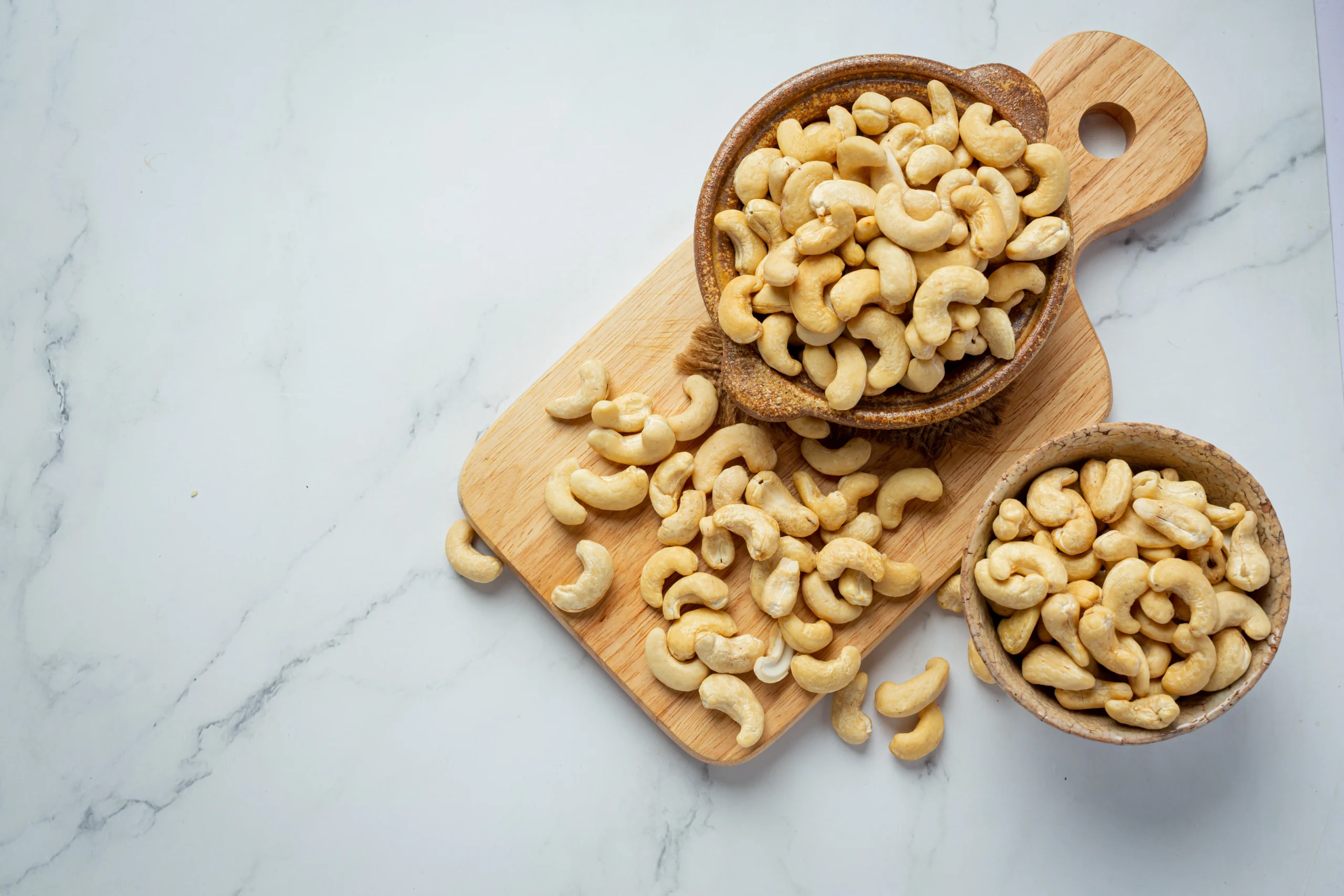
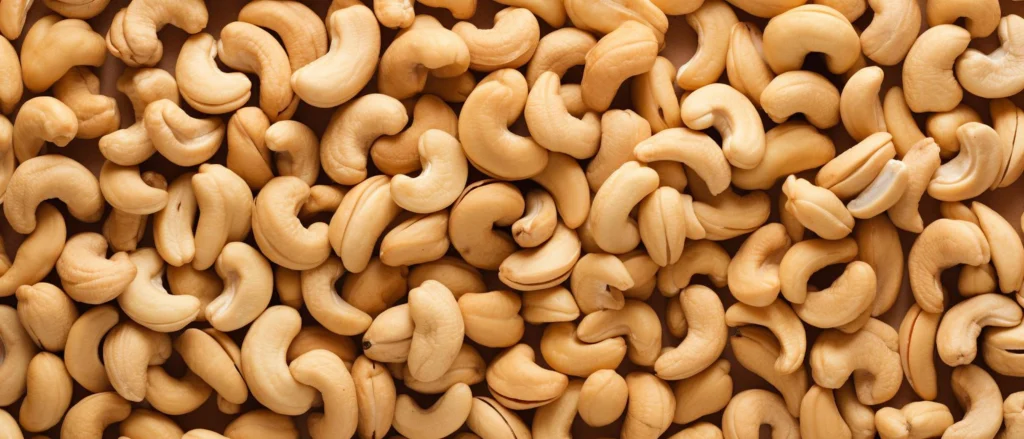
- Color: Pale yellow to light brown.
- Shape: Kidney-shaped or bean-shaped.
- Size: Typically 1 to 2 inches (2.5 to 5 cm) in length.
- Texture: Firm but slightly spongy in texture; they become crunchy when roasted.
Culinary Uses
Cashew nuts are versatile in culinary applications:
- Common Dishes: Used in salads, stir-fries, and as toppings on desserts. They are also ground into cashew butter or cashew milk.
- Preparation Methods: Can be eaten raw, roasted, or used as a base for vegan cheeses and creams due to their creamy texture when soaked and blended.
- Suitable Pairings: Pairs well with vegetables, fruits, chocolates, and is commonly used in Indian and Thai cuisines for its creamy texture in sauces and curries.
Geographical Information
- Origin: Native to northeastern Brazil, the cashew tree is now cultivated in various tropical climates.
- Primary Growing Regions: Major producers include India, Ivory Coast, Vietnam, and the Philippines.
- Seasonal Availability: Cashews are harvested twice a year, but as they are stored well, raw cashew nuts are available year-round in most markets.
| proximates: | |
| Water | 4.81 g |
| Energy (Atwater General Factors) | 565 kcal |
| Energy (Atwater Specific Factors) | 533 kcal |
| Nitrogen | 3.29 g |
| Protein | 17.4 g |
| Total lipid (fat) | 38.9 g |
| Ash | 2.6 g |
| Carbohydrates: | |
| Carbohydrate, by difference | 36.3 g |
| Fiber, total dietary | 4.1 g |
| Minerals: | |
| Calcium, Ca | 42 mg |
| Iron, Fe | 5.99 mg |
| Magnesium, Mg | 251 mg |
| Phosphorus, P | 532 mg |
| Potassium, K | 638 mg |
| Sodium, Na | 5 mg |
| Zinc, Zn | 5.07 mg |
| Copper, Cu | 2.22 mg |
| Manganese, Mn | 1.95 mg |
| Selenium, Se | 20.7 µg |