

Basic Information
- Common Name: Pistachio Nuts
- Scientific Name: Pistacia vera
- Category: Nut
Varieties
Pistachio nuts primarily come from the Pistacia vera tree and are not divided into varieties in the same way as some other fruits and nuts. However, there are different types of pistachio nuts distinguished by their size, color, and the region they are grown in. Some notable types include the Kerman, from California, and the Turkish Antep.
Nutritional Information
Macronutrients (per 100g of raw pistachio nuts)
- Carbohydrates: Approximately 27.97 g
- Proteins: About 20.5 g
- Fats: 45 g
Micronutrients
Raw pistachio nuts are rich in various vitamins and minerals, especially:
- Vitamins: B6, Thiamin (B1), and Vitamin K.
- Minerals: Potassium, Phosphorus, Magnesium, and particularly rich in Copper and Manganese.
Phytonutrients
Raw pistachio nuts are not only delicious but also packed with a variety of phytonutrients that offer numerous health benefits, including antioxidant and anti-inflammatory properties. Here’s a detailed overview of the key phytonutrients present in raw pistachio nuts:
Antioxidants
- Vitamin E (Gamma-Tocopherol): Pistachios are a good source of vitamin E, particularly gamma-tocopherol, which acts as a powerful antioxidant, protecting the cells from damage caused by free radicals.
- Polyphenols: These include flavonoids and proanthocyanidins, which have strong antioxidant properties that help neutralize harmful free radicals in the body.
Carotenoids
- Lutein and Zeaxanthin: Pistachios are among the few nuts that contain these two important carotenoids, which are beneficial for eye health. They protect the eyes from damage by blue light and may reduce the risk of age-related macular degeneration and cataracts.
Phytosterols
- Beta-Sitosterol: Like other nuts, pistachios contain phytosterols, particularly beta-sitosterol, which can help lower cholesterol levels by reducing the absorption of cholesterol in the intestines, contributing to heart health.
Essential Fatty Acids
- Omega-3 and Omega-6 Fatty Acids: Pistachios contain these essential fatty acids, which are important for heart health, brain function, and reducing inflammation.
Minerals with Antioxidant Properties
- Copper: This mineral is essential for the formation of red blood cells and maintaining healthy bones, blood vessels, nerves, and immune function. Copper also acts as an antioxidant by helping the body fight against free radicals.
- Manganese: Functions as a component of the antioxidant enzyme superoxide dismutase (SOD), which helps combat oxidative stress in the body.
Dietary Fiber
- Fiber: Although not a phytonutrient, the dietary fiber in pistachios contributes to digestive health, helps maintain stable blood sugar levels, and supports weight management by promoting feelings of fullness.
The combination of these phytonutrients in pistachios contributes to their various health benefits, including improving heart health, supporting eye health, and potentially reducing the risk of certain chronic diseases. However, because they are high in calories, pistachios should be consumed in moderation as part of a balanced diet.
Calorie Count
There are about 561 calories per 100 grams of raw pistachio nuts.
Glycemic Index
Pistachio nuts have a low glycemic index (GI) of around 15, making them a good option for blood sugar management.
Physical Characteristics
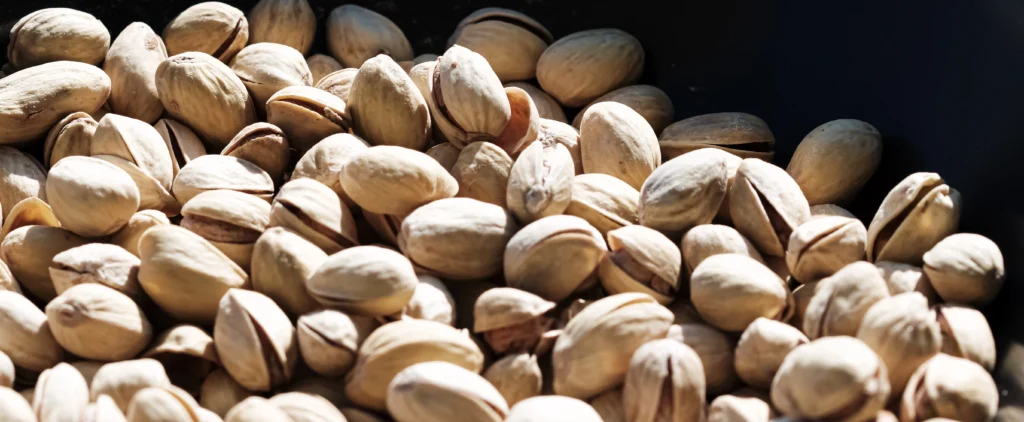
- Color: The shell is beige, while the nut itself is green and sometimes has a purple skin.
- Shape: Long and slightly curved.
- Size: Typically about an inch long (2.5 cm).
- Texture: The nuts are crunchy with a slightly chewy center.
Culinary Uses
Pistachio nuts are versatile in the kitchen:
- Common Dishes: Used in both savory and sweet dishes, including salads, pesto, baked goods, and ice cream.
- Preparation Methods: Can be eaten raw, roasted, or ground into pistachio butter or paste.
- Suitable Pairings: Complements dairy products, fruits, meats, and is especially popular in Middle Eastern and Mediterranean cuisines.
Geographical Information
- Origin: Native to Central Asia, specifically present-day Iran and Afghanistan.
- Primary Growing Regions: Today, major producers include Iran, the United States (particularly California), Turkey, and Syria.
- Seasonal Availability: Harvested in late summer to early fall, but available year-round in stores.
| proximates: | |
| Water | 3.95 g |
| Energy (Atwater General Factors) | 598 kcal |
| Energy (Atwater Specific Factors) | 561 kcal |
| Nitrogen | 3.87 g |
| Protein | 20.5 g |
| Total lipid (fat) | 45 g |
| Ash | 2.83 g |
| Carbohydrates: | |
| Carbohydrate, by difference | 27.7 g |
| Fiber, total dietary | 7 g |
| Minerals: | |
| Calcium, Ca | 117 mg |
| Iron, Fe | 3.46 mg |
| Magnesium, Mg | 110 mg |
| Phosphorus, P | 500 mg |
| Potassium, K | 947 mg |
| Sodium, Na | <2.5 mg |
| Zinc, Zn | 2.18 mg |
| Copper, Cu | 1.05 mg |
| Manganese, Mn | 1.05 mg |
| Selenium, Se | 23.1 µg |