
Basic Information
Name: The common name for the nut is “Walnut,” specifically the variety known as “English Walnut.” Its scientific name is Juglans regia.
Category: Walnuts are categorized as nuts, which are technically the seeds of the fruit of the walnut tree.
Varieties: While the focus here is on the English Walnut, other notable varieties include the Black Walnut (Juglans nigra) and the White Walnut or Butternut (Juglans cinerea). The English Walnut is favored for its milder taste and easier shell cracking.
Nutritional Information
- Macronutrients: Walnuts are high in healthy fats, primarily polyunsaturated fatty acids, including alpha-linolenic acid (ALA), a type of omega-3 fatty acid. They also contain moderate amounts of protein and a small amount of carbohydrates, primarily dietary fiber.
- Carbohydrates: 10.9 g
- Proteins: 14.6 g
- fats: 69.7 g
- Micronutrients: Walnuts are rich in vitamins and minerals. They contain high levels of vitamin E, B vitamins (especially folate), and essential minerals such as magnesium, phosphorus, potassium, and iron.
Phytonutrients
Walnuts, including the English walnut variety (Juglans regia), are renowned not only for their macronutrient profile but also for their rich content of phytonutrients. These compounds play a crucial role in reducing inflammation and oxidative stress, contributing to the nuts’ health benefits. Here’s an overview of the key phytonutrients found in raw English walnut halves:
1. Polyphenolic Compounds
- Ellagitannins: Including ellagic acid, these compounds are metabolized into urolithins in the gut, which have anti-inflammatory and antioxidant properties.
- Flavonoids: Such as quercetin and catechin, offer antioxidant benefits, helping to neutralize free radicals and reduce oxidative stress.
2. Phenolic Acids
- Gallic Acid: Has antioxidant properties.
- Syringic Acid: Known for its antioxidative effects.
3. Tannins
- Present in smaller amounts, tannins also contribute to the antioxidant properties of walnuts.
4. Phytosterols
- Beta-Sitosterol: This phytosterol is known for its cholesterol-lowering properties and potential to enhance immune function.
- Campesterol and Stigmasterol: Also contribute to lowering blood cholesterol levels.
5. Naphthoquinones
- Juglone (5-hydroxy-1,4-naphthoquinone): While present in small amounts, juglone has been studied for its potential antimicrobial and antifungal properties.
6. Omega-3 Fatty Acids
- Alpha-Linolenic Acid (ALA): Though technically a fatty acid, ALA deserves mention for its significant anti-inflammatory effects and role in heart health.
Health Benefits
The phytonutrients in walnuts contribute to several health benefits:
- Reduced Inflammation: Many of the phytonutrients in walnuts, such as ellagitannins and omega-3 fatty acids, help reduce inflammation, a key factor in many chronic diseases.
- Antioxidant Effects: Compounds like flavonoids and phenolic acids neutralize free radicals, reducing oxidative stress and potentially lowering the risk of certain diseases.
- Heart Health: The combination of phytosterols, omega-3 fatty acids, and polyphenolic compounds can improve lipid profiles, lower blood pressure, and reduce overall risk of heart disease.
- Cancer Prevention: Some studies suggest that the phytonutrients in walnuts may contribute to a reduced risk of certain types of cancer, though more research is needed to confirm these effects.
Walnuts are a nutrient-dense food, packed with beneficial phytonutrients that contribute to their health-promoting properties. Including walnuts in a balanced diet can offer a range of health benefits, underlining the importance of consuming a variety of whole foods for optimal nutrition.
Calorie Count and Glycemic Index
- Calorie Count: Approximately 679 calories per 100 grams.
- Glycemic Index: Walnuts have a low glycemic index due to their low carbohydrate content and high fat and protein content, making them a good option for blood sugar control.
Physical Characteristics
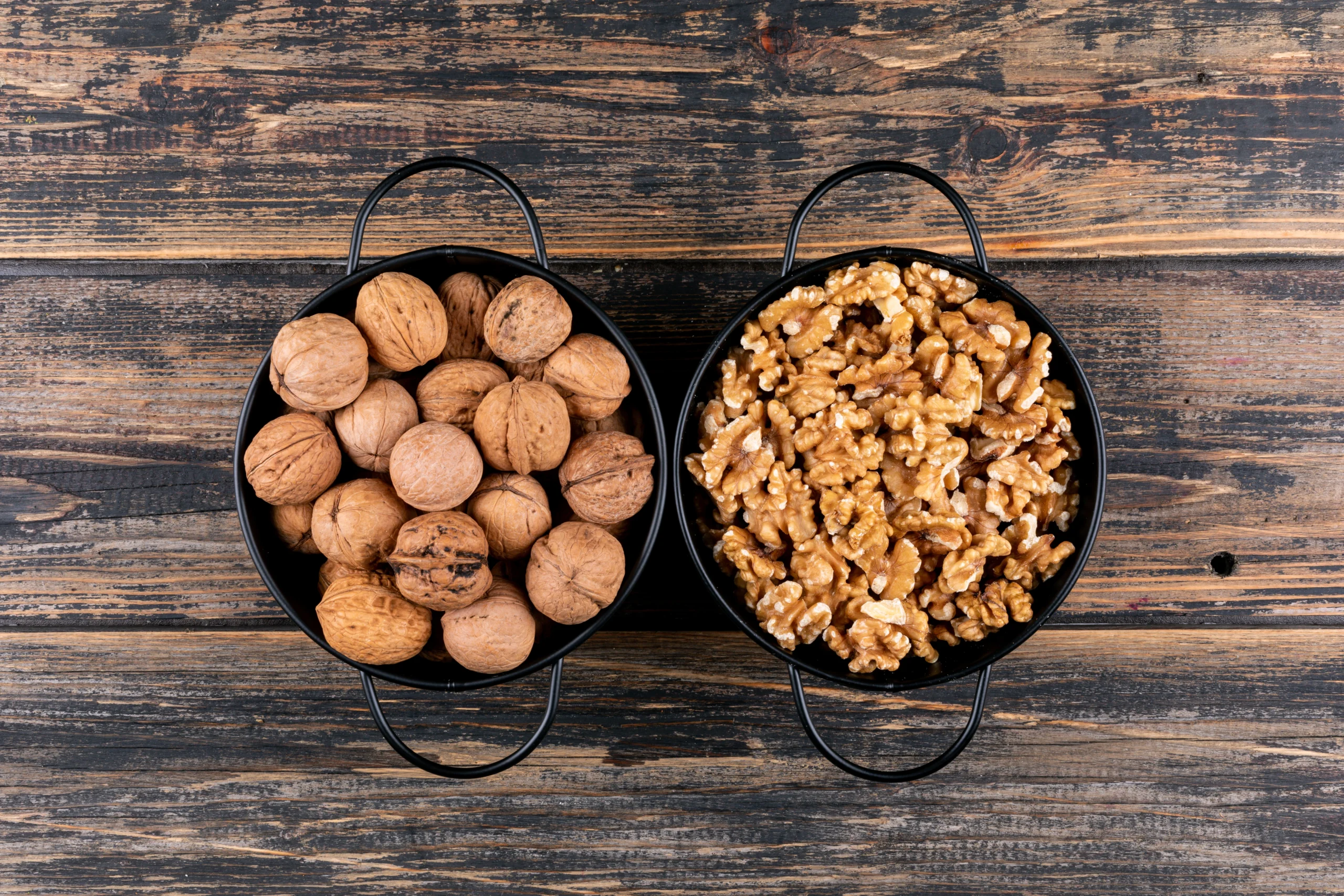
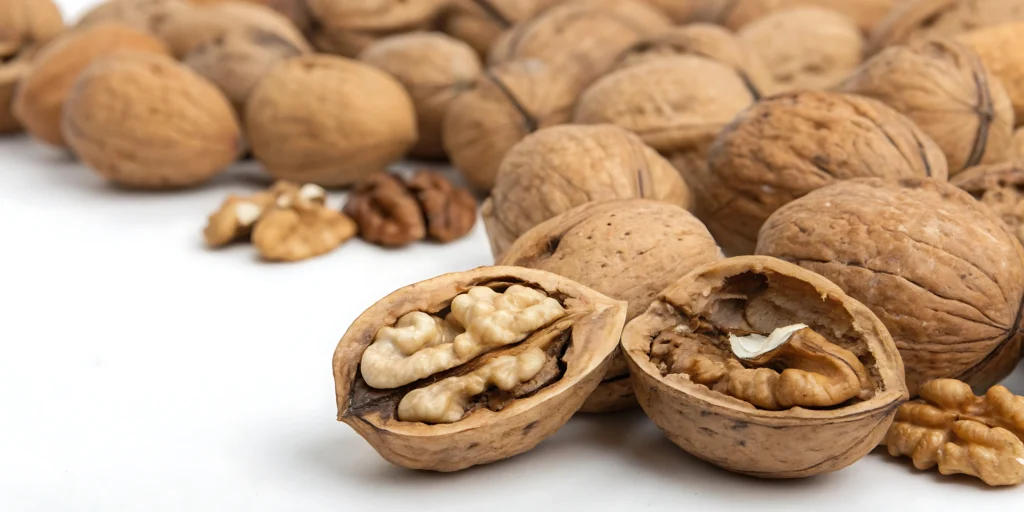
- Color: The meat of the walnut is light brown, while the shell ranges from light to dark brown.
- Shape: The walnut kernel resembles a lobed brain, with a convoluted surface. The shell is roughly spherical to oval and hard.
- Size: A typical English walnut half can vary in size but generally fits within the palm of an adult hand. The nuts are usually about 1.5 to 2 inches in length.
- Texture: The kernel has a crisp, dense texture that becomes creamy when chewed.
Culinary Uses
- Common Dishes: Walnuts are versatile in culinary uses, featured in both sweet and savory dishes. They are commonly used in baked goods (like brownies, cookies, and banana bread), salads, pesto, and as a crunchy topping for yogurts and oatmeal.
- Preparation Methods: Walnuts can be eaten raw or roasted to enhance their flavor. They can also be soaked or candied.
- Suitable Pairings: Walnuts pair well with cheeses, fruits (such as apples and pears), honey, chocolate, and are often used to add texture and nutrition to salads and grain dishes.
Geographical Information
- Origin: The English Walnut is believed to have originated in Central Asia and the Himalayas.
- Primary Growing Regions: Today, major producers include China, the United States (particularly California), Iran, and Turkey.
- Seasonal Availability: Walnuts are harvested in the autumn but are available year-round due to storage capabilities.
| proximates: | |
| Water | 3.14 g |
| Energy (Atwater General Factors) | 730 kcal |
| Energy (Atwater Specific Factors) | 679 kcal |
| Nitrogen | 2.75 g |
| Protein | 14.6 g |
| Total lipid (fat) | 69.7 g |
| Ash | 1.64 g |
| Carbohydrates: | |
| Carbohydrate, by difference | 10.9 g |
| Fiber, total dietary | 5.2 g |
| Minerals: | |
| Calcium, Ca | 88 mg |
| Iron, Fe | 2.24 mg |
| Magnesium, Mg | 142 mg |
| Phosphorus, P | 365 mg |
| Potassium, K | 424 mg |
| Sodium, Na | <2.5 mg |
| Zinc, Zn | 2.76 mg |
| Copper, Cu | 1.21 mg |
| Manganese, Mn | 3 mg |
| Molybdenum, Mo | 21 µg |
| Vitamins and Other Components: | |
| Thiamin | 0.23 mg |
| Niacin | 1.22 mg |
| Vitamin B-6 | 0.66 mg |
| Biotin | 17.3 µg |
| Vitamin K (phylloquinone) | 1.7 µg |
| Vitamin K (Dihydrophylloquinone) | <0.1 µg |
| Vitamin K (Menaquinone-4) | <0.1 µg |
| Lipids: | |
| Fatty acids, total saturated | 6.05 g |
| Fatty acids, total monounsaturated | 9.62 g |
| Fatty acids, total polyunsaturated | 49.3 g |
| Amino acids: | |
| Tryptophan | 0.127 g |
| Threonine | 0.443 g |
| Isoleucine | 0.52 g |
| Leucine | 0.997 g |
| Lysine | 0.38 g |
| Methionine | 0.19 g |
| Phenylalanine | 0.607 g |
| Tyrosine | 0.43 g |
| Valine | 0.597 g |
| Arginine | 2.02 g |
| Histidine | 0.343 g |
| Alanine | 0.59 g |
| Aspartic acid | 1.29 g |
| Glutamic acid | 2.99 g |
| Glycine | 0.69 g |
| Proline | 0.78 g |
| Serine | 0.78 g |
| Hydroxyproline | <0.01 g |
| Cysteine | 0.377 g |