
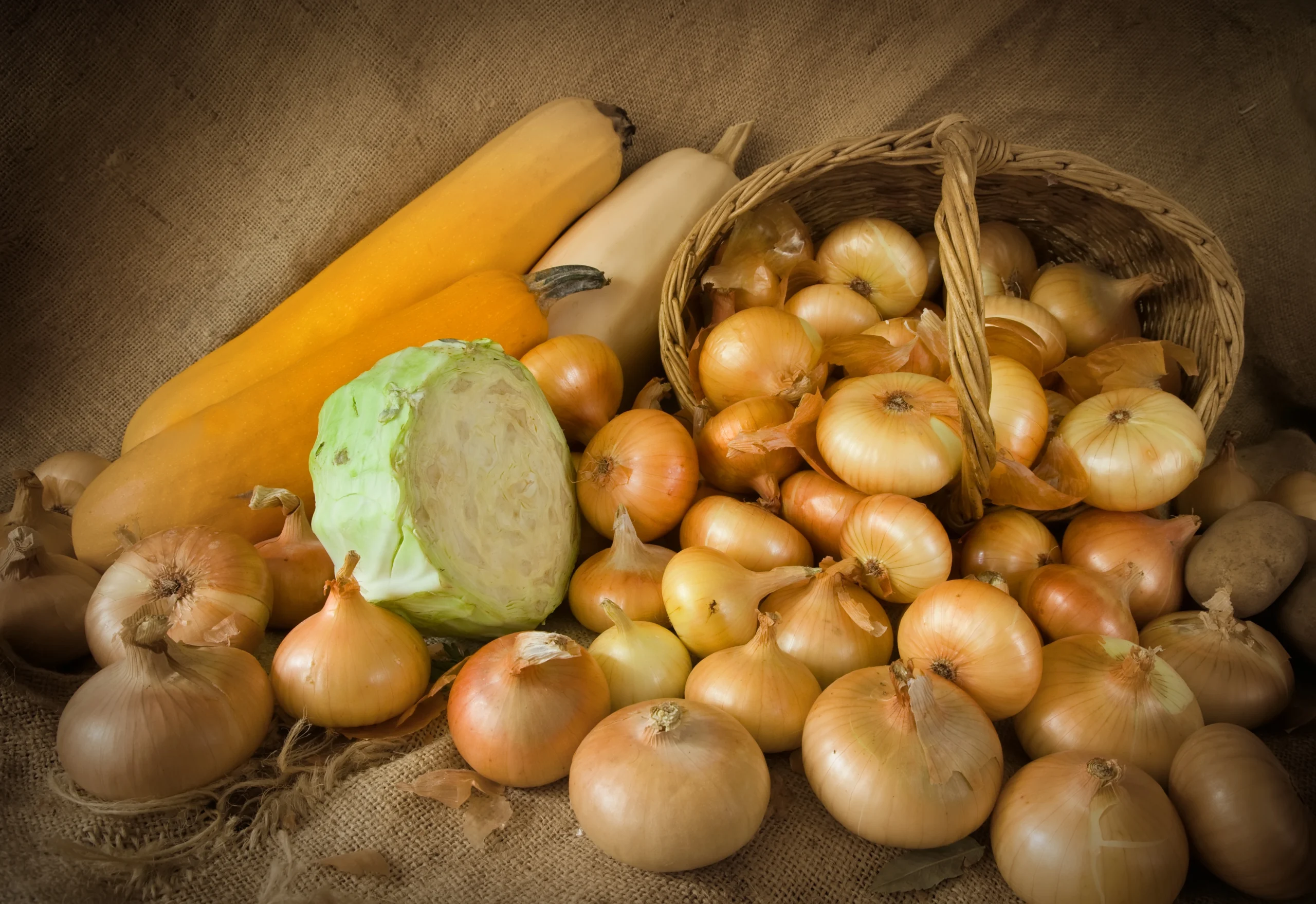
Yellow onions, known for their robust flavor and versatility, are a staple in kitchens around the globe. Here’s an in-depth look based on your requested categories:
Basic Information
- Common Name: Yellow Onion
- Scientific Name: Allium cepa
- Category: Vegetable
- Varieties: There are several varieties of yellow onions, including ‘Yellow Sweet Spanish’, ‘Yellow Globe’, and ‘Golden Yellow’. These varieties may differ slightly in taste, size, and storage qualities.
Nutritional Information
For a typical serving size (about 1 cup, chopped, approximately 160 grams):
- Macronutrients:
- Carbohydrates: Approximately 8.61 grams, primarily from sugars and dietary fiber.
- Proteins: About 0.83 grams, offering a small amount of plant-based protein.
- Fats: Minimal, as onions are virtually fat-free about 0.05 grams.
- Micronutrients:
- Vitamin C: A good source, important for immune function and skin health.
- B Vitamins: Contains traces of B-vitamins like folate and vitamin B6, essential for energy metabolism and brain health.
- Minerals: Provides potassium, and smaller amounts of magnesium and calcium.
Phytonutrients
Yellow onions, known for their robust flavor and versatility in cooking, are packed with beneficial phytonutrients that contribute to health and wellness. These phytonutrients include a variety of compounds that have antioxidant, anti-inflammatory, and potentially anti-cancer properties. Here’s a detailed overview of the phytonutrients present in raw yellow onions:
Flavonoids
- Quercetin: Yellow onions are a particularly rich source of quercetin, a powerful antioxidant that may help reduce blood pressure, combat inflammation, and lower the risk of certain diseases, including cancer. Quercetin is more concentrated in the outer layers of the onion.
- Kaempferol: Another flavonoid with antioxidant properties, kaempferol contributes to the protective effects against cardiovascular diseases and certain types of cancer.
- Isorhamnetin: A metabolite of quercetin, isorhamnetin offers similar benefits, including anti-inflammatory and anticancer activities.
Sulfur Compounds
- Sulfides and Thiosulfinates: These compounds are responsible for the characteristic aroma and taste of onions. They have been studied for their antimicrobial properties and their potential to reduce the risk of certain types of cancer, as well as their ability to improve cardiovascular health by reducing blood lipid and blood pressure levels.
- Allicin: Generated when the onion is chopped or crushed, allicin has antimicrobial and anti-inflammatory properties. Though more commonly associated with garlic, allicin is also present in onions and contributes to their health benefits.
Other Phytonutrients
- Allium Compounds: Yellow onions contain various allium compounds that are under investigation for their role in reducing the risk of several types of cancer, particularly those of the gastrointestinal tract.
- Fructans: A type of prebiotic fiber, fructans in onions support digestive health by nourishing beneficial gut bacteria. This can enhance overall gut health and immune function.
Health Benefits
The combination of flavonoids, sulfur compounds, and other phytonutrients in yellow onions provides a range of health benefits:
- Antioxidant Effects: Helps neutralize free radicals, reducing oxidative stress and potentially lowering the risk of chronic diseases.
- Cardiovascular Health: The phytonutrients in yellow onions can contribute to heart health by improving arterial function, lowering blood pressure, and reducing inflammation.
- Anti-inflammatory Properties: Many of the compounds in onions have anti-inflammatory effects, which may help reduce the risk of chronic conditions such as heart disease, diabetes, and certain cancers.
- Cancer Prevention: Preliminary research suggests that the phytonutrients in onions may offer protective effects against certain types of cancer, especially those of the stomach and other parts of the gastrointestinal tract.
Including raw yellow onions in the diet maximizes their phytonutrient content, as cooking can diminish some beneficial compounds. However, even cooked onions can contribute valuable nutrients and phytonutrients to a healthy diet. Yellow onions’ unique combination of flavors and health benefits makes them an indispensable ingredient in cuisines worldwide.
Calorie Count and Glycemic Index
- Calorie Count: Around 38 calories per cup.
- Glycemic Index: Low; yellow onions are suitable for diets aimed at managing blood sugar levels.
Physical Characteristics
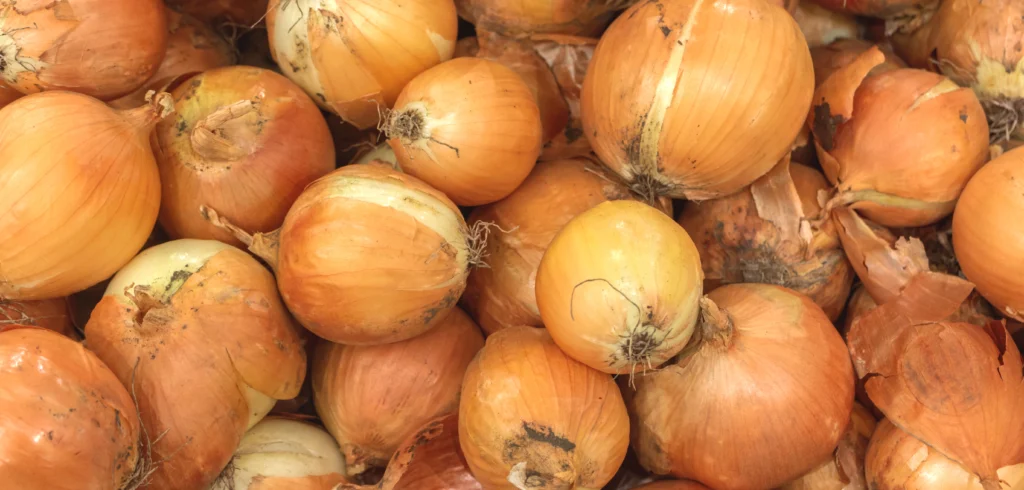
- Color: The outer skin is a vibrant yellow, while the inner flesh is white with a pale yellow tint.
- Shape: Typically round with a slightly tapered neck.
- Size: Ranges from medium to large, about 2 to 4 inches in diameter.
- Texture: Crisp and juicy when raw, becoming soft and sweet when cooked.
Culinary Uses
- Common Dishes: Yellow onions are incredibly versatile and used in a variety of dishes, including soups, stews, sautés, and roasts. They are the onion of choice for caramelizing due to their natural sweetness.
- Preparation Methods: They can be eaten raw, though they’re more commonly cooked. Cooking mellows their flavor and brings out their sweetness, making them ideal for a wide range of culinary applications.
- Suitable Pairings: Their robust flavor pairs well with hearty ingredients like meats, potatoes, and other root vegetables. They are also commonly used in stock and broth preparations for their depth of flavor.
Geographical Information
- Origin: Onions are thought to have originated in central Asia or Iran and Pakistan. Yellow onions, as a variant of Allium cepa, share this ancient lineage.
- Primary Growing Regions: Yellow onions are grown globally, with major production in countries including the United States, China, India, and Egypt.
- Seasonal Availability: Available year-round, yellow onions have a good storage life which contributes to their constant availability. Their peak season may vary locally but typically falls in late summer through fall.
Yellow onions are beloved for their balance of astringency and sweet flavor, especially when cooked. Their nutritional profile, which includes essential vitamins, minerals, and dietary fiber, combined with their low calorie and glycemic index, makes them a healthful addition to a wide array of dishes. Their storage resilience further cements their status as a kitchen staple worldwide.
| proximates: | |
| Water | 90.1 g |
| Energy (Atwater General Factors) | 38 kcal |
| Energy (Atwater Specific Factors) | 36 kcal |
| Protein | 0.83 g |
| Total lipid (fat) | 0.05 g |
| Ash | 0.41 g |
| Carbohydrates: | |
| Carbohydrate, by difference | 8.61 g |
| Fiber, total dietary | 1.9 g |
| Total dietary fiber (AOAC 2011.25) | 2.71 g |
| Sugars, Total | 5.82 g |
| Sucrose | 1.6 g |
| Glucose | 2.31 g |
| Fructose | 1.91 g |
| Lactose | <0.15 g |
| Maltose | <0.15 g |
| Minerals: | |
| Calcium, Ca | 15 mg |
| Iron, Fe | 0.28 mg |
| Magnesium, Mg | 9 mg |
| Phosphorus, P | 34 mg |
| Potassium, K | 182 mg |
| Sodium, Na | 1 mg |
| Zinc, Zn | 0.2 mg |
| Copper, Cu | 0.035 mg |
| Manganese, Mn | 0.144 mg |
| Iodine, I | <10 µg |
| Selenium, Se | <2.5 µg |
| Vitamins and Other Components: | |
| Vitamin C, total ascorbic acid | 8.2 mg |
| Biotin | <0.004 µg |