
Orange juice without pulp, not fortified, and made from concentrate, then refrigerated, is a popular beverage choice for many due to its refreshing taste and nutritional value. Here’s a comprehensive overview based on your requested aspects:
Basic Information
- Common Name: Orange Juice (No Pulp, Not Fortified, From Concentrate, Refrigerated)
- Scientific Name: Derived from Citrus sinensis (sweet orange) fruits
- Category: Beverage
Nutritional Information
For a typical serving size of 1 cup (about 248 grams):
- Macronutrients:
- Carbohydrates: Approximately 10.3 grams, mostly from natural sugars.
- Proteins: About 0.73 grams.
- Fats: Negligible amounts, as orange juice is virtually fat-free about 0.32 grams.
- Micronutrients:
- Rich in vitamin C, providing more than 100% of the Daily Value (DV) per serving, crucial for immune function, skin health, and antioxidant protection.
- Contains potassium, important for blood pressure regulation and heart health.
- Offers small amounts of folate (vitamin B9), beneficial for cell function and tissue growth.
Phytonutrients
Orange juice, even when it’s made from concentrate, refrigerated, and without pulp, retains a variety of beneficial phytonutrients. These compounds contribute to the health-promoting properties of orange juice. Here’s a detailed overview of the phytonutrients present in such orange juice:
Flavonoids
- Hesperidin: A significant flavonoid in oranges, hesperidin has antioxidant properties, contributes to the juice’s anti-inflammatory effects, and may help lower blood pressure.
- Naringenin: Known for its antioxidant and anti-inflammatory effects, naringenin may also have a role in metabolism regulation and disease prevention.
- Flavanones: These are abundant in citrus fruits and are known for their antioxidant and anti-inflammatory properties.
Carotenoids
- Beta-Cryptoxanthin: Although the no-pulp variety might have less of this than whole oranges or pulp-containing juices, beta-cryptoxanthin is a notable antioxidant that can be converted into vitamin A in the body.
- Lutein and Zeaxanthin: Present in smaller amounts, these carotenoids are important for eye health.
Vitamins
- Vitamin C (Ascorbic Acid): While not a phytonutrient, it’s worth mentioning due to its significant presence and important role as an antioxidant in orange juice. Vitamin C supports immune function, skin health, and iron absorption.
Other Compounds
- Citric Acid: Though more of a natural preservative and flavoring than a phytonutrient, citric acid has antioxidant properties and can help prevent kidney stones.
Health Benefits of Phytonutrients in Orange Juice
The phytonutrients in orange juice contribute to various health benefits:
- Antioxidant Support: They combat oxidative stress and reduce the risk of chronic diseases such as heart disease and cancer.
- Heart Health: Flavonoids in orange juice can improve heart health by reducing blood pressure and cholesterol levels.
- Anti-inflammatory Effects: The anti-inflammatory properties of these phytonutrients help in reducing the risk of chronic inflammation-related diseases.
- Immune Function: Vitamin C and other antioxidants support a healthy immune system.
It’s important to note that while orange juice contains beneficial phytonutrients, it also has a high natural sugar content. Consuming it in moderation as part of a balanced diet is advisable to maximize health benefits while minimizing potential negative effects from sugar consumption.
Calorie Count and Glycemic Index
- Calorie Count: Roughly 47 calories per cup.
- Glycemic Index: Medium (ranges from 46 to 52), which means it can cause a moderate rise in blood sugar levels.
Physical Characteristics
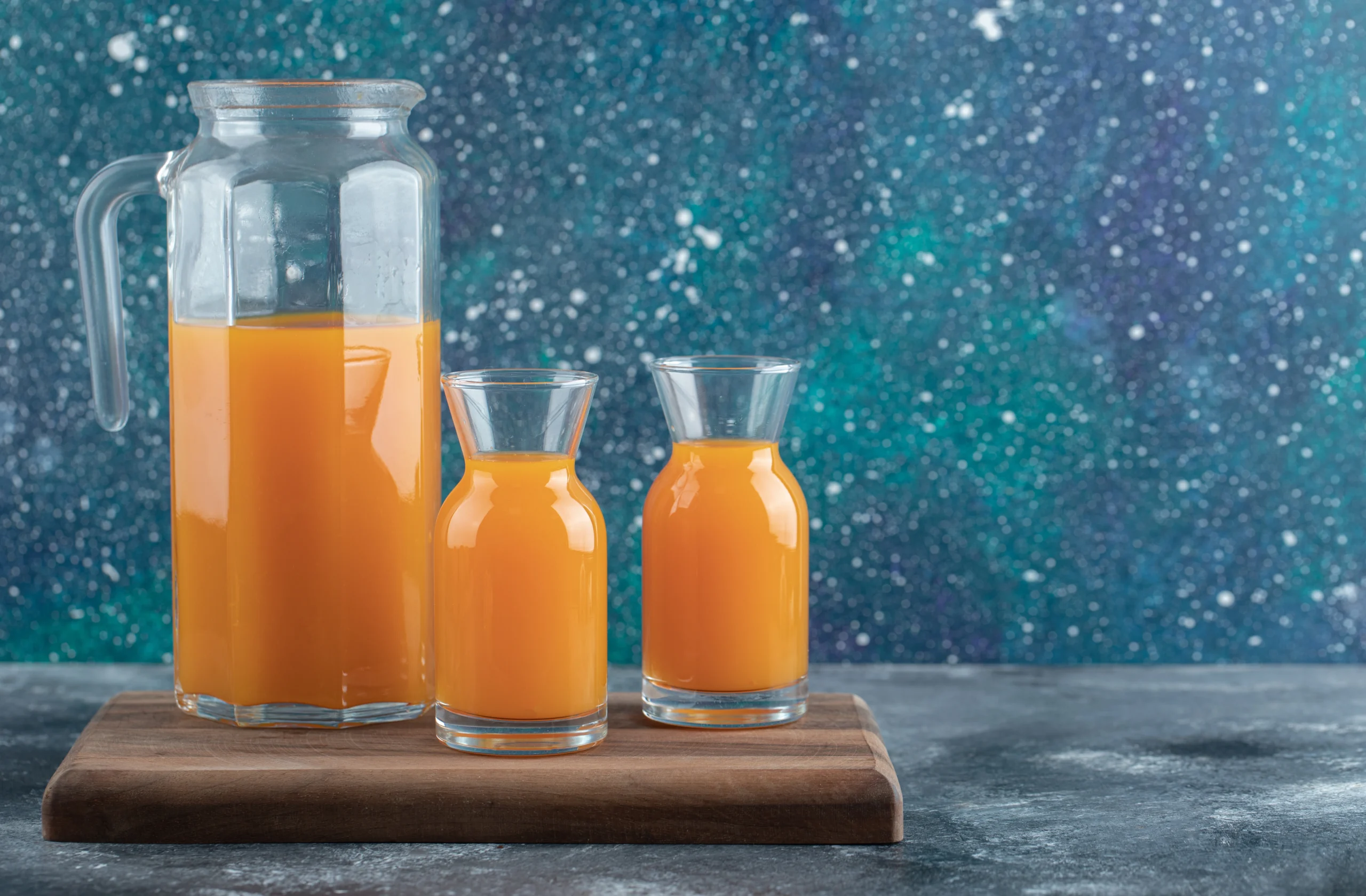
- Color: Bright orange, characteristic of citrus juices.
- Shape: Liquid form, served as a beverage.
- Size: Sold in various container sizes, from single-serve portions to large family-sized bottles.
- Texture: Smooth, without pulp, providing a consistent liquid texture.
Culinary Uses
- Common Dishes: Consumed on its own as a refreshing drink, used in smoothies, cocktails, or as a base in various recipes and sauces.
- Preparation Methods: Typically chilled and served cold. Can also be used as an ingredient in cooking and baking.
- Suitable Pairings: Pairs well with breakfast foods, such as cereals, pancakes, and eggs. Also complements savory dishes like seafood and salads.
Geographical Information
- Origin: Orange juice as we know it today has origins in the United States, with a significant commercial industry developing in the early 20th century.
- Primary Growing Regions: The primary regions for orange cultivation include Florida, Brazil, Mexico, and parts of the Mediterranean. These areas supply the oranges used for juice production.
- Seasonal Availability: While fresh oranges have a seasonal peak, the processed form of orange juice from concentrate allows for year-round availability in refrigerated forms.
Orange juice made from concentrate and served without pulp is a convenient and tasty way to enjoy the flavors and nutritional benefits of oranges. It offers a significant amount of vitamin C among other nutrients, making it a healthy beverage option when consumed in moderation.
| proximates: | |
| Water | 88.2 g |
| Energy (Atwater General Factors) | 47 kcal |
| Energy (Atwater Specific Factors) | 46 kcal |
| Nitrogen | 0.12 g |
| Protein | 0.73 g |
| Total lipid (fat) | 0.32 g |
| Ash | 0.35 g |
| Carbohydrates: | |
| Carbohydrate, by difference | 10.3 g |
| Sugars, Total | 8.28 g |
| Sucrose | 4.39 g |
| Glucose | 1.79 g |
| Fructose | 2.1 g |
| Lactose | <0.25 g |
| Maltose | <0.25 g |
| Galactose | <0.1 g |
| Organic acids: | |
| Citric acid | 706 mg |
| Malic acid | 161 mg |
| Oxalic acid | <40 mg |
| Quinic acid | 12 mg |
| Minerals: | |
| Calcium, Ca | 13 mg |
| Iron, Fe | 0.06 mg |
| Magnesium, Mg | 10.6 mg |
| Phosphorus, P | 18 mg |
| Potassium, K | 180 mg |
| Sodium, Na | 5 mg |
| Zinc, Zn | 0.03 mg |
| Copper, Cu | 0.032 mg |
| Manganese, Mn | 0.03 mg |
| Vitamins and Other Components: | |
| Vitamin C, total ascorbic acid | 26.9 mg |
| Thiamin | 0.07 mg |
| Niacin | 0.04 mg |
| Vitamin B-6 | 0.043 mg |
| Folate, total | 30 µg |