
Basic Information
- Common Name: Bartlett Pear
- Scientific Name: Pyrus communis
- Category: Fruit
Varieties
Bartlett pears come in two main varieties:
- Yellow Bartlett: Becomes bright yellow as it ripens.
- Red Bartlett: Maintains its red color and has a similar taste and texture to the yellow variety.
Nutritional Information
- Macronutrients:
- Carbohydrates: Approximately 15.1g per 100g, primarily composed of sugars and dietary fiber.
- Proteins: About 0.38g per 100g.
- Fats: Minimal fat content, around 0.16g per 100g.
- Micronutrients:
- Vitamins: Good source of Vitamin C and Vitamin K.
- Minerals: Provides small amounts of calcium, magnesium, potassium, and iron.
Phytonutrients
Bartlett pears, like many fruits, are rich in a variety of phytonutrients that contribute to their health benefits, taste, and aroma. These phytonutrients include flavonoids, antioxidants, and dietary fiber, which collectively support overall health, particularly heart health, and may reduce the risk of certain chronic diseases. Here’s an overview of the key phytonutrients found in Bartlett pears:
Flavonoids
- Epicatechin: A potent antioxidant found in Bartlett pears, epicatechin contributes to the reduction of oxidative stress and inflammation in the body.
- Quercetin: Another significant flavonoid, quercetin has anti-inflammatory and antioxidant effects. It’s concentrated mainly in the skin of the pear.
Antioxidants
- Vitamin C (Ascorbic Acid): Bartlett pears are a good source of vitamin C, an essential antioxidant that helps protect cells from damage by free radicals and supports a healthy immune system.
- Chlorogenic Acid: This compound has antioxidant properties that may help lower blood pressure and reduce the risk of chronic diseases.
Dietary Fiber
- Pectin: A soluble fiber in Bartlett pears, pectin can help lower LDL cholesterol levels and is beneficial for gut health. It also plays a role in regulating blood sugar levels by slowing the absorption of carbohydrates.
Other Compounds
- Aragonite: This mineral, found in trace amounts in Bartlett pears, is known for its potential benefits to bone health.
- Boron: Pears contain boron, a mineral that supports bone health by helping to retain calcium.
Health Benefits of Phytonutrients in Bartlett Pears
- Cardiovascular Health: The flavonoids and fiber in Bartlett pears can contribute to heart health by lowering blood pressure and cholesterol levels.
- Cancer Prevention: Some studies suggest that the consumption of foods rich in flavonoids, like Bartlett pears, may be linked to a reduced risk of certain types of cancer.
- Digestive Health: The dietary fiber in pears promotes healthy bowel movements and prevents constipation.
- Immune Support: Vitamin C in Bartlett pears supports the immune system, helping the body fight off infections.
Incorporating Bartlett pears into your diet can thus offer a range of health benefits. Enjoy them fresh to maximize the intake of these beneficial phytonutrients, particularly quercetin, which is more concentrated in the skin.
Calorie Count and Glycemic Index
- Calorie Count: Roughly 57 calories per 100g.
- Glycemic Index: Low to medium GI, typically ranging between 38 and 44.
Physical Characteristics
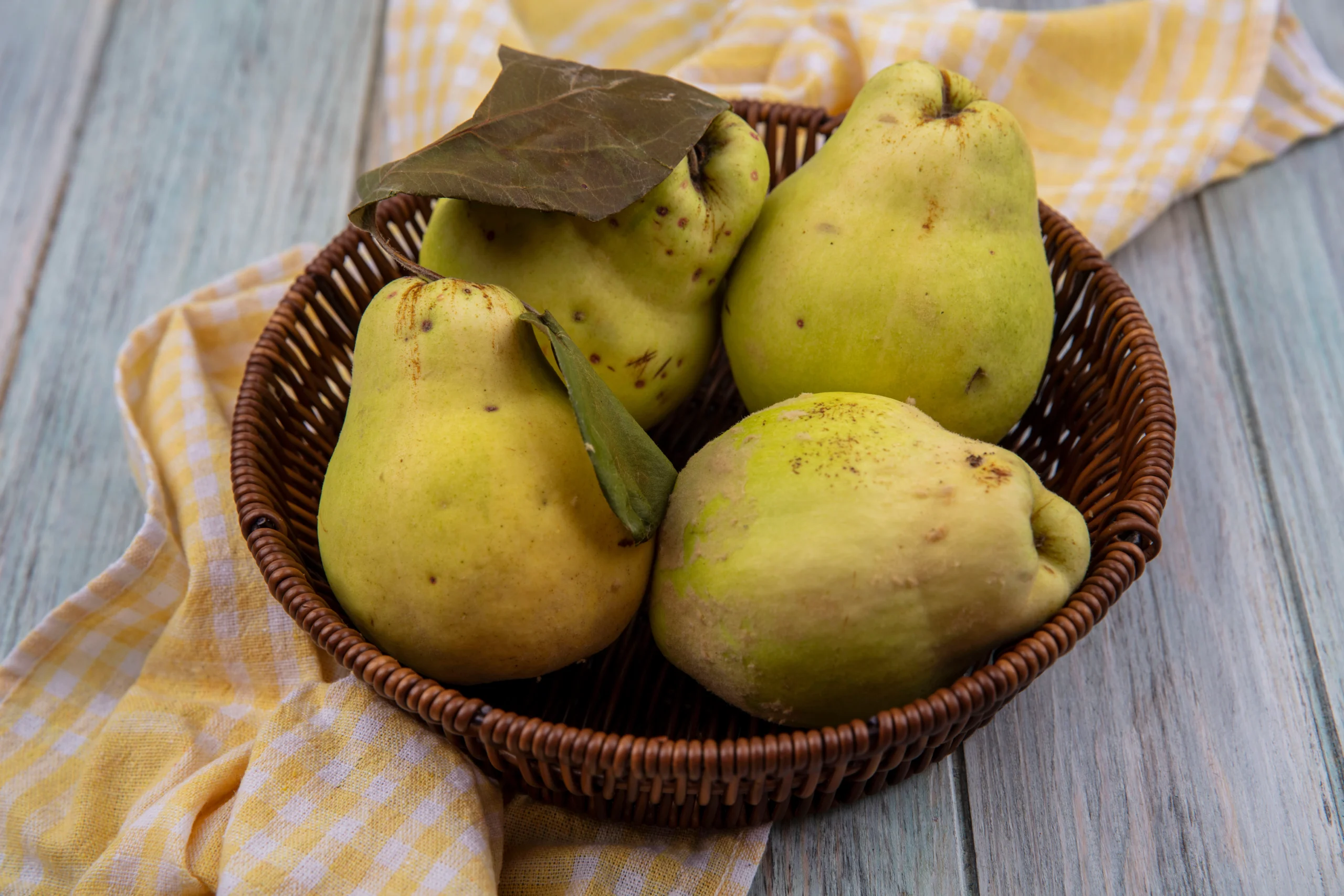
- Color: The Yellow Bartlett pear turns from green to bright yellow as it ripens, while the Red Bartlett maintains its red hue.
- Shape: Characterized by a classic pear shape with a rounded bottom half that tapers to a smaller neck and stem.
- Size: Medium to large, depending on the growing conditions and region.
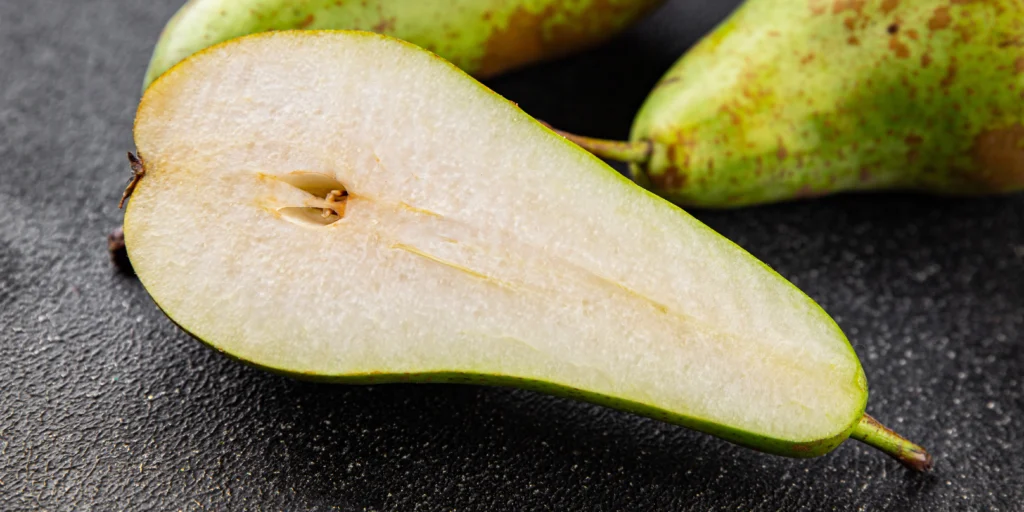
- Texture: Smooth skin with a soft and juicy interior when ripe. The flesh is white, fine-grained, and buttery.
Culinary Uses
Bartlett pears are versatile in culinary applications, popular both for eating fresh and for cooking. They are excellent for:
- Eating Raw: Enjoyed as a fresh, juicy snack.
- Canning and Preserving: Bartlett pears are the primary choice for canning due to their texture and flavor.
- Baking: Used in pies, tarts, and cakes.
- Cooking: Suitable for sauces, jams, and compotes.
- Pairings: Pairs well with cheeses, especially blue cheese and Gorgonzola, as well as with nuts, honey, and arugula in salads.
Geographical Information
- Origin: Originally from England, the Bartlett pear is known as the Williams pear in other parts of the world.
- Primary Growing Regions: Widely cultivated in the United States, particularly in California, Oregon, and Washington. Also grown in Europe, Canada, and Argentina.
- Seasonal Availability: The Bartlett pear season starts in late summer and extends into fall. In the U.S., they are typically available from August through December.
Bartlett pears, with their sweet flavor and versatility, are a favorite among pear varieties. They provide essential nutrients and antioxidants, making them a healthy addition to the diet. Whether eaten fresh, canned, or used in culinary creations, Bartlett pears offer a delightful taste and texture that complements a wide range of dishes.
| proximates: | |
| Water | 84.1 g |
| Energy (Atwater General Factors) | 63 kcal |
| Energy (Atwater Specific Factors) | 57 kcal |
| Nitrogen | 0.06 g |
| Protein | 0.38 g |
| Total lipid (fat) | 0.16 g |
| Ash | 0.3 g |
| Carbohydrates: | |
| Carbohydrate, by difference | 15.1 g |
| Fiber, total dietary | 3.1 g |
| Fiber, soluble | 0.3 g |
| Fiber, insoluble | 2.8 g |
| Sugars, Total | 9.69 g |
| Sucrose | 0.43 g |
| Glucose | 2.5 g |
| Fructose | 6.76 g |
| Minerals: | |
| Calcium, Ca | 8 mg |
| Iron, Fe | 0.17 mg |
| Magnesium, Mg | 5.7 mg |
| Phosphorus, P | 10 mg |
| Potassium, K | 87 mg |
| Sodium, Na | 7 mg |
| Zinc, Zn | 0.07 mg |
| Copper, Cu | 0.07 mg |
| Manganese, Mn | 0.032 mg |
| Selenium, Se | 0.2 µg |
| Vitamins and Other Components: | |
| Vitamin C, total ascorbic acid | 4.4 mg |
| Thiamin | 0.012 mg |
| Riboflavin | 0.026 mg |
| Niacin | 0.164 mg |
| Pantothenic acid | 0.042 mg |
| Vitamin B-6 | 0.026 mg |
| Folate, total | 6 µg |
| Vitamin A, RAE | 1 µg |
| Carotene, beta | 8 µg |
| Cryptoxanthin, beta | 3 µg |
| Lutein + zeaxanthin | 48 µg |
| Vitamin K (phylloquinone) | 3.8 µg |
| Amino acids: | |
| Tryptophan | 0.002 g |
| Threonine | 0.013 g |
| Isoleucine | 0.014 g |
| Leucine | 0.023 g |
| Lysine | 0.021 g |
| Methionine | 0.002 g |
| Cystine | 0.002 g |
| Phenylalanine | 0.013 g |
| Tyrosine | 0.002 g |
| Valine | 0.019 g |
| Arginine | 0.012 g |
| Histidine | 0.002 g |
| Alanine | 0.016 g |
| Aspartic acid | 0.104 g |
| Glutamic acid | 0.036 g |
| Glycine | 0.015 g |
| Proline | 0.017 g |
| Serine | 0.016 g |