

Basic Information
- Common Name: Orange Bell Pepper
- Scientific Name: Capsicum annuum
- Category: Vegetable
Varieties
Although “orange bell pepper” refers to the orange variety of the Capsicum annuum species, bell peppers themselves come in various colors including green, red, yellow, and sometimes purple or chocolate. The color indicates the ripeness of the pepper, with orange being a middle stage between green and red.
Nutritional Information
- Macronutrients:
- Carbohydrates: Orange bell peppers contain about 6.7g of carbohydrates per 100g, which includes dietary fibers (2.1g) and natural sugars.
- Proteins: They provide approximately 0.88g of protein per 100g.
- Fats: Very low in fats, with less than 0.16g per 100g.
- Micronutrients: High in Vitamin C and Vitamin A, with significant amounts of Vitamin B6, folate, and Vitamin E. Minerals include potassium, manganese, and magnesium.
Phytonutrients
Orange bell peppers, like their green, red, and yellow counterparts, are packed with an array of phytonutrients that contribute to their bright color, distinctive flavor, and health benefits. These phytonutrients include a variety of antioxidants, which are vital for maintaining good health and preventing chronic diseases. Here’s a detailed overview of the key phytonutrients found in raw orange bell peppers:
Carotenoids
- Beta-Carotene: Orange bell peppers are rich in beta-carotene, which the body can convert into vitamin A. This nutrient is essential for vision, immune function, and skin health.
- Alpha-Carotene: Similar to beta-carotene, alpha-carotene is another precursor to vitamin A, contributing to the same health benefits but is less efficiently converted.
- Lutein and Zeaxanthin: While generally more associated with green vegetables, orange bell peppers also contain these eye-protecting antioxidants, which are known to contribute to eye health by filtering harmful light wavelengths and may help prevent macular degeneration.
Flavonoids
- Quercetin: This flavonoid has antioxidant and anti-inflammatory properties that may help reduce the risk of chronic diseases, such as heart disease and cancer.
- Luteolin: Known for its antioxidant and anti-inflammatory effects, luteolin may also provide benefits for brain health and help reduce the risk of inflammatory diseases.
Vitamins
- Vitamin C: Orange bell peppers are an excellent source of vitamin C, an essential antioxidant that supports the immune system, skin health, and iron absorption.
- Vitamin E: Provides antioxidant properties that help protect cells from oxidative damage.
Health Benefits of Phytonutrients in Orange Bell Peppers
The combination of these phytonutrients in orange bell peppers contributes to several health benefits:
- Antioxidant Protection: The high levels of antioxidants, including vitamin C, carotenoids, and flavonoids, help neutralize free radicals, reducing oxidative stress and potentially lowering the risk of various chronic diseases.
- Eye Health: Carotenoids like lutein and zeaxanthin play an important role in protecting the eyes from damage and may help prevent age-related eye diseases.
- Inflammation Reduction: The anti-inflammatory properties of phytonutrients found in orange bell peppers can help reduce the risk of inflammatory conditions and support overall health.
- Skin and Immune System Support: The high vitamin C content not only supports the immune system but also contributes to healthy skin by promoting collagen production.
Incorporating orange bell peppers into your diet can offer these health benefits, making them a valuable addition to a balanced and nutritious diet. Their bright color, sweet flavor, and nutritional profile enhance a variety of dishes and contribute to overall health and well-being.

Calorie Count and Glycemic Index
- Calorie Count: Roughly 32 calories per 100g.
- Glycemic Index: Low, estimated to be under 40, making it suitable for maintaining stable blood sugar levels.
Physical Characteristics
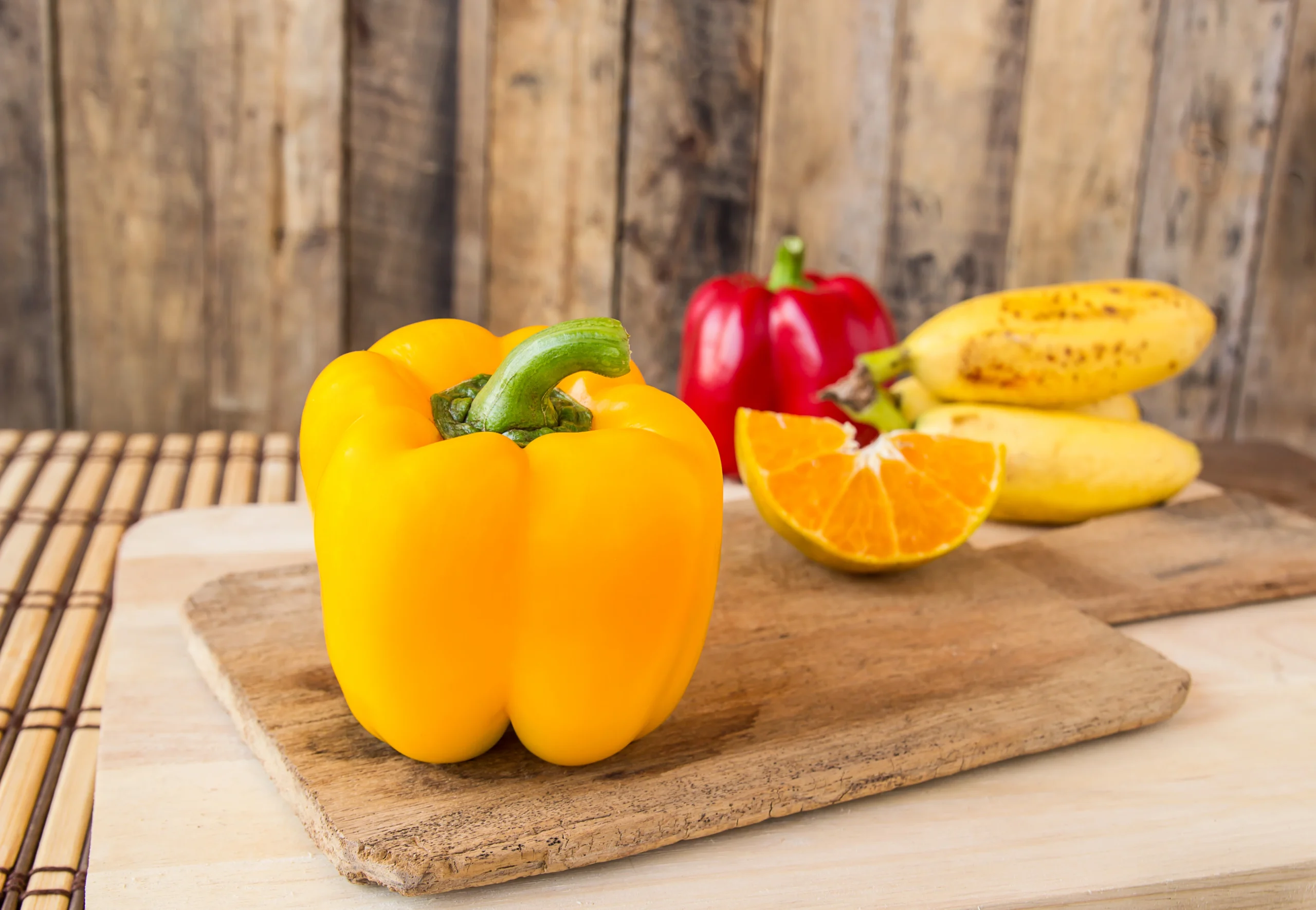
- Color: Bright orange, indicating a ripe but not fully matured state similar to red peppers.
- Shape: Blocky and three-dimensional, with a broad base that tapers slightly towards the stem.
- Size: Varies, but typically about 3 to 5 inches in length and 2 to 4 inches in diameter.
- Texture: Crisp and firm when raw, with a smooth, glossy exterior. The interior contains a hollow cavity divided by spongy white ribs and seeds.
Culinary Uses
Orange bell peppers are versatile in cooking, appreciated for their sweet flavor and crunchy texture:
- Raw: Sliced or chopped in salads, as a crunchy snack, or in cold dishes.
- Cooked: Stir-frying, roasting, grilling, or baking. They can be stuffed, added to pasta, pizzas, and sandwiches, or used as a colorful addition to various dishes.
- Common Dishes: Fajitas, salads, stuffed peppers, ratatouille, and as garnishes.
- Preparation Methods: Can be grilled, roasted, sautéed, or eaten raw.
- Suitable Pairings: Pairs well with meats, poultry, grains, cheeses, and other vegetables.
Geographical Information
- Origin: Native to Central and South America.
- Primary Growing Regions: Cultivated globally, with major production in China, Mexico, the United States (especially in California and Florida), Spain, and the Netherlands.
- Seasonal Availability: Available year-round, with peak seasons varying by local climate but generally in the late summer through fall.
Orange bell peppers offer a delightful balance of sweetness and crunch to a wide range of dishes. Their bright color and nutritional profile make them a popular choice for adding both visual appeal and health benefits to meals.
| proximates: | |
| Water | 91.9 g |
| Energy (Atwater General Factors) | 32 kcal |
| Energy (Atwater Specific Factors) | 27 kcal |
| Nitrogen | 0.14 g |
| Protein | 0.88 g |
| Total lipid (fat) | 0.16 g |
| Ash | 0.38 g |
| Carbohydrates: | |
| Carbohydrate, by difference | 6.7 g |
| Fiber, total dietary | 1 g |
| Minerals: | |
| Calcium, Ca | 5 mg |
| Iron, Fe | 0.37 mg |
| Magnesium, Mg | 10.4 mg |
| Phosphorus, P | 27 mg |
| Potassium, K | 201 mg |
| Sodium, Na | <2.49 mg |
| Zinc, Zn | 0.24 mg |
| Copper, Cu | 0.035 mg |
| Manganese, Mn | 0.149 mg |
| Selenium, Se | 0.3 µg |
| Vitamins and Other Components: | |
| Vitamin C, total ascorbic acid | 158 mg |
| Thiamin | 0.055 mg |
| Riboflavin | 0.102 mg |
| Niacin | 1.08 mg |
| Vitamin B-6 | 0.332 mg |
| Biotin | 0.58 µg |