

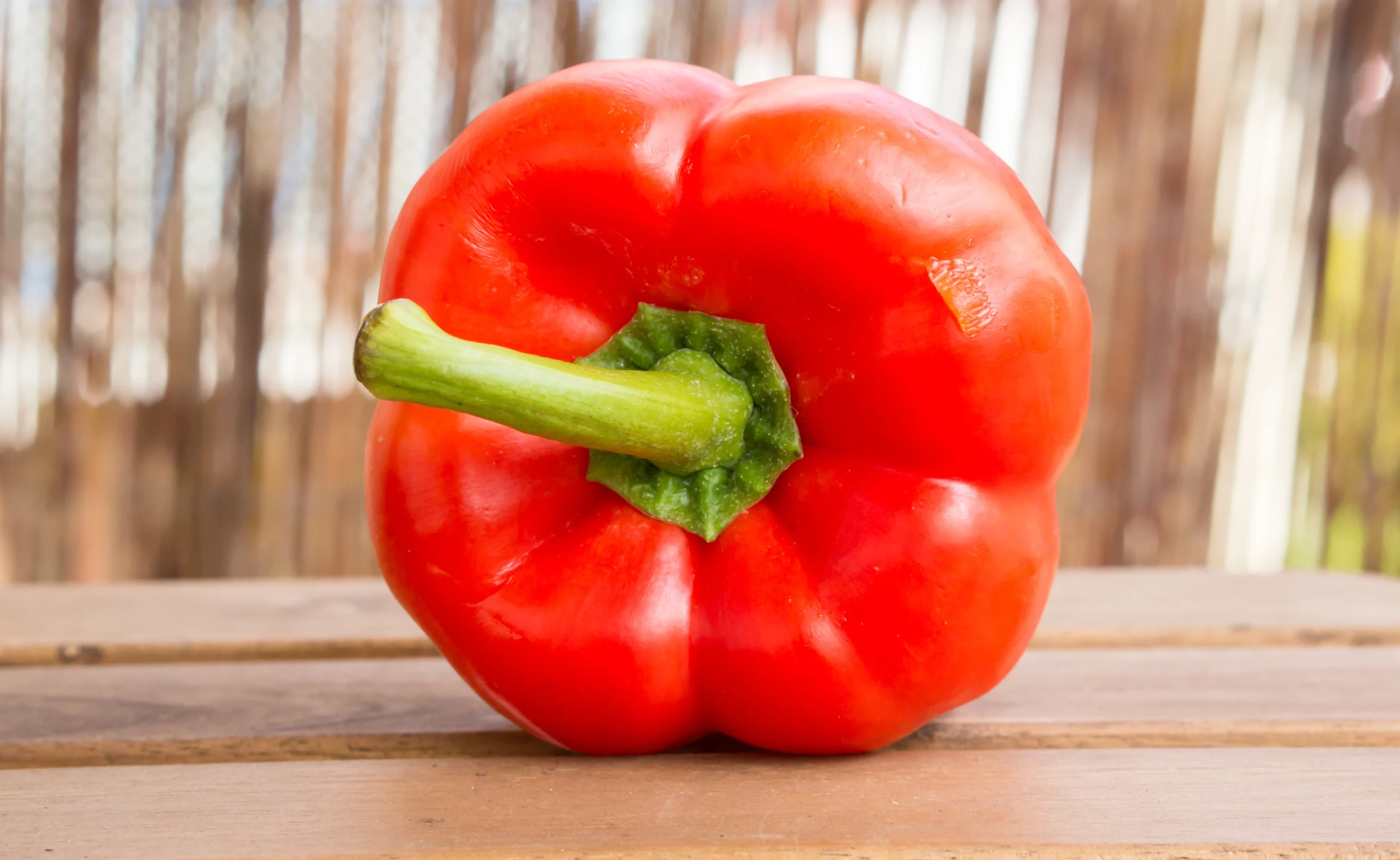
Basic Information
- Common Name: Red Bell Pepper
- Scientific Name: Capsicum annuum
- Category: Vegetable (botanically a fruit)
- Varieties: While “red bell pepper” refers to the mature version of the green bell pepper, there are various cultivars within this category, each with slight differences in taste and growth requirements.
Nutritional Information
- Macronutrients:
- Carbohydrates: About 6.65g per 100g, with a significant portion coming from natural sugars and dietary fiber.
- Proteins: Approximately 0.9g per 100g.
- Fats: Negligible fat content, typically less than 0.13g per 100g.
- Micronutrients: Rich in vitamins and minerals, particularly high in Vitamin C and Vitamin A. Also contains Vitamin E, Vitamin K, B6, folate, and minerals such as potassium and manganese.
Phytonutrients
Red bell peppers are rich in phytonutrients that contribute significantly to their health benefits, vibrant color, and flavor. These compounds have various antioxidant and anti-inflammatory effects, supporting overall health and potentially reducing the risk of certain chronic diseases. Here’s a detailed look at the key phytonutrients present in raw red bell peppers:
Carotenoids
- Beta-Carotene: Converts to vitamin A in the body, essential for vision, immune function, and skin health.
- Lycopene: A powerful antioxidant linked to reduced risk of certain types of cancer, particularly prostate cancer. It’s responsible for the red color in bell peppers.
- Lutein and Zeaxanthin: Concentrated in the eyes, these antioxidants are known for protecting vision and reducing the risk of age-related eye diseases.
Capsanthin
- Capsanthin: The predominant carotenoid in red bell peppers, capsanthin is a potent antioxidant that gives the peppers their red color and contributes to anti-inflammatory and immune-boosting properties.
Flavonoids
- Quercetin: Known for its antioxidant and anti-inflammatory properties, quercetin may help reduce blood pressure and improve heart health.
- Hesperidin: This compound can improve blood vessel function and may have anti-inflammatory effects.
Vitamins
- Vitamin C: Red bell peppers are extremely rich in vitamin C, an essential antioxidant that supports the immune system, skin health, and iron absorption.
- Vitamin E: An antioxidant that helps protect cells from oxidative damage.
Sulfur Compounds
- Red bell peppers contain sulfur compounds that have been studied for their potential cancer-preventive properties.
Health Benefits of Phytonutrients in Red Bell Peppers
The combination of these phytonutrients in red bell peppers contributes to several health benefits:
- Antioxidant Activity: The high levels of antioxidants, such as vitamin C, carotenoids, and flavonoids, help neutralize free radicals, reducing oxidative stress and potentially lowering the risk of various chronic diseases.
- Eye Health: Carotenoids like lutein and zeaxanthin play an important role in protecting the eyes from damage and may help prevent age-related eye diseases.
- Heart Health: Flavonoids and vitamin C contribute to cardiovascular health by improving endothelial function and reducing LDL cholesterol levels.
- Cancer Prevention: Some phytonutrients, including carotenoids and sulfur compounds, have been associated with a reduced risk of certain cancers.
Incorporating red bell peppers into your diet can offer these health benefits, making them a valuable addition to a balanced and nutritious diet. Their bright color, sweet flavor, and nutritional profile enhance a variety of dishes and contribute to overall health and well-being.

Calorie Count and Glycemic Index
- Calorie Count: Roughly 31 calories per 100g.
- Glycemic Index: Low, estimated at around 40.
Physical Characteristics
- Color: Vibrant red, indicating full ripeness and maximum sweetness among bell peppers.
- Shape: Three or four lobed, with a round to slightly elongated shape that tapers at the bottom.
- Size: Can vary, but typically 3 to 5 inches in diameter and 2 to 3 inches in height.
- Texture: Crisp and juicy when raw, becomes tender when cooked.
Culinary Uses
Red bell peppers are valued for their sweet, almost fruity taste and are used in a wide range of dishes:
- Eating Raw: In salads, sandwiches, or as a crunchy snack.
- Cooking: Roasted, grilled, sautéed, or stuffed. Their sweetness enhances many cooked dishes.
- Common Dishes: Fajitas, pizzas, pasta dishes, stir-fries, and roasted pepper soups.
- Preparation Methods: Can be roasted whole or in pieces, grilled, baked, or stir-fried.
- Suitable Pairings: Pairs well with a variety of meats, cheeses, other vegetables, and grains.
Geographical Information
- Origin: Native to Central and South America.
- Primary Growing Regions: Widely cultivated worldwide, with major production in China, Mexico, the United States, Indonesia, Turkey, and Spain.
- Seasonal Availability: Available year-round, with peak seasons varying by local climate but generally in the late summer to early fall in temperate regions.
Red bell peppers, with their bright color and sweet flavor, are not only a versatile ingredient in the kitchen but also a nutritional powerhouse, providing significant amounts of essential vitamins and minerals. Their cultivation and availability on a global scale ensure they are a staple in cuisines around the world, appreciated for both their taste and health benefits.
| proximates: | |
| Water | 91.9 g |
| Energy (Atwater General Factors) | 31 kcal |
| Energy (Atwater Specific Factors) | 27 kcal |
| Nitrogen | 0.14 g |
| Protein | 0.9 g |
| Total lipid (fat) | 0.13 g |
| Ash | 0.4 g |
| Carbohydrates: | |
| Carbohydrate, by difference | 6.65 g |
| Fiber, total dietary | 1.2 g |
| Minerals: | |
| Calcium, Ca | 6 mg |
| Iron, Fe | 0.35 mg |
| Magnesium, Mg | 11 mg |
| Phosphorus, P | 27 mg |
| Potassium, K | 213 mg |
| Sodium, Na | <2.5 mg |
| Zinc, Zn | 0.2 mg |
| Copper, Cu | 0.04 mg |
| Manganese, Mn | 0.133 mg |
| Selenium, Se | <2.5 µg |
| Vitamins and Other Components: | |
| Vitamin C, total ascorbic acid | 142 mg |
| Thiamin | 0.055 mg |
| Riboflavin | 0.142 mg |
| Niacin | 1.02 mg |
| Vitamin B-6 | 0.303 mg |
| Biotin | 0.427 µg |
| Folate, total | 47 µg |