

Basic Information
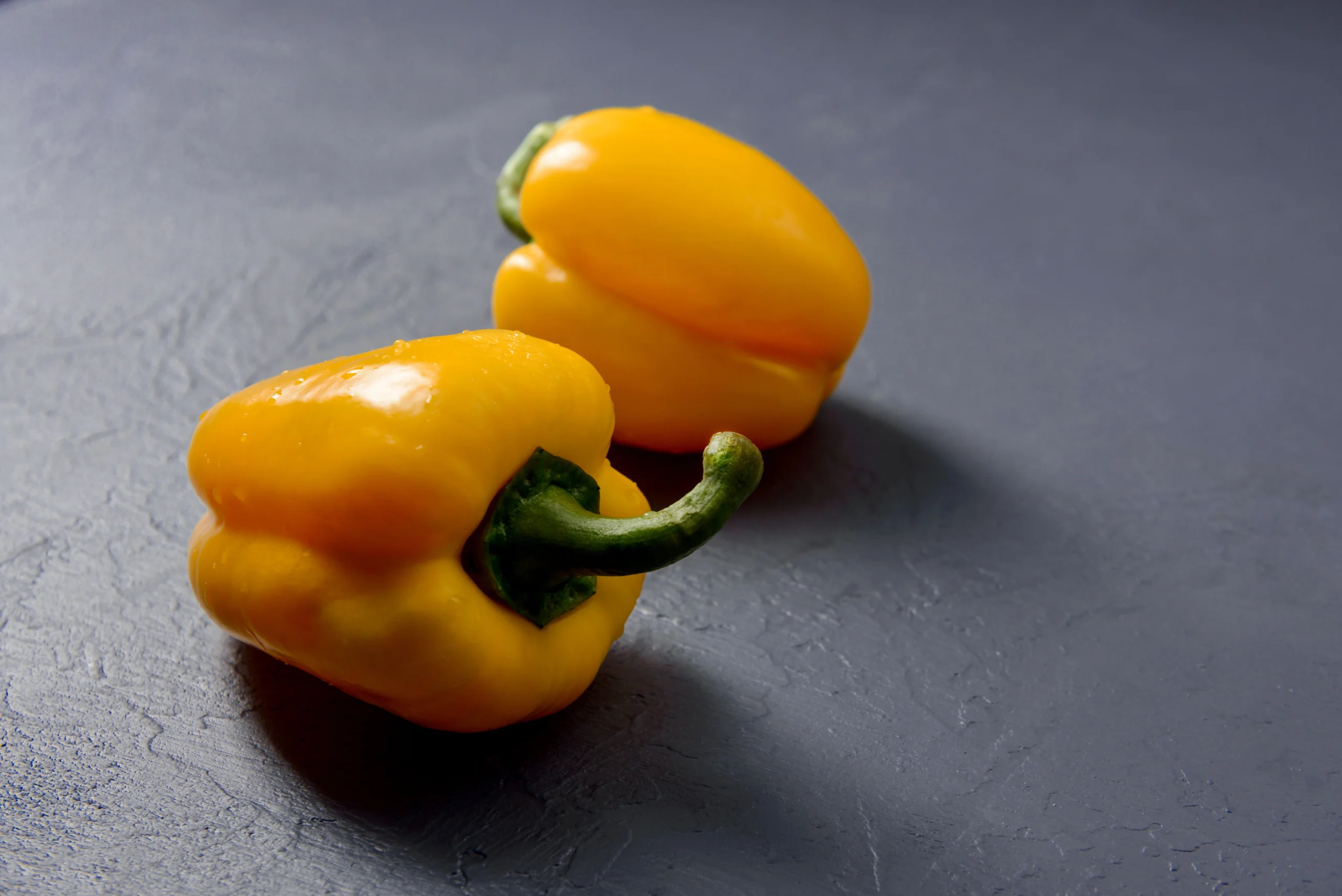
- Common Name: Yellow Bell Pepper
- Scientific Name: Capsicum annuum
- Category: Vegetable (though botanically considered a fruit)
Varieties
While “yellow bell pepper” generally refers to the color variant of the Capsicum annuum species, there are several cultivars that produce yellow fruits. These cultivars vary slightly in taste, size, and growth requirements but are all characterized by their vibrant yellow hue when mature.
Nutritional Information
- Macronutrients:
- Carbohydrates: Approximately 6.6g per 100g, mainly from sugars and dietary fiber.
- Proteins: Roughly 0.82g per 100g.
- Fats: Negligible, less than 0.12g per 100g.
- Micronutrients: High in Vitamin C and a good source of Vitamin A (from beta-carotene). Also contains vitamins E, K, and B6, with minerals like potassium, manganese, and a small amount of iron.
Phytonutrients
Yellow bell peppers are packed with a wide array of phytonutrients, which contribute to their vibrant color, health benefits, and distinctive flavor. These bioactive compounds include a variety of antioxidants and other beneficial chemicals that support overall health. Here’s an overview of the key phytonutrients found in raw yellow bell peppers:
Carotenoids
- Beta-Carotene: Converts to vitamin A in the body, essential for healthy vision, skin, and immune function.
- Lutein and Zeaxanthin: These are important for eye health, protecting the retina and reducing the risk of macular degeneration.
- Violaxanthin: The main carotenoid in yellow bell peppers, known for its antioxidant properties.
Vitamins
- Vitamin C: Yellow bell peppers are an excellent source of vitamin C, an essential antioxidant that supports the immune system, aids in the absorption of iron, and promotes healthy skin.
- Vitamin E: Contributes to cell protection from oxidative stress.
- Vitamin K1: Important for blood clotting and bone health.
Flavonoids
- Quercetin: This antioxidant has anti-inflammatory and antihistamine effects, potentially reducing the risk of chronic diseases like heart disease and cancer.
- Luteolin: Possesses antioxidant properties and may support brain health and general anti-inflammatory responses.
Capsaicinoids
- While yellow bell peppers are not spicy and contain only trace amounts of capsaicin compared to their hot pepper cousins, even these minimal amounts can contribute to anti-inflammatory and metabolic health benefits.
Health Benefits of Phytonutrients in Yellow Bell Peppers
The combination of these phytonutrients in yellow bell peppers contributes to several health benefits:
- Antioxidant Protection: The high levels of antioxidants, such as vitamin C and various carotenoids, help neutralize free radicals, reducing oxidative stress and potentially lowering the risk of various chronic diseases.
- Eye Health: Carotenoids like lutein and zeaxanthin play an important role in protecting the eyes from damage and may help prevent age-related eye diseases.
- Skin Health: Vitamin C is crucial for the synthesis of collagen, supporting skin elasticity and overall health.
- Inflammatory Response: The anti-inflammatory properties of phytonutrients found in yellow bell peppers can help reduce the risk of inflammatory conditions and support overall health.
Incorporating yellow bell peppers into your diet can offer these health benefits, making them a valuable addition to a balanced and nutritious diet. Their bright color, sweet flavor, and rich nutritional profile enhance a variety of dishes and contribute to overall health and well-being.
Calorie Count and Glycemic Index
- Calorie Count: About 27 calories per 100g.
- Glycemic Index: Low, generally estimated to be below 40.
Physical Characteristics
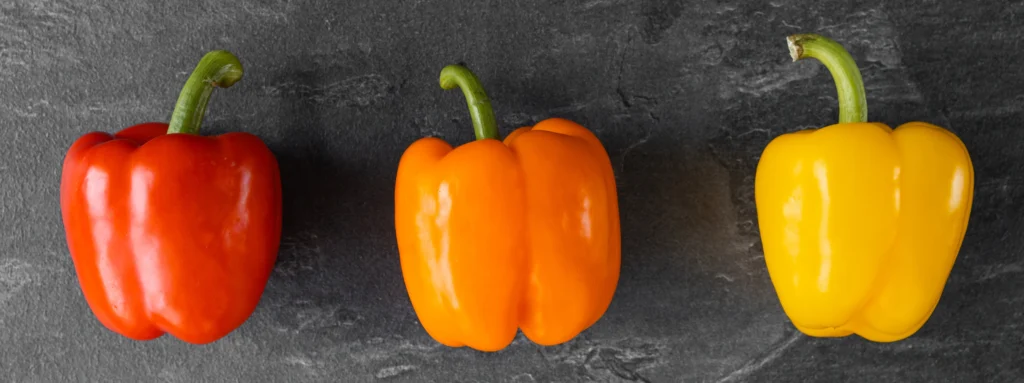
- Color: Bright yellow, indicating full maturity and a higher sugar content than green bell peppers.
- Shape: Blocky with three or four lobes, and a hollow interior divided by membranes to which seeds are attached.
- Size: Typically ranges from 2 to 5 inches in diameter and 2 to 6 inches in height.
- Texture: Crisp and juicy when raw; softens when cooked.
Culinary Uses
Yellow bell peppers are celebrated for their mildly sweet flavor and are used in a variety of dishes:
- Raw Consumption: In salads, sandwiches, or as a crunchy snack.
- Cooking: Popular in stir-fries, roasted vegetable mixes, or grilled. They also make excellent stuffed peppers due to their size and shape.
- Common Dishes: Ratatouille, fajitas, pasta dishes, and vegetable trays.
- Preparation Methods: Can be grilled, roasted, baked, sautéed, or eaten raw.
- Suitable Pairings: Works well with onions, tomatoes, zucchini, eggplants, various cheeses, and meats.
Geographical Information
- Origin: Native to Central and South America.
- Primary Growing Regions: Now widely cultivated across the globe, with significant production in China, Mexico, the United States, Indonesia, Turkey, and Spain.
- Seasonal Availability: Available year-round, with peak season in late summer to early fall in temperate regions.
Yellow bell peppers, with their vibrant color, add not only visual appeal to dishes but also a sweet flavor and a host of nutritional benefits. They are a versatile ingredient that can enhance the taste and nutritional profile of a wide range of recipes.
| proximates: | |
| Water | 92.1 g |
| Energy (Atwater General Factors) | 31 kcal |
| Energy (Atwater Specific Factors) | 27 kcal |
| Nitrogen | 0.13 g |
| Protein | 0.82 g |
| Total lipid (fat) | 0.12 g |
| Ash | 0.38 g |
| Carbohydrates: | |
| Carbohydrate, by difference | 6.6 g |
| Fiber, total dietary | 1.1 g |
| Minerals: | |
| Calcium, Ca | 7 mg |
| Iron, Fe | 0.36 mg |
| Magnesium, Mg | 10.3 mg |
| Phosphorus, P | 25 mg |
| Potassium, K | 197 mg |
| Sodium, Na | <2.5 mg |
| Zinc, Zn | 0.19 mg |
| Copper, Cu | 0.045 mg |
| Manganese, Mn | 0.142 mg |
| Selenium, Se | <2.5 µg |
| Vitamins and Other Components: | |
| Vitamin C, total ascorbic acid | 139 mg |
| Thiamin | 0.049 mg |
| Riboflavin | 0.098 mg |
| Niacin | 0.91 mg |
| Vitamin B-6 | 0.292 mg |
| Biotin | 0.46 µg |
| Folate, total | 42 µg |