
Basic Information
Name:
- Common: Brown Rice
- Scientific: Oryza sativa
- Category: Whole Grain, Cereal
Varieties:
- Short Grain Brown Rice: Stickier texture, often used in sushi or rice puddings.
- Medium Grain Brown Rice: Balanced texture, commonly used in risottos and salads.
- Long Grain Brown Rice: Fluffy and separate grains, ideal for pilafs and side dishes.
- Specialty Varieties: Basmati and Jasmine brown rice, which have distinct aromas and flavors.
Nutritional Information (per 100 grams of raw long grain brown rice)
Macronutrients:
- Carbohydrates: 76.7 grams
- Dietary Fiber: 3.5 grams
- Proteins: 7.25 grams
- Fats: 3.31 grams
- Saturated fats: 0.5 grams
- Polyunsaturated fats: 1.0 grams
- Monounsaturated fats: 0.9 grams
Micronutrients:
- Vitamins:
- Thiamin (Vitamin B1): 0.40 mg (33% DV)
- Niacin (Vitamin B3): 5.1 mg (32% DV)
- Vitamin B6: 0.5 mg (29% DV)
- Pantothenic Acid (Vitamin B5): 1.5 mg (30% DV)
- Minerals:
- Iron: 1.47 mg (8% DV)
- Magnesium: 143 mg (36% DV)
- Phosphorus: 333 mg (27% DV)
- Potassium: 223 mg (5% DV)
- Zinc: 2.02 mg (18% DV)
- Manganese: 3.743 mg (163% DV)
- Selenium: 15.1 mcg (27% DV)
Calorie Count:
- Approximately 370 calories per 100 grams
Glycemic Index:
- Moderate, typically around 50-55
Phytonutrients
Brown rice contains several key phytonutrients that contribute to its health benefits:
1. Phytic Acid:
- Benefits: Acts as an antioxidant and may contribute to the reduction of certain types of cancer. However, it can also reduce the absorption of minerals.
2. Lignans:
- Benefits: Phytoestrogens that can help reduce the risk of heart disease by improving cholesterol levels and blood vessel function.
3. Phenolic Acids:
- Includes: Ferulic acid, p-coumaric acid.
- Benefits: Have antioxidant properties that help protect cells from oxidative damage and reduce inflammation.
4. Flavonoids:
- Includes: Apigenin, quercetin.
- Benefits: Provide anti-inflammatory and antioxidant benefits, potentially reducing the risk of chronic diseases like heart disease and cancer.
5. Tocotrienols and Tocopherols (Vitamin E):
- Benefits: Act as antioxidants, protecting cells from damage, and may contribute to skin health and a reduced risk of heart disease.
These phytonutrients, along with the fiber and other nutrients in brown rice, make it a nutritious food choice that supports overall health, particularly in terms of cardiovascular health, cancer prevention, and antioxidant protection.
Physical Characteristics
Color:
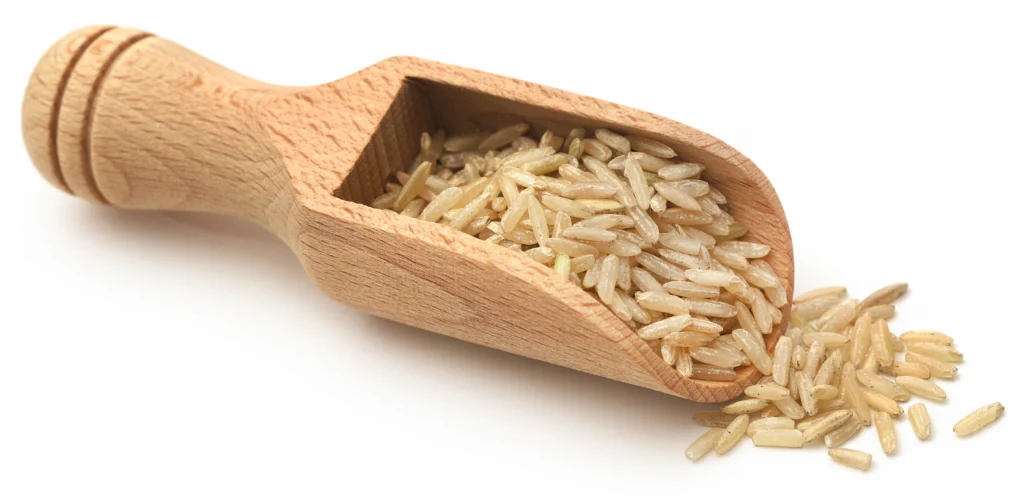
- Brown to light tan, with a slightly translucent appearance.
Shape:
- Long and slender grains, typically about 6-8 mm in length.
Size:
- Length is about 6-8 mm, width is about 2 mm.
Texture:
- Raw: Firm and hard.
- Cooked: Chewy and slightly nutty, with a firm texture and a slightly separated grain structure.
Aroma and Flavor:
- Aroma: Mild, slightly nutty aroma when raw, with a richer, more pronounced nutty scent when cooked.
- Flavor: Mild, slightly sweet, and nutty flavor.
Culinary Uses
Common Dishes:
- Pilafs: Often used in pilaf dishes due to its separate and fluffy grain structure.
- Side Dishes: Serves as a nutritious side dish for a variety of meats, vegetables, and sauces.
- Salads: Ideal for grain salads, often combined with vegetables, nuts, and dressings.
- Stir-Fries: Used in stir-fries where its firm texture holds up well.
- Casseroles and Soups: Adds texture and nutrition to casseroles and soups.
Preparation Methods:
- Basic Cooking: Typically cooked with a water-to-rice ratio of 2:1. Bring to a boil, reduce heat, cover, and simmer for about 45 minutes until water is absorbed and rice is tender.
- Soaking: Soaking the rice for 30 minutes to an hour before cooking can reduce cooking time and improve texture.
- Flavor Enhancements: Can be cooked in broth or seasoned with herbs and spices for added flavor.
Suitable Pairings:
- Proteins: Pairs well with chicken, beef, pork, tofu, and legumes.
- Vegetables: Complements a wide variety of vegetables, including bell peppers, broccoli, carrots, and spinach.
- Sauces: Works well with sauces like soy sauce, teriyaki, curry, and vinaigrettes.
- Nuts and Seeds: Adding nuts or seeds like almonds, cashews, or sesame seeds can enhance the texture and flavor.
Geographical Information
Origin:
- Brown rice, like all rice, is believed to have originated in the region of the Yangtze River valley in China over 10,000 years ago.
Primary Growing Regions:
- Asia: Major producers include China, India, Indonesia, and Thailand.
- Americas: The United States (primarily Arkansas, California, Louisiana, and Texas), Brazil, and Argentina.
- Africa: Egypt, Madagascar, and Nigeria.
- Europe: Italy and Spain also produce significant quantities of rice, although brown rice is less common than white rice in these regions.
Seasonal Availability:
- Brown rice is available year-round. Its availability is not limited by seasons, as it is a dry grain that can be stored for extended periods.
| Proximates: | |
| Water | 11.5 g |
| Energy (Atwater General Factors) | 366 kcal |
| Energy (Atwater Specific Factors) | 368 kcal |
| Nitrogen | 1.22 g |
| Protein | 7.25 g |
| Total lipid (fat) | 3.31 g |
| Ash | 1.28 g |
| Carbohydrates: | |
| Carbohydrate, by difference | 76.7 g |
| Fiber, total dietary | 3 g |
| Total dietary fiber (AOAC 2011.25) | 4.3 g |
| High Molecular Weight Dietary Fiber (HMWDF) | 3.38 g |
| Low Molecular Weight Dietary Fiber (LMWDF) | 0.5 g |
| Starch | 71.6 g |
| Minerals: | |
| Calcium, Ca | 8 mg |
| Iron, Fe | 1.24 mg |
| Magnesium, Mg | 115 mg |
| Phosphorus, P | 303 mg |
| Potassium, K | 250 mg |
| Sodium, Na | <2.5 mg |
| Zinc, Zn | 1.85 mg |
| Copper, Cu | 0.266 mg |
| Manganese, Mn | 2.7 mg |
| Selenium, Se | 14.8 µg |
| Molybdenum, Mo | 63.9 µg |
| Vitamins and Other Components: | |
| Thiamin | 0.326 mg |
| Riboflavin | 0.102 mg |
| Niacin | 6.27 mg |
| Vitamin B-6 | 0.161 mg |
| Biotin | 4.99 µg |