
Basic Information
- Common Name: Salsa
- Scientific Name: N/A (Salsa is a culinary product, not a single plant or animal species.)
- Category: Food Product (Condiment)
- Varieties: There are numerous varieties of salsa, which can be broadly categorized into salsa roja (red sauce), salsa verde (green sauce), pico de gallo (fresh, uncooked tomatoes, onions, and sometimes chiles), fruit salsas, and more specialized versions like salsa negra (made with dried chiles) and salsa taquera (taco sauce).
Nutritional Information
- Macronutrients (per 100 grams of ready-to-serve salsa):
- Carbohydrates: Approximately 5-7 grams, mainly from tomatoes and onions, including dietary fiber and natural sugars.
- Proteins: About 1.44 grams
- Fats: Less than 0.19 grams, depending on ingredients like avocados or oil in some varieties.
- Micronutrients: Rich in vitamin C and vitamin A, with some salsas also providing potassium, iron, and calcium. Contains antioxidants like lycopene (in red tomatoes) and various phytonutrients from vegetables and herbs.
- Calorie Count: Roughly 20-40 calories per 100 grams.
- Glycemic Index: Low, due to its low carbohydrate content and high fiber.
Phytonutrients:
Ready-to-serve salsa, a popular condiment in many cuisines, particularly Mexican and Tex-Mex, is made from a variety of vegetables and spices. Its phytonutrient content primarily comes from its raw ingredients, such as tomatoes, onions, chiles, and herbs like cilantro. These phytonutrients offer numerous health benefits, including antioxidant and anti-inflammatory properties. Here’s an overview of key phytonutrients found in ready-to-serve salsa:
1. Lycopene
- Source: Tomatoes
- Benefits: Lycopene is a powerful antioxidant that may help reduce the risk of certain types of cancer, particularly prostate cancer, and protect against heart diseases.
2. Quercetin
- Source: Onions
- Benefits: Quercetin has antioxidant and anti-inflammatory effects, potentially reducing the risk of chronic diseases such as heart disease and providing allergy relief.
3. Capsaicin
- Source: Chiles
- Benefits: Capsaicin is known for its pain-relief properties, metabolism-boosting potential, and may reduce the risk of cancer.
4. Vitamin C
- Source: Tomatoes, chiles, and other vegetables
- Benefits: While technically a vitamin, it acts as a potent antioxidant, supporting immune function, skin health, and iron absorption.
5. Beta-carotene
- Source: Tomatoes and any orange or yellow vegetables used
- Benefits: Beta-carotene is converted into vitamin A in the body, supporting vision, immune function, and skin health.
6. Allicin
- Source: Garlic
- Benefits: Allicin has antimicrobial and cardioprotective properties, potentially helping to lower cholesterol and blood pressure.
7. Cilantro Compounds
- Source: Cilantro
- Benefits: Cilantro contains antioxidants and may help remove heavy metals from the body.
8. Flavonols and Anthocyanins
- Source: Various vegetables and herbs
- Benefits: These compounds have antioxidant properties that may help protect against heart disease and improve brain health.
The combination of these phytonutrients makes salsa not only a flavorful addition to meals but also a healthful one. The benefits are maximized when salsa is made with fresh, uncooked ingredients, as cooking can reduce the levels of certain phytonutrients. However, even ready-to-serve salsas can contribute valuable antioxidants and other beneficial compounds to the diet, supporting overall health.
Physical Characteristics
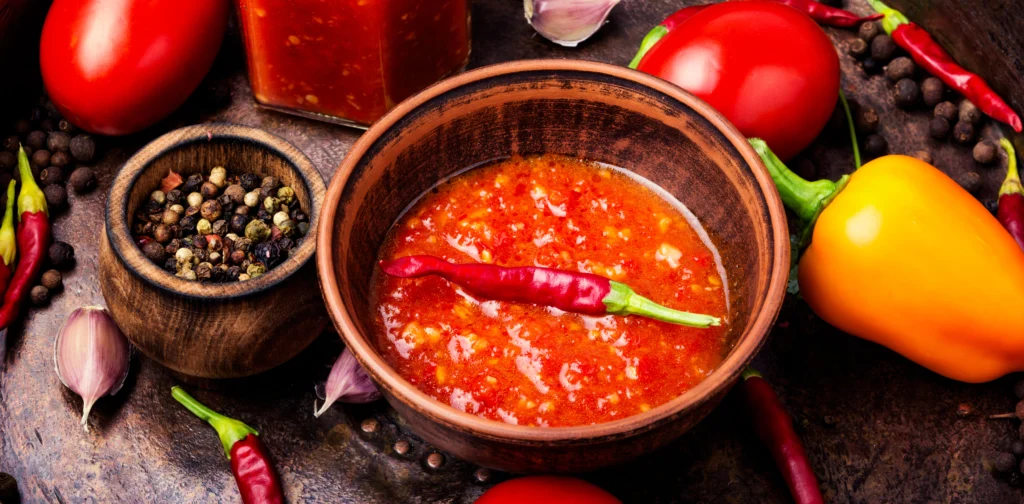
- Color: Varies widely from red to green to orange, based on ingredients.
- Shape: N/A (liquid to semi-solid condiment)
- Size: Sold in various container sizes, typically measured by volume (e.g., ounces or liters).
- Texture: Can range from smooth to chunky, depending on the preparation style and ingredients used.
Culinary Uses
Salsa is incredibly versatile in the kitchen:
- Common Dishes: Used as a condiment for Mexican and Tex-Mex dishes, including tacos, burritos, and enchiladas; served with chips as an appetizer; used as a cooking ingredient or topping for meats and vegetables.
- Preparation Methods: Ready-to-serve salsas are used directly from the container; homemade versions involve chopping and mixing fresh or cooked ingredients.
- Suitable Pairings: Complements a wide variety of foods, from simple tortilla chips to complex dishes like grilled fish, chicken, and even eggs.
Geographical Information
- Origin: Salsa has its roots in the cuisines of Central and South America, with a significant history in Mexican cuisine.
- Primary Growing Regions: Ingredients for salsa are grown worldwide, with tomatoes, chiles, and onions being stapled crops in many countries.
- Seasonal Availability: Ready-to-serve salsa is available year-round due to modern preservation and global distribution methods.
Salsa is a staple condiment in many cuisines, celebrated for its fresh flavor and versatility. Its nutritional profile makes it a flavorful addition to meals with minimal calories, offering a boost of vitamins and antioxidants. Whether enjoyed as a dip, a topping, or a cooking ingredient, salsa adds a vibrant touch to a wide range of dishes.
| Proximates: | |
| Water | 89.3 g |
| Energy (Atwater General Factors) | 34 kcal |
| Energy (Atwater Specific Factors) | 29 kcal |
| Nitrogen | 0.23 g |
| Protein | 1.44 g |
| Total lipid (fat) | 0.19 g |
| Ash | 2.3 g |
| Carbohydrates: | |
| Carbohydrate, by difference | 6.74 g |
| Carbohydrate, by summation | 5.66 g |
| Fiber, total dietary | 1.8 g |
| Sugars, Total | 3.81 g |
| Sucrose | 0.2 g |
| Glucose | 1.63 g |
| Fructose | 1.98 g |
| Minerals: | |
| Calcium, Ca | 28 mg |
| Iron, Fe | 0.42 mg |
| Magnesium, Mg | 15.2 mg |
| Phosphorus, P | 32 mg |
| Potassium, K | 258 mg |
| Sodium, Na | 656 mg |
| Zinc, Zn | 0.2 mg |
| Copper, Cu | 0.065 mg |
| Manganese, Mn | 0.11 mg |
| Vitamins and Other Components: | |
| Thiamin | 0.035 mg |
| Niacin | 1.12 mg |
| Pantothenic acid | 0.202 mg |
| Vitamin B-6 | 0.176 mg |
| Vitamin A, RAE | 24 |
| Carotene, beta | 288 |
| Lycopene | 6310 |
| Lutein + zeaxanthin | 211 |
| Vitamin E (alpha-tocopherol) | 1.22 mg |
| Tocopherol, beta | 0.03 mg |
| Tocopherol, gamma | 0.14 mg |
| Tocotrienol, beta | 0.43 mg |
| Tocotrienol, delta | 0.01 mg |
| Vitamin K (phylloquinone) | 4.2 µg |