

Basic Information:
- Common Name: Sunflower Seed Kernel
- Scientific Name: Helianthus annuus
- Category: Seed
- Varieties: There are various varieties of sunflower seeds, primarily classified into oilseed (black seeds) and non-oilseed (confectionery seeds). The kernels from non-oilseed varieties are commonly consumed as snacks or ingredients.
Nutritional Information:
- Macronutrients (per 100 grams):
- Carbohydrates: 24.5 grams
- Proteins: 18.9 grams
- Fats: 48.4 grams
- Saturated Fat: 4.5 grams
- Monounsaturated Fat: 19 grams
- Polyunsaturated Fat: 23 grams
- Micronutrients:
- Vitamins:
- Vitamin E: 35.17 mg (234% DV)
- Vitamin B1 (Thiamine): 1.48 mg (123% DV)
- Vitamin B6: 1.34 mg (79% DV)
- Folate: 227 µg (57% DV)
- Minerals:
- Magnesium: 325 mg (81% DV)
- Phosphorus: 660 mg (94% DV)
- Iron: 5.25 mg (29% DV)
- Zinc: 5 mg (45% DV)
- Selenium: 53 µg (96% DV)
Phytonutrients
Phytonutrients, also known as phytochemicals, are compounds produced by plants that have various health benefits. Sunflower seed kernels contain several phytonutrients, which contribute to their nutritional and health-promoting properties. Here are the primary phytonutrients found in raw sunflower seed kernels:
- Phenolic Acids:
- Chlorogenic Acid: Known for its antioxidant properties, it helps neutralize free radicals and reduce inflammation.
- Caffeic Acid: Another powerful antioxidant that also has anti-inflammatory and immune-boosting properties.
- Coumaric Acid: Possesses antioxidant properties and may help reduce oxidative stress.
- Flavonoids:
- Quercetin: A well-known antioxidant that helps reduce inflammation, supports heart health, and boosts the immune system.
- Kaempferol: Known for its anti-inflammatory, antioxidant, and anticancer properties.
- Phytosterols:
- Beta-sitosterol: Helps lower cholesterol levels, supports prostate health, and has anti-inflammatory properties.
- Campesterol: Works alongside beta-sitosterol to support cholesterol reduction and has anti-inflammatory effects.
- Tocopherols:
- Alpha-tocopherol (Vitamin E): A potent antioxidant that protects cells from oxidative damage, supports immune function, and promotes skin health.
- Gamma-tocopherol: Another form of Vitamin E that also provides antioxidant benefits and may support heart health.
- Lignans:
- Secoisolariciresinol diglucoside (SDG): Has antioxidant and estrogenic properties, which may help balance hormones and reduce the risk of certain cancers.
- Saponins:
- Known for their cholesterol-lowering properties, immune-boosting effects, and potential anticancer activity.
Health Benefits of Phytonutrients in Sunflower Seed Kernels
- Antioxidant Protection: The phenolic acids, flavonoids, tocopherols, and lignans in sunflower seeds help protect cells from oxidative damage caused by free radicals.
- Anti-inflammatory Effects: Many phytonutrients, including flavonoids and phytosterols, reduce inflammation, which is beneficial for managing chronic conditions such as arthritis and heart disease.
- Heart Health: Phytosterols, particularly beta-sitosterol and campesterol, help lower cholesterol levels, which supports cardiovascular health. Tocopherols also contribute to heart health by preventing the oxidation of LDL cholesterol.
- Cancer Prevention: Some phytonutrients, such as lignans and flavonoids, have been shown to have anticancer properties, potentially reducing the risk of certain types of cancer.
- Hormonal Balance: Lignans like SDG have estrogenic properties that can help balance hormones, particularly in postmenopausal women.
- Immune Support: Compounds like quercetin and saponins boost immune function, helping the body to fight off infections and diseases.
Summary
Raw sunflower seed kernels are rich in a variety of phytonutrients, including phenolic acids, flavonoids, phytosterols, tocopherols, lignans, and saponins. These compounds provide numerous health benefits, such as antioxidant protection, anti-inflammatory effects, heart health support, cancer prevention, hormonal balance, and immune support. Including sunflower seeds in your diet can contribute to overall health and well-being due to their rich phytonutrient profile.
Calorie Count and Glycemic Index
- Calorie Count: Approximately 571 calories
- Glycemic Index: Low (approx. 35)
Physical Characteristics:
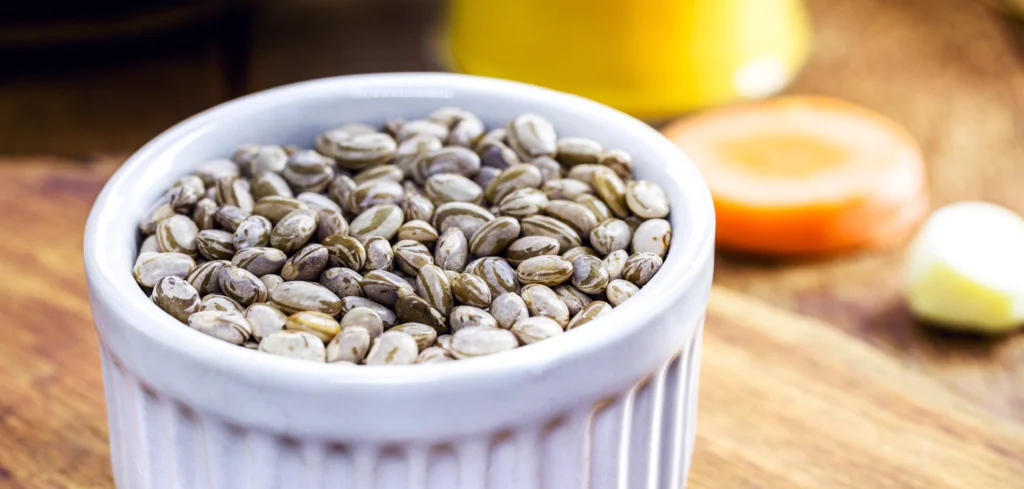
- Color: Light gray to greenish, with a beige or light tan kernel inside.
- Shape: Oval and flat with a tapered point at one end.
- Size: Typically about 6 to 10 mm in length and 3 to 5 mm in width.
- Texture: Smooth and firm exterior with a crunchy texture when bitten.
Culinary Uses:
- Common Dishes: Salads, granola, trail mix, baked goods (bread, muffins), and as a topping for yogurt or oatmeal.
- Preparation Methods: Can be eaten raw, roasted, or toasted. Often used as a garnish or ingredient in various recipes.
- Suitable Pairings: Pairs well with leafy greens, fruits (such as berries and apples), dairy products (like cheese and yogurt), and other seeds and nuts.
Geographical Information:
- Origin: North America, specifically central United States and Mexico.
- Primary Growing Regions: The largest producers of sunflower seeds include Russia, Ukraine, the United States, Argentina, and China.
- Seasonal Availability: Typically harvested in late summer to early fall, but available year-round due to storage and distribution.
Sunflower seed kernels are not only a nutritious snack but also a versatile ingredient that adds flavor and texture to a variety of dishes. Their rich nutrient profile makes them a valuable addition to a balanced diet.
| Proximates: | |
| Water | 4.87 g |
| Energy (Atwater General Factors) | 609 kcal |
| Energy (Atwater Specific Factors) | 571 kcal |
| Nitrogen | 3.56 g |
| Protein | 18.9 g |
| Total lipid (fat) | 48.4 g |
| Ash | 3.31 g |
| Carbohydrates: | |
| Carbohydrate, by difference | 24.5 g |
| Fiber, total dietary | 7.2 g |
| Minerals: | |
| Calcium, Ca | 116 mg |
| Iron, Fe | 4.37 mg |
| Magnesium, Mg | 302 mg |
| Phosphorus, P | 732 mg |
| Potassium, K | 657 mg |
| Sodium, Na | <2.5 mg |
| Zinc, Zn | 5.58 mg |
| Copper, Cu | 1.88 mg |
| Manganese, Mn | 2.63 mg |
| Selenium, Se | 17.8 µg |