
Basic Information:
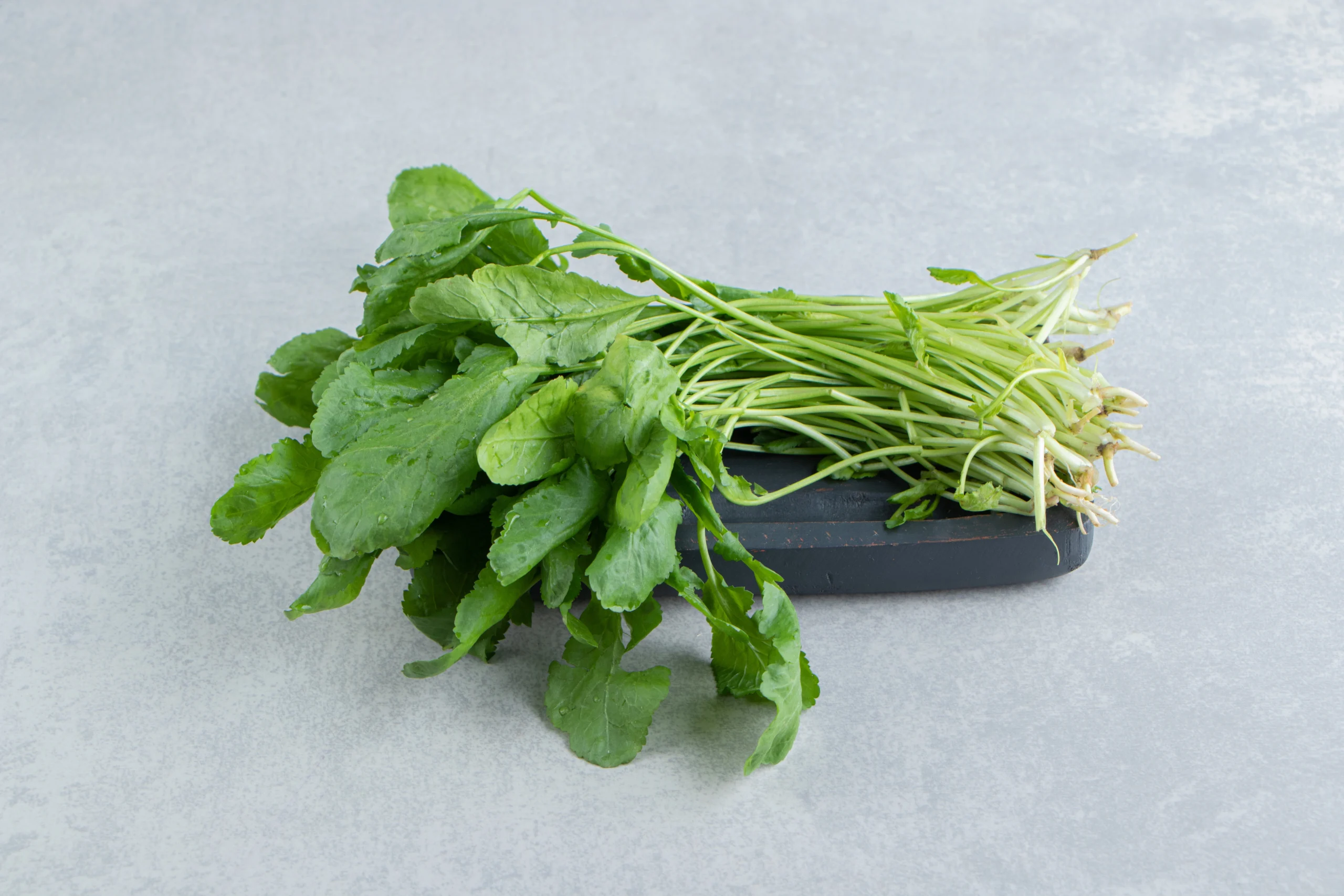
- Common Name: Baby Spinach
- Scientific Name: Spinacia oleracea
- Category: Leafy Green Vegetable
- Varieties: Baby spinach is typically harvested from varieties of Spinacia oleracea that include savoy, semi-savoy, and flat-leaf spinach. The “baby” form refers to the young, tender leaves harvested earlier than mature spinach.
Nutritional Information:
- Macronutrients (per 100 grams):
- Carbohydrates: 2.41 grams
- Proteins: 2.85 grams
- Fats: 0.62 grams
- Saturated Fat: 0.06 grams
- Monounsaturated Fat: 0.01 grams
- Polyunsaturated Fat: 0.17 grams
- Micronutrients:
- Vitamins:
- Vitamin A: 469 µg (52% DV)
- Vitamin C: 28.1 mg (31% DV)
- Vitamin K: 483 µg (402% DV)
- Folate: 194 µg (49% DV)
- Vitamin B6: 0.2 mg (15% DV)
- Vitamin E: 2 mg (13% DV)
- Minerals:
- Calcium: 99 mg (8% DV)
- Iron: 2.7 mg (15% DV)
- Magnesium: 79 mg (20% DV)
- Phosphorus: 49 mg (7% DV)
- Potassium: 558 mg (12% DV)
- Sodium: 79 mg (3% DV)
- Zinc: 0.53 mg (5% DV)
Phytonutrients
Baby spinach is rich in various phytonutrients that contribute to its health benefits. These phytonutrients include:
- Carotenoids:
- Beta-Carotene: A precursor to vitamin A, beta-carotene is an antioxidant that supports vision, immune function, and skin health.
- Lutein and Zeaxanthin: These antioxidants are crucial for eye health, reducing the risk of cataracts and age-related macular degeneration.
- Flavonoids:
- Quercetin: An antioxidant with anti-inflammatory properties that supports cardiovascular health and may help reduce the risk of certain cancers.
- Kaempferol: Known for its anti-inflammatory and anticancer properties, kaempferol also helps protect the body from oxidative stress.
- Phenolic Acids:
- Caffeic Acid: An antioxidant that helps reduce inflammation and may protect against certain diseases.
- Ferulic Acid: Another antioxidant that helps protect cells from damage caused by free radicals and supports skin health.
- Glucosinolates:
- Compounds that can be broken down into isothiocyanates, which have been shown to have anticancer properties.
- Saponins:
- Plant compounds that can help reduce cholesterol levels, boost the immune system, and provide anticancer benefits.
- Nitric Oxide:
- While not a phytonutrient, baby spinach contains nitrates, which can be converted into nitric oxide in the body. Nitric oxide helps improve blood flow and reduce blood pressure.
Health Benefits of Phytonutrients in Baby Spinach
- Antioxidant Protection:
- Carotenoids (beta-carotene, lutein, zeaxanthin), flavonoids (quercetin, kaempferol), and phenolic acids (caffeic acid, ferulic acid) help protect cells from oxidative damage caused by free radicals, reducing the risk of chronic diseases.
- Eye Health:
- Lutein and zeaxanthin are specifically beneficial for eye health, protecting against cataracts and age-related macular degeneration.
- Anti-inflammatory Effects:
- Flavonoids (quercetin, kaempferol) and phenolic acids (caffeic acid, ferulic acid) reduce inflammation, which is beneficial for managing chronic conditions such as arthritis and heart disease.
- Heart Health:
- Flavonoids (quercetin, kaempferol) and saponins help lower cholesterol levels and protect cardiovascular health by improving blood vessel function and reducing arterial stiffness.
- Nitric oxide, derived from dietary nitrates in spinach, improves blood flow and helps lower blood pressure.
- Cancer Prevention:
- Some phytonutrients, such as kaempferol and glucosinolates, have anticancer properties, potentially reducing the risk of certain types of cancer by inhibiting cancer cell growth and proliferation.
- Immune Support:
- Saponins and flavonoids boost immune function, helping the body to fight off infections and diseases by enhancing the activity of immune cells.
Summary
Baby spinach is a nutrient-rich leafy green vegetable that contains a variety of beneficial phytonutrients, including carotenoids (beta-carotene, lutein, zeaxanthin), flavonoids (quercetin, kaempferol), phenolic acids (caffeic acid, ferulic acid), glucosinolates, and saponins. These phytonutrients provide numerous health benefits, such as antioxidant protection, anti-inflammatory effects, heart health support, cancer prevention, eye health improvement, and immune support. Including baby spinach in your diet can contribute to overall health and well-being due to its rich phytonutrient profile.
Calorie Count and Glycemic Index
- Calorie Count: Approximately 21 calories
- Glycemic Index: Very low
Physical Characteristics:
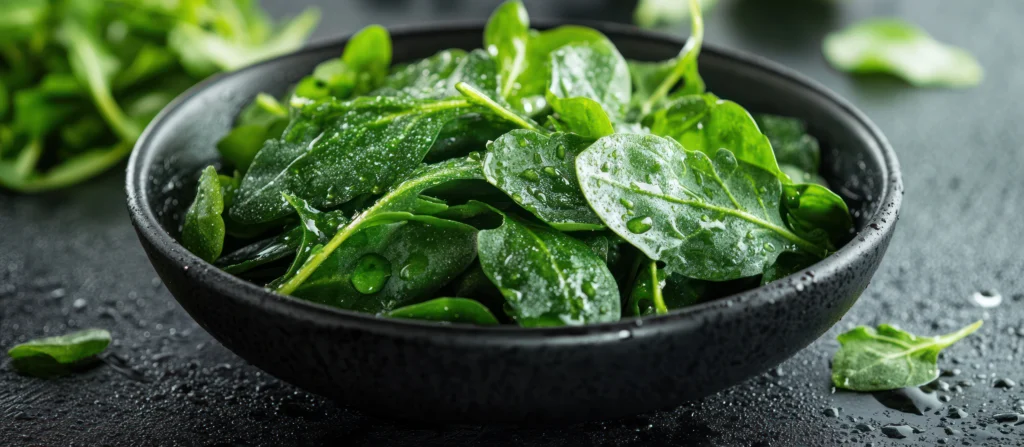
- Color: Dark green
- Shape: Oval to slightly pointed leaves
- Size: Small, tender leaves, typically 1-4 inches long
- Texture: Soft and tender
Culinary Uses:
- Common Dishes: Salads, smoothies, soups, sautés, stir-fries, and as a base for various dishes.
- Preparation Methods: Can be eaten raw in salads, blended into smoothies, steamed, sautéed, or added to soups and stews.
- Suitable Pairings: Pairs well with fruits (like strawberries and apples), nuts (such as almonds and walnuts), cheeses (like feta and goat cheese), proteins (such as chicken, fish, and tofu), and dressings (such as vinaigrettes).
Geographical Information:
- Origin: Believed to have originated in ancient Persia (modern-day Iran).
- Primary Growing Regions: Major producers include the United States (California and Arizona), China, Japan, and Turkey.
- Seasonal Availability: Available year-round, with peak seasons in the spring and fall.
| Proximates: | |
| Water | 95.5 g |
| Energy (Atwater General Factors) | 27 kcal |
| Energy (Atwater Specific Factors) | 21 kcal |
| Nitrogen | 0.46 g |
| Protein | 2.85 g |
| Total lipid (fat) | 0.62 g |
| Ash | 1.6 g |
| Carbohydrates: | |
| Carbohydrate, by difference | 2.41 g |
| Carbohydrate, by summation | 1.56 g |
| Fiber, total dietary | 1.6 g |
| Minerals: | |
| Calcium, Ca | 68 mg |
| Iron, Fe | 1.26 mg |
| Magnesium, Mg | 92.9 mg |
| Phosphorus, P | 39 mg |
| Potassium, K | 582 mg |
| Sodium, Na | 111 mg |
| Zinc, Zn | 0.45 mg |
| Copper, Cu | 0.082 mg |
| Manganese, Mn | 0.488 mg |
| Iodine, I | <10 µg |
| Selenium, Se | <2.5 µg |
| Vitamins and Other Components: | |
| Vitamin C, total ascorbic acid | 26.5 g |
| Thiamin | 0.077 mg |
| Riboflavin | 0.194 mg |
| Niacin | 0.551 mg |
| Vitamin B-6 | 0.195 mg |
| Biotin | 1.66 µg |
| Folate, total | 116 µg |
| Vitamin A, RAE | 283 µg |
| Carotene, beta | 3400 µg |
| Lutein + zeaxanthin | 6020 µg |
| Lutein | 5830 µg |
| Zeaxanthin | 191 µg |