
Basic Information:
- Common Name: Acorn Squash
- Scientific Name: Cucurbita pepo
- Category: Vegetable
- Varieties: Acorn squash is a type of winter squash, which includes various cultivars such as the traditional dark green acorn squash, as well as golden, white, and multicolored varieties.
Nutritional Information:
- Macronutrients (per 100 grams):
- Carbohydrates: 10.5 grams
- Proteins: 1.25 grams
- Fats: 0.18 grams
- Saturated Fat: 0.02 grams
- Monounsaturated Fat: 0.01 grams
- Polyunsaturated Fat: 0.04 grams
- Micronutrients:
- Vitamins:
- Vitamin C: 9.0 mg (10% DV)
- Vitamin A: 40 IU (1% DV)
- Vitamin K: 2.8 µg (2% DV)
- Folate: 14 µg (4% DV)
- Vitamin B6: 0.1 mg (6% DV)
- Minerals:
- Potassium: 347 mg (7% DV)
- Magnesium: 20 mg (5% DV)
- Phosphorus: 33 mg (3% DV)
- Calcium: 24 mg (2% DV)
- Iron: 0.4 mg (2% DV)
Phytonutrients
While specific data on the phytonutrient content of raw acorn squash may not be as readily available as information on macronutrients and micronutrients, we can discuss some of the common phytonutrients that are likely present:
- Carotenoids:
- Beta-Carotene: This pigment gives acorn squash its vibrant orange color and is a precursor to vitamin A. Beta-carotene is an antioxidant that supports eye health and immune function.
- Lutein and Zeaxanthin: These carotenoids are important for eye health, reducing the risk of age-related macular degeneration.
- Flavonoids:
- Quercetin: A flavonoid with antioxidant and anti-inflammatory properties, quercetin may help protect against heart disease and certain types of cancer.
- Kaempferol: Known for its antioxidant and anti-inflammatory effects, kaempferol may have protective benefits against chronic diseases such as cancer and cardiovascular disease.
- Phenolic Compounds:
- Chlorogenic Acid: Found in many fruits and vegetables, chlorogenic acid has antioxidant properties and may help lower blood pressure and improve glucose metabolism.
- Caffeic Acid: Another phenolic compound with antioxidant and anti-inflammatory effects, caffeic acid may have protective benefits against cancer and cardiovascular disease.
- Vitamin C:
- Acorn squash is a good source of vitamin C, which is a potent antioxidant that supports immune function, collagen production, and wound healing.
- Fiber:
- While not a phytonutrient per se, fiber is a plant compound found in acorn squash that supports digestive health, regulates blood sugar levels, and may help lower cholesterol.
These are just a few examples of the phytonutrients that may be present in raw acorn squash. Consuming a variety of fruits and vegetables, including different varieties of squash like acorn squash, can provide a wide range of phytonutrients that contribute to overall health and well-being.
Calorie Count and Glycemic Index
- Calorie Count: Approximately 42 calories
- Glycemic Index: Low
Physical Characteristics:
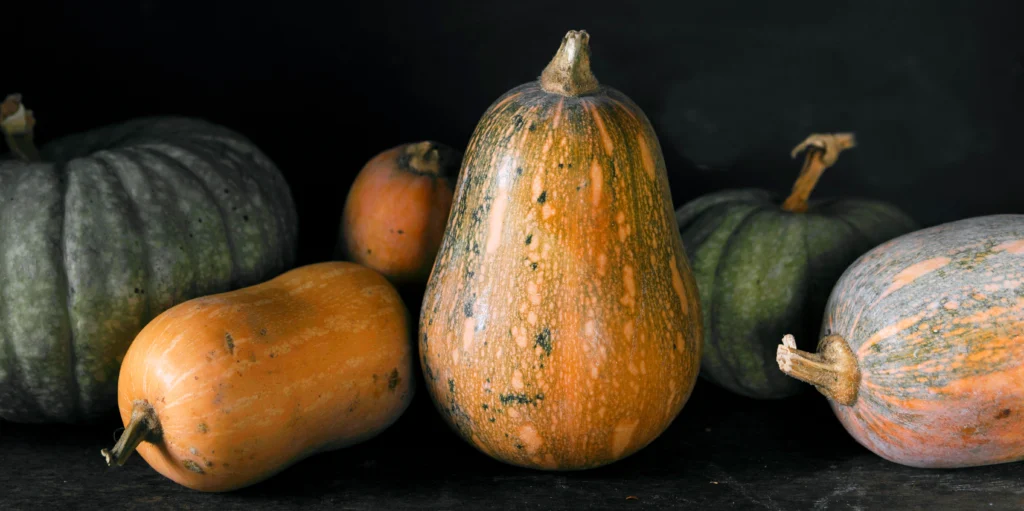
- Color: Typically dark green, sometimes with orange or yellow patches
- Shape: Characterized by its acorn-like shape, with ridges running vertically along its surface and a distinct ridged cap or stem end
- Size: Usually smaller than other winter squash varieties, approximately 4-7 inches in diameter
- Texture: Firm, with smooth skin and dense, sweet flesh
Culinary Uses:
- Common Dishes: Acorn squash is often baked, roasted, steamed, or microwaved and can be served as a side dish, stuffed, or used in soups, stews, and casseroles.
- Preparation Methods: When preparing acorn squash, it is commonly halved or sliced, seeds removed, and then roasted with various seasonings such as brown sugar, cinnamon, nutmeg, or savory herbs like rosemary and thyme.
- Suitable Pairings: Acorn squash pairs well with flavors like maple syrup, honey, apples, cranberries, pecans, sage, and goat cheese. It can be incorporated into both sweet and savory dishes.
Geographical Information:
- Origin: Acorn squash is native to North and Central America, with evidence of its cultivation dating back thousands of years.
- Primary Growing Regions: Acorn squash is grown in various regions around the world, including the United States (particularly in the Midwest and Northeast regions), Mexico, Canada, and parts of Europe.
- Seasonal Availability: Typically harvested in the fall and winter months, acorn squash is available from late summer through early spring in temperate regions. It can often be found in grocery stores year-round due to modern storage and distribution methods.
| Proximates: | |
| Water | 87.2 g |
| Energy (Atwater General Factors) | 49 kcal |
| Energy (Atwater Specific Factors) | 42 kcal |
| Nitrogen | 0.2 g |
| Protein | 1.25 g |
| Total lipid (fat) | 0.18 g |
| Ash | 0.87 g |
| Carbohydrates: | |
| Carbohydrate, by difference | 10.5 g |
| Fiber, total dietary | 2.6 g |
| Minerals: | |
| Calcium, Ca | 25 mg |
| Iron, Fe | 0.31 mg |
| Phosphorus, P | 42 mg |
| Potassium, K | 332 mg |
| Sodium, Na | <2.5 mg |
| Zinc, Zn | 0.29 mg |
| Copper, Cu | 0.087 mg |
| Manganese, Mn | 0.187 mg |