

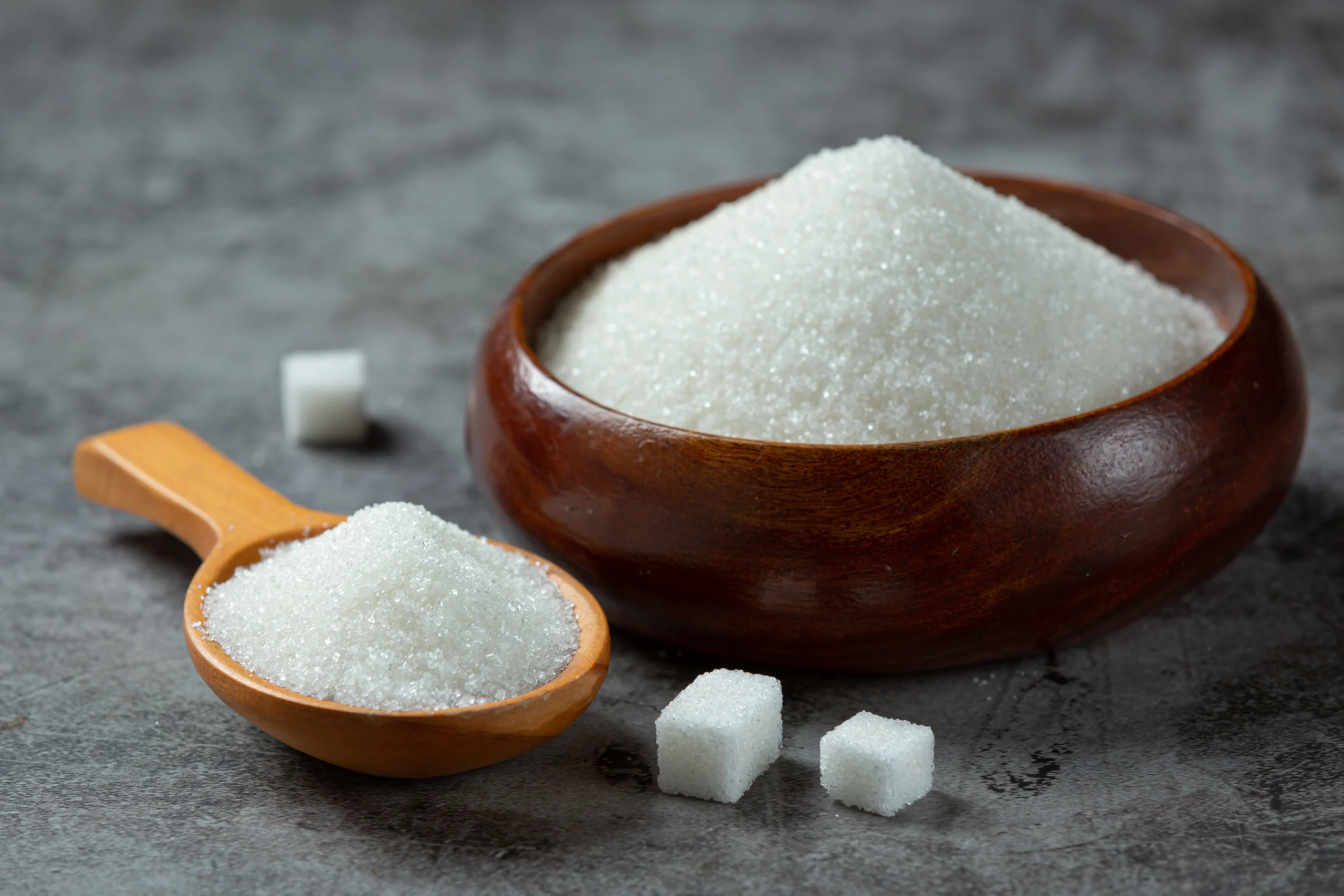
Basic Information:
- Common Name: Granulated Sugar
- Scientific Name: Sucrose
- Category: Sweetener
- Varieties: Granulated sugar is a highly refined sugar derived from sugar cane or sugar beets. While there may be variations in crystal size and color among brands, granulated sugar is generally uniform in appearance.
Nutritional Information:
- Macronutrients (per 100 grams):
- Carbohydrates: 99.6 grams
- Proteins: 0 grams
- Fats: 0.32 grams
- Micronutrients:
- Granulated sugar contains negligible amounts of micronutrients.
Phytonutrients
Granulated sugar, being a highly refined product derived from sugar cane or sugar beets, does not contain significant amounts of phytonutrients. During the refining process, most of the naturally occurring phytonutrients, such as flavonoids, phenolic compounds, and other antioxidants, are removed along with impurities, leaving behind mainly sucrose, the primary carbohydrate found in granulated sugar.
While granulated sugar provides energy in the form of carbohydrates, it lacks essential nutrients such as vitamins, minerals, and fiber. Therefore, it is considered an empty calorie food, providing sweetness but little to no nutritional value beyond its caloric content.
It’s important to note that consuming excessive amounts of refined sugars, including granulated sugar, has been associated with various health risks, including obesity, type 2 diabetes, and heart disease. Therefore, it’s recommended to consume granulated sugar in moderation as part of a balanced diet, while focusing on obtaining essential nutrients from whole, nutrient-rich foods like fruits, vegetables, whole grains, and lean proteins.

Calorie Count and Glycemic Index
- Calorie Count: Approximately 385 calories per 100 grams
- Glycemic Index: High (around 60-70)
Physical Characteristics:
- Color: White or off-white
- Shape: Small, fine crystals
- Size: Varies depending on the brand and processing method, but typically small and uniform in size
- Texture: Dry, granular, and free-flowing
Culinary Uses:
- Common Dishes: Granulated sugar is used as a sweetener in a wide range of dishes and beverages, including baked goods (cakes, cookies, muffins), desserts (puddings, custards, ice creams), beverages (coffee, tea, cocktails), and savory dishes (marinades, sauces).
- Preparation Methods: Granulated sugar can be added directly to recipes or dissolved in liquid to sweeten beverages or create syrups. It can also be caramelized by heating to create a sweet, golden-brown syrup for various applications.
- Suitable Pairings: Granulated sugar pairs well with flavors like vanilla, chocolate, cinnamon, citrus, and berries. It is commonly used in combination with butter, flour, eggs, and other baking ingredients.
Geographical Information:
- Origin: The production of granulated sugar from sugar cane dates back thousands of years, with historical origins in Asia and the Middle East. Sugar beets were later cultivated for sugar production in Europe during the 18th century.
- Primary Growing Regions: Sugar cane is grown in tropical and subtropical regions around the world, including countries in Latin America, the Caribbean, Africa, and Asia. Sugar beets are primarily cultivated in temperate regions, such as Europe, North America, and parts of Asia.
- Seasonal Availability: Granulated sugar is available year-round and is a staple ingredient in most kitchens. The production of sugar from sugar cane and sugar beets follows seasonal cycles, but granulated sugar remains consistently available due to storage and distribution.
| Proximates: | |
| Water | 0.02 g |
| Energy (Atwater General Factors) | 401 kcal |
| Energy (Atwater Specific Factors) | 385 kcal |
| Total lipid (fat) | 0.32 g |
| Ash | 0.07 g |
| Carbohydrates: | |
| Carbohydrate, by difference | 99.6 g |
| Sugars, Total | 99.8 g |
| Sucrose | 99.8 g |
| Galactose | 0.03 g |
| Minerals: | |
| Calcium, Ca | 1 mg |
| Iron, Fe | 0.05 mg |
| Magnesium, Mg | 0.3 mg |
| Potassium, K | 2 mg |
| Sodium, Na | 1 mg |
| Zinc, Zn | 0.01 mg |
| Copper, Cu | 0.007 mg |
| Manganese, Mn | 0.004 mg |